
Florent Marchet
Berry — Naturalist chanson
Twenty years of a discography that tells the story of peripheral France through its pavilion houses, its missed retrofutures and its family silences. A body of work crossed by two stubborn constants — and the same gesture throughout: capturing the sound of a place to house lives that look like ours.
Why a signature stays recognizable
His music produces something nostalgic. That isn’t an accident. It’s a device, built album after album, and carried by two constants that never move.
Marchet occupies rare territory: erudite orchestral pop applied to tiny lives — pavilion houses, quiet renunciations, silences between parents and children. Where mainstream French chanson underlines emotion, he lets it surface. Where singer-songwriter folk strips itself bare, he arranges with precision.
Critics keep returning to the same filiations: Nick Drake and Souchon for the voice, Dominique A and Miossec for observation, 2000s-era Michel Delpech for the social postcard, Nicolas Mathieu for peripheral naturalism.
The seven albums that follow show how these two constants play out across radical aesthetic pivots — from orchestral folk to electro retrofuturism, from the novel-concept to pianistic minimalism.


◆ Musicological studies
The work’s tracks examined closely — device, structure, procedure, lineage, reading under the permanences.

Gargilesse
The matrix. Everything is already here except what comes next.
The title comes from a village in the Indre region where Marchet used to go as a child. The production history tells the story: he first records in Belgium at ICP Studios, judges the result too antiseptic, and decides to re-record the album in the Berry region, on site, on old pianos and guitars captured in the village itself.
This is the founding aesthetic gesture. The sound must come from the place. The whole artistic project is set in a single recording decision — and will structure the twenty years that follow, all the way down to the customized upright piano of Garden Party.
The sonic setup
Miossec lays down his voice on Je m’en tire pas mal. Wind and string arrangements written by Marchet himself. Transverse flute and piano referencing Nick Drake. Harpsichord on Mes nouveaux amis, a nod to 1960s American pop.
"Disappointment at the surface of the words, the baroque at the surface of the notes. Without cynicism, but with a touch of nostalgic bitterness.”— Le Temps, 2004
Themes already in place
The general tone: people in their thirties looking at their renunciations. Tous pareils, Levallois, Le terrain de sport — the last of which critics systematically cite as one of his melodic peaks.
The album wins the Prix Coup de Cœur from the Charles Cros Academy and the Prix FAIR. The only album to sound young: all those that follow will play on constructed positions.
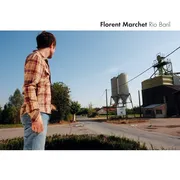
Rio Baril
The masterpiece. Chabrol sung over Morricone.
Second album, first novel-album. The name comes from a real place in his childhood, Riau Baril, transposed into an imaginary village. Les Inrocks places Rio Baril among the 100 best French albums of the 2000s, third French entry behind Daft Punk and Air.
The dramatic arc
Fifteen tracks tell the story of a fictional character from childhood to forty, when he will be the perpetrator of a crime column incident. First collaboration with Arnaud Cathrine, who co-writes three tracks. The opening Le Belvédère sets up a Morricone-style Western backdrop. The closing Tout est oublié, a village brass band, buries everything.
"Beneath the bonhomie of the traditional village, with its bell tower, war memorial and public school, you discover an actual cesspool, a pond of toads.”— La Vie Errante
The tone/subject dichotomy
Pastoral music, burnished Western, village brass band. Text: cesspool, National Front leaflet, sordid crime news. Marchet invents here a device he will use throughout his career — the arrangement that refuses to underline the darkness of the text.
The orchestral ambition
Recorded in the Berry by Erik Arnaud. Strings captured in Sofia by the Bulgarian Philharmonic Orchestra. Mixing by Ryan Boesch (Eels) in Los Angeles. Extreme palette: ukulele, banjo, toy piano, melodica, kazoo, brass band, symphony orchestra. Collaborations: Dominique A, Philippe Katerine, Jasmine Vegas.
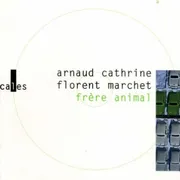
Frère Animal
The theatrical parenthesis. Laboratory of the talk-over.
Not a solo album but a book-album co-signed with Arnaud Cathrine, published by Verticales (Gallimard). An extension of Rio Baril in method, but new territory: the world of the corporation.
The story
In an imaginary town, SINOC reigns (Société Industrielle Nautique d’Objets Culbuto). “Mother Nurturer” of the inhabitants, it swallows everyone. Thibaut, twenty years old, refuses the traced path. He’d like to “slip through the net’s mesh”. The company swallows him anyway.
Nineteen chapters, nineteen tracks, spoken or sung. This is the first major use of talk-singing in Marchet — fourteen years before Freddie Mercury on Garden Party.
Thibaut’s arc
The book-album unfolds as a musical novel in three movements. The exposition: the town, SINOC, the workers, the family apparitions. The knot: Thibaut refuses, tries to disappear into the margins, fails. The fall: the company absorbs everything, even the recalcitrant, even the gestures of resistance — which end up as anecdotes during the lunch break.
The device is signed by Cathrine on the text side, Marchet on the music side — with Stephan Eicher as recurring guest, his voice crossing several tracks. Talk-singing alternates with more held songs, and it is in this back-and-forth that the social fatigue the album wants to tell takes shape.
"A virulent, vivid critique of an industrial project where the value of labor is the foundation of everything. A record where cynicism plays the lead role.”— Benzine Magazine
Meaning in the trajectory
Frère Animal demonstrates that as early as 2008, Marchet thinks of song as a long narrative device. He will produce a sequel — Second Tour — in 2016, around a presidential runoff. Marchet is not only a songwriter, he is an author of formats who does not lock himself inside the album form.
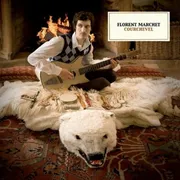
Courchevel
The hinge. The prototype of Garden Party, twelve years before Garden Party.
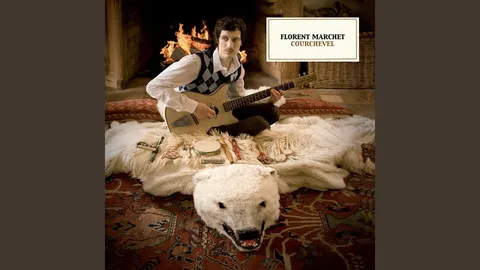
Third solo album. Marchet leaves Barclay for PIAS. Recorded at Nodiva Studio (his own). Prestigious mixing: Alf (Air), Julien Delfaud (Phoenix), Stéphane Prin (Jean-Louis Murat).
The break in format
The novel-album is abandoned. Courchevel is a suite of autonomous vignettes, a gallery of characters: faded pop idol, eternal adolescent (Benjamin), couple in a plane crash (Roissy, with Jane Birkin), soon-to-be unemployed man, drowning of children.
The places are false leads. The “character gallery” form that will reappear identically on Garden Party in 2022 is born here.
"Beautiful, acid and vicious while more accessible than Rio Baril.”— Les Inrocks (35th best album 2010)
Roissy, the centerpiece
Duet with Jane Birkin. Pure vertigo, Birkin’s voice full of cracks crossing with Marchet’s. Probably the most beautiful vocal moment of his discography.

Bambi Galaxy
The rupture. The nostalgia for a future that never took place.
A radical turn. A rupture with the orchestral folk of the previous three albums. Concept album: a character looks for his place, tries escape routes (psychotropics, sects, sex, spatial flight), finds a scientific serenity in string theory.
The singular energy
Where the other albums look behind, Bambi Galaxy projects forward — but into a future that has already happened. Marchet: “In the 1980s we imagined the 2000s. The scenario has inverted.” The album makes a nostalgia for a future that never happened. Mark Fisher theorized this under the name hauntology.
The sonic vocabulary
Claimed references: Bowie (Ziggy Stardust), Daft Punk (Discovery), Air (Virgin Suicides), Sébastien Tellier. Vintage analog synths (Moog, ARP, Juno, Mellotron). 2001: A Space Odyssey-style choirs right from Alpha Centauri.
"A Souchon-like voice over Sébastien Tellier-style music. The friction creates the identity.”— paraphrase of several critics
Why the attachment works
Three reasons. Motorik energy: the pulse holds the album upright. Jubilation of the concept: a joyful ironic dimension absent from his other works. Generational memorial object: children of the 1980s-1990s recognize their imaginary world here.
The crossing of the discographic desert
Eight years without a solo album between Bambi Galaxy (2014) and Garden Party (2022). A gap, apparently. In fact: a period of dense activity where Marchet fully exists outside the album form.
- Film soundtracksCarré 35 (2017), Going to Brazil (2017), Je promets d’être sage (2019, Renan Le Page), Les Aventures du jeune Voltaire (series), À moi seule (2012, Frédéric Videau), La part de l’autre (2013, Christophe Chiesa), Le choix de mon père (2008, Rabah Zanoun, documentary).
- Second Tour · 2016A sequel to Frère Animal with Arnaud Cathrine, built around the runoff of a presidential election. A return to the novel-album format eight years after the first.
- Composition and co-productionBartone Song (2018, with Zaza Fournier and Aldebert); Sophie Calle’s collective album Souris Calle (November 2018, Un temps de chien with Cathrine, Mon chat beauté written for Clarika).
- Writing collaborationsCalogero, Bernard Lavilliers, Bénabar. Mainstream French chanson comes looking for Marchet precisely for the precision of his writing.
- Theatre and musical readingsIntimate stage formats, often in dialogue with Cathrine. The sung-spoken voice rehearsed in front of audiences before Garden Party.
- Novel · Le Monde du vivant (Stock, 2020)On farmers, noted by the critics. Marchet the novelist, not a songwriter who writes. The book moves the naturalism of observation outside the chanson form.
This period rereads the body of work: Marchet is not only a singer-songwriter. He is a polymorphic author for whom the album is one format among several. Garden Party, emerging from this crossing, is not a “return” but the lucid choice of a format that has once again become the right one for what he has to say.
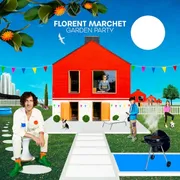
Garden Party
The stripped-down return. An upright piano in the living room is enough.
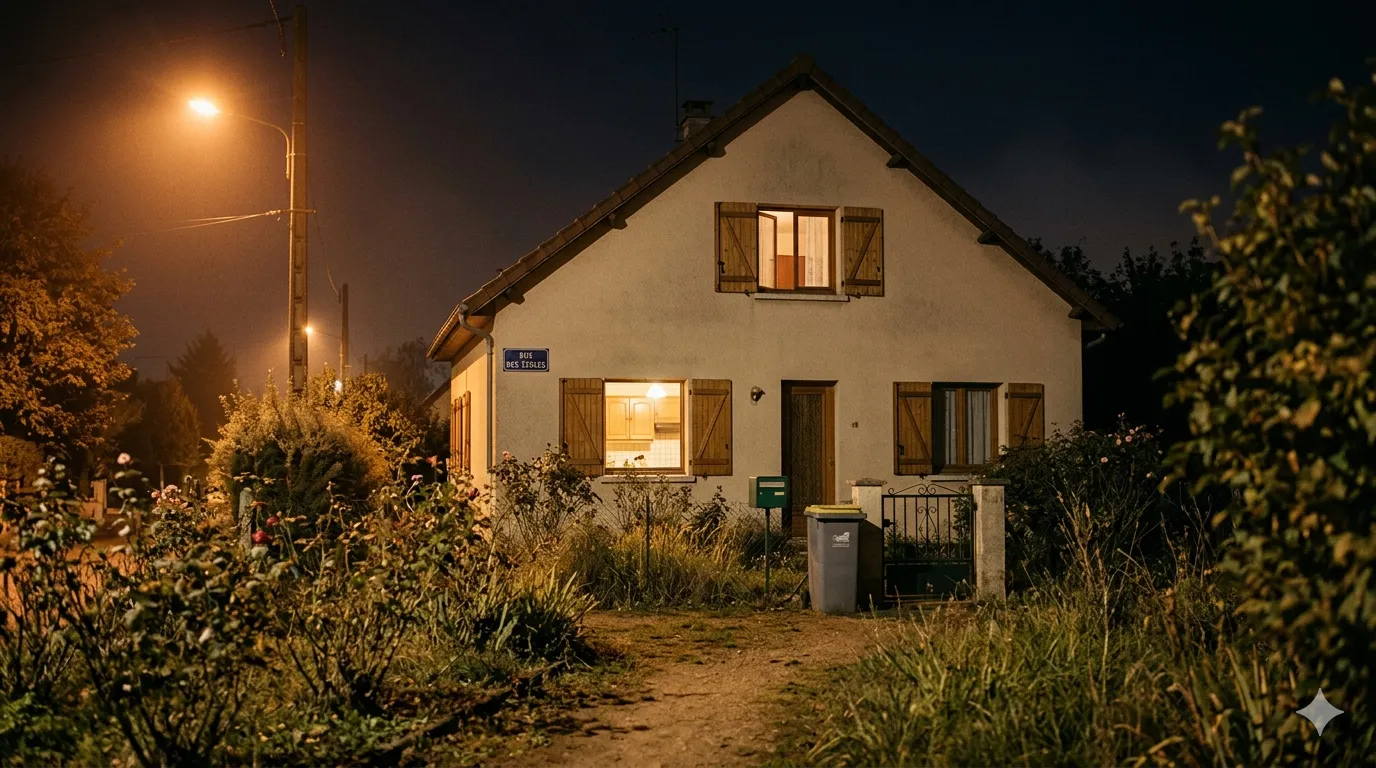
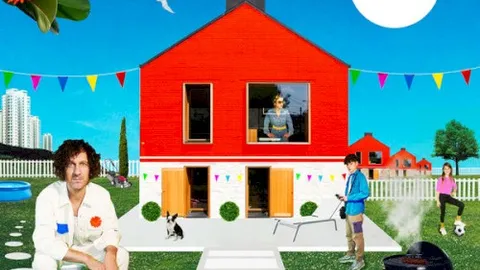
Eight years of silence broken by an album written during the first lockdown, based on Marchet’s nighttime walks with his dog through his suburban neighborhood.
The setup
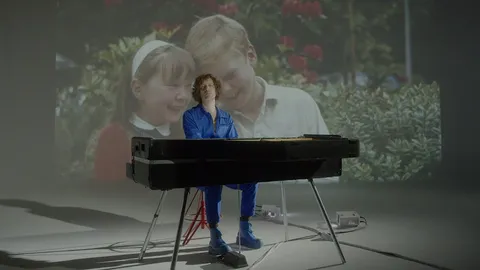
The songs are first tested in his living room — muted piano, voice barely murmured. The recording captures that setup: a customized old upright piano, close voice. Mixing by Loris Bernot.
The sound of the album is the writing setup captured as-is. Exactly like Gargilesse in 2004. Same gesture, eighteen years apart.
The softness/violence dichotomy
Hard subjects set inside a fragile music. A father fearing for his son (De justesse), a rejected coming out (Paris-Nice), adolescent abuse (Freddie Mercury). The music refuses to underline the pain — it is that refusal that makes it bearable, and memorable.
"The album, deeply humane, will rest on this seductive dichotomy: the softness and fragility of the music at the service of very hard subjects.”— Five Minutes
On Garden Party, three tracks sustain a dedicated musicological analysis: De justesse, Paris-Nice and Freddie Mercury. Open each for the harmonic, narrative and contextual detail.
A full critical return. Twenty years after Gargilesse, Marchet arrives at a spare form that contains everything. Maisons Alfort (2023) will extend the setup by revisiting the entire repertoire in piano-voice.

Maisons Alfort
The confirmation. The stripped-down gesture has become the norm.
Not a new album of original compositions but a piano-voice reissue of seventeen songs from the repertoire. Nodiva, October 2023. Marchet extends the Garden Party device across his entire discography: upright piano, close voice, nothing else.
A signature gesture
The choice to revisit Le terrain de sport, Roissy, Benjamin in the living-room setup closes a twenty-year loop. What was the intuition of Gargilesse — that the sound must come from the place — becomes in 2023 the retroactive norm applied to the entire catalog.
Songs written for orchestra, for analog synths, for village brass band, are all brought back to the same tiny gesture: one man, a muted keyboard, a voice a few centimeters from the microphone.
"The gesture of making has become the gesture of interpretation.”— retrospective reading
Position in the body of work
Maisons Alfort is neither a summing-up nor a greatest hits. It is a delayed aesthetic affirmation: what Garden Party laid down as proposition (the living room suffices), Maisons Alfort lays down as method (the living room fits everything). The reissue answers the album — same tone, same scale, same restraint.
Provisional end of the arc. The next inflection will have to displace at least one of the two constants for something new to happen.
A body of work in four phases
Seen from a distance, the discography reads as a clear trajectory. Four phases, two constants, a single artistic project that changes costume every eight years.
What never changes
Two constants run through the four phases: the sound must come from the place and the gaze must land on ordinary lives. These two gestures are the real signature. Everything else — orchestral folk, electro, bare piano — is material.
The inverted dramatic arc
The in-depth analyses of De justesse, Paris-Nice and Freddie Mercury reveal the same device: the lyrics tell a violence or a vertigo, the music refuses to translate it.
This is the inverse of mainstream French chanson, where the arrangement amplifies the emotion of the text (Goldman, Cabrel, Bruel). Marchet takes the opposite bet: the less the music does, the more the text carries. That aesthetic choice — close to the restraint of a Dominique A or certain Miossec tracks — is precisely what produces the specific nostalgic feeling his work provokes.
Music that underlines nothing leaves the listener free to project their own memories onto the text. You don’t cry because Marchet is crying (he isn’t); you cry because the song leaves you the room to do so.
The map
The albums in orbit around the two constants. Click an album to see how each one plays them out.
Naturalism: thirty-somethings and renunciations, a Berry postcard.
Position: matrix. All the later vocabulary is already set down.
Naturalism: 15 chapters of a provincial life.
Position: masterpiece. Top 100 French albums of the 2000s (Les Inrocks).
Naturalism: alienation through labor, 19 chapters.
Position: laboratory of talk-singing. Foreshadows Freddie Mercury.
Naturalism: gallery of vignettes, misleading toponyms.
Position: the hinge. Structural prototype of Garden Party. Duet with Jane Birkin on Roissy.
Naturalism: displaced to the Anthropocene, sects, escape routes.
Position: rupture. A test of the signature's limits.
Naturalism: gallery of 13 pavilion-district characters.
Position: stripped-down return. A domestic concept album written during lockdown.
- De justesse Four ages, four deaths narrowly avoided, and a harmony that passes close by without ever resolving. Read the analysis →
- Freddie Mercury 7'15 of talk-singing on upright piano. Air's Virgin Suicides transposed to the living room. The track does not build toward a climax — it lasts. Read the analysis →
- Paris-Nice A paternal rejection embedded in the same flat register as a herbal tea and a redone parquet floor. Nicolas Mathieu in song form. Read the analysis →
Naturalism: 17 tracks of the repertoire revisited.
Position: confirmation that the stripped-down gesture has become the norm.