Cartographies
An audiovisual collection designed to wander through the work of artists you keep coming back to — album by album, track by track, tracing where the feeling comes from.
Artist journeys
- 1998 — 2009
Air Versailles — Chamber-electronica
Twenty years of chamber-electronica that invented a timbre — Mini-Moog, distant voices, felted strings. The future of the 1970s told across five albums and a soundtrack.
Enter the cartography → - 1980 — 2008
Alain Bashung France — Modernist rock-chanson
Thirty years of French song stripped of compromise — the deep voice as dramatic gesture, the poetic-fragmented texts of Bergman, Fauque and Manset as architecture. From Roulette russe to the swan song of Bleu pétrole.
Enter the cartography → - 2003 — 2021
Albin de la Simone Amiens — Chanson · Piano-illustration
Twenty years of intimate songwriting built on restraint: piano, near-spoken voice, ordinary subjects handled without pathos. An arranger turned author who draws his own sleeve art — sound and image shaped by the same precise hand.
Enter the cartography → - 1996 — 2023
Belle and Sebastian Glasgow — Indie chamber-pop
Six members, Glasgow, 1996. From *Tigermilk* (1,000 vinyl copies) to *Late Developers* (2023), Stuart Murdoch invents a pop song that tells peripheral lives with sociological care and chamber arrangements that always refuse the grand gesture.
Enter the cartography → - 2001 — 2020
Benjamin Biolay Lyon — Orchestrated chanson
Twenty years of orchestrated French chanson across five pivot albums — from the imagined America of Rose Kennedy to the Monégasque autofiction of Grand Prix.
Enter the cartography → - 1968 — 2026
Brigitte Fontaine Paris — Avant-garde chanson
Sixty years of uncompromising radicalism — voice as percussion, speech as primary rhythm, each album a new collaboration that renews the sonic material without ever departing from the same founding grammar.
Enter the cartography → - 1996 — 2019
Cassius Paris — French Touch
Philippe Zdar and Hubert Boombass — twenty years of French Touch built from the mixing desk, from the filtered manifesto of 1999 to the involuntary epilogue of Dreems. The studio as instrument, groove as discipline.
Enter the cartography → - 1965 — 2020
Christophe France — Experimental chanson-pop
Fifty-five years of French song held between two irreconcilable lives: the yéyé star of Aline (1965) and the chamber experimentalist of Les Vestiges du chaos (2016). A falsetto voice intact from age 19 to 70 — poetic principle, not technique.
Enter the cartography → - 1997 — 2021
Daft Punk Paris — French Touch · Robots
Thomas Bangalter and Guy-Manuel de Homem-Christo — twenty-eight years of French loop-discipline carried to global scale, from the filtered sample of 1997 to the silent withdrawal of 2021. The helmet as aesthetic position, the loop as architecture.
Enter the cartography → - 1997 — 2025
Étienne de Crécy Paris — French house auteur
From *Super Discount* (1997) to *Warm Up* (2025): the producer who turned the collective compilation into an authorial format and live electronics into a design object. *French Touch* from the inside, without stardom.
Enter the cartography → - 2004 — 2023
Florent Marchet Berry — Naturalist chanson
Twenty years of a discography that tells the story of peripheral France — pavilion suburbs, missed retrofutures, family silences — held together across seven albums with a naturalism that refuses lyrical excess.
Enter the cartography → - 2018 — 2024
Fred again.. London — Sample-diary pop
Fred Gibson — London producer who turned his diary into four pop-electronic albums. Drake, Brian Eno, Boiler Room, and the Actual Life trilogy that invents the diary-house format.
Enter the cartography → - 1988 — 2024
Hans Zimmer Frankfurt → Los Angeles — Orchestral-electronic film score
From *Rain Man* (1988) to *Dune* (2021), Hans Zimmer transformed film music into a studio production discipline: the orchestra treated as a synthesiser, the simple ostinato erected as emotional architecture. Two Oscars won. The most imitated composer of his generation.
Enter the cartography → - 1973 — 2019
Haruomi Hosono Tokyo — Passage-maker of Japanese modern music
From *Hosono House* (1973), pastoral folk recorded in his Sayama home, to *HOCHONO HOUSE* (2019), a solitary re-recording of the same album 46 years later — Haruomi Hosono traversed every genre of Japanese musical modernity with the same quality of attention, never settling into a signature style.
Enter the cartography → - 1991 — 2025
IAM Marseille — French Rap · Egyptology
Six members, 1989, Marseille. From *De la planète Mars* to *Yasuke*, the collective places Marseille at the centre of the world and forges Egyptology into political metaphor. *L'École du micro d'argent* remains the best-selling French rap record.
Enter the cartography → - 1984 — 2023
Joe Hisaishi Tokyo — Film score composition
From *Nausicaä* (1984) to *The Boy and the Heron* (2023), Joe Hisaishi built a body of work across two parallel ecosystems — eleven films with Miyazaki, seven with Kitano — united by a single formal spine: melodic minimalism. The whistleable melody as method. The integral author, alone.
Enter the cartography → - 2008 — 2024
Julien Doré Alès — French folk-pop
Sixteen years of folk-pop built on two quiet gestures: an androgynous voice that refuses power, and a tender observation of the world close at hand — animals, landscapes, ordinary loves. The artist who proved you can reach a mass audience without grandiloquence.
Enter the cartography → - 2003 — 2024
Justice Paris — Electro · Ed Banger
Gaspard Augé and Xavier de Rosnay — twenty years of Parisian rock-electro fusion, from the saturated cross of 2007 to the cosmic return of 2024. Musical violence disguised as pop.
Enter the cartography → - 1995 — 2023
Laurent Garnier Paris — Techno · Long form
Thirty years of French techno writing across five pivot albums — the album conceived as a continuous set by one of Europe's great DJs, with eclecticism as the only stable signature.
Enter the cartography → - 2002 — 2017
LCD Soundsystem New York — Dance-punk
James Murphy and the DFA collective — four albums between 2005 and 2017, a farewell at Madison Square Garden, a return as continuation. Dance music built as embodied music criticism.
Enter the cartography → - 1991 — 2010
Massive Attack Bristol — Trip-hop
3D, Daddy G, Mushroom — born out of the Wild Bunch sound-system collective. Five albums over twenty years that invent trip-hop, reshape it, push it to its limits. Bass as emotional architecture.
Enter the cartography → - 1991 — 2025
MC Solaar Paris — French Rap · Sustained Metaphor
Solo, 1991, Paris. From Qui sème le vent récolte le tempo to Géopoétique, Solaar establishes language as architecture and rap as courtesy — two permanences across thirty-five years. Victoire de la musique chanson album 2018.
Enter the cartography → - 2003 — 2011
Nujabes Tokyo — Instrumental hip-hop
Jun Seba (1974–2010) — seven years of work, two solo albums during his lifetime, a cult anime soundtrack, a posthumous third album. Japanese instrumental hip-hop that becomes the global grammar of lo-fi.
Enter the cartography → - 2009 — 2025
Orelsan Caen — French Rap
Aurélien Cotentin — sixteen years, five solo albums, two Victoires Album of the Year, a Casseurs Flowters detour and a dual film/album in 2025. The narrator of contemporary France, in cynicism-tenderness register.
Enter the cartography → - 2000 — 2022
Phoenix Versailles — International indie pop
Seven albums over twenty years, a Grammy, and one constant: chamber pop from Versailles as an export discipline. Four friends since high school who refused both chanson française and French Touch to invent a third way.
Enter the cartography → - 1987 — 2001
Pizzicato Five Tokyo — Shibuya-kei · Citational Pop
Fifteen years of citational pop that invented a method — the sample as courtesy, Burt Bacharach and Gainsbourg seen from Shibuya, Maki Nomiya as visual grammar as much as voice. A body of work exported by Matador Records to the United States before it became a prophet in its own country.
Enter the cartography → - 1980 — 2023
Ryuichi Sakamoto Tokyo — Orchestral-electronic composition
From *B-2 Unit* (1980), a founding album of electro, to *12* (2023), piano improvisations recorded under chemotherapy two months before his death — Ryuichi Sakamoto traversed every musical territory of the 20th century with the same formal rigour, never fixing himself within a signature.
Enter the cartography → - 2001 — 2020
Sébastien Tellier Paris — Cosmic chamber-pop
Six studio albums on Record Makers, a baritone voice treated as pure timbre, and imaginary universes built with absolute conviction. From La Ritournelle to Domesticated — a trajectory without compromise.
Enter the cartography → - 1998 — 2017
Soulwax · 2manydjs Ghent — Rock-electro friction
Stephen and David Dewaele — a rock band that becomes a mashup duo, canonical remixers (LCD, MGMT, Daft Punk), DEEWEE label. Twenty-five years of permanent friction between rock, club and studio.
Enter the cartography → - 2001 — 2022
The Supermen Lovers Paris — French Touch · electronic pop
Guillaume Atlan, Paris — twenty years of French Touch in song form, from the worldwide hit Starlight (2001) to the closing statement Body Double (2022). The guest voice as signature, pop as Trojan horse.
Enter the cartography → - 2002 — 2025
Vincent Delerm Évreux — Literary piano-chanson
Twenty-three years of songs built on two twin gestures: the literary-cinematic citation as affective material, and the precise observation of bourgeois-bohemian Paris. An entomologist who lives inside his own terrarium.
Enter the cartography →
Musicological studies
Tracks examined closely, across every artist — device, structure, lineage, read under the constants. Click to open the analysis.
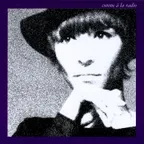
Comme à la radio
8'04 of spoken-word over Art Ensemble of Chicago free jazz. Voice as percussion among percussions. The piece that fixes the Fontaine grammar for sixty years.
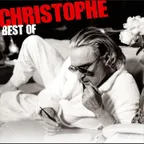
Les Mots bleus
Amber falsetto, Jarre lyrics, Beach Boys harmonics. The track that proves the renaissance — pop-3-minute format, entirely new material.
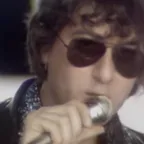
Gaby oh Gaby
The voice is born here. Nasal-deep phrasing over a rock riff, deliberately opaque Bergman text. The track that changed French song in 1979.
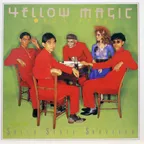
Rydeen
The mechanism of world techno-pop. Composed by Yukihiro Takahashi, embodied by all of YMO — and notably by Hosono's synthetic bass, the invisible backbone of the most-played track in the YMO discography.
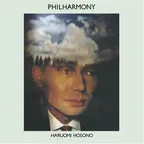
Sports Men
The maximum bifurcation point. False falsetto voice, angular Roland synthesisers, structure that refuses to resolve as a song. The moment Hosono takes off from YMO while retaining the electronic language but directing it towards concept-art-pop.
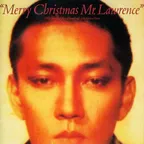
Merry Christmas, Mr. Lawrence
The Japanese minor pentatonic scale harmonised in the Western manner. A six-bar melody that became a global classic. The most precise East-West cultural bridge of 20th-century music.
Baby Love Child
Sparse ballad, Nomiya's bare voice, minimal arrangement — covered in Futurama (2002), oblique diffusion of Japanese pop toward America.

Caroline
The card-game sustained metaphor held across the entire track — ace of clubs, queen of hearts, the jack. Permanence 1 in its chemically pure form, in 1991.
Unfinished Sympathy
The founding track of trip-hop. Wally Badarou sample, Will Malone live strings, Shara Nelson vocals, West Pico Boulevard single-take. The entire genre in four minutes fifteen.

Je danse le Mia
Single #1 France in 1994. Michel Gondry video. George Benson sample. Marseille nostalgia from the 1970s–80s that becomes a national hit — the unlikely victory of suburban Marseille rap on the charts.
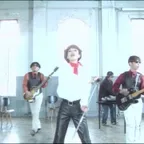
Sweet Soul Revue
Break-beat soul, Bacharach strings, Nomiya's spoken-sung voice — the single that exported Pizzicato Five: Kao campaign 1993, then Jury Duty soundtrack 1995.
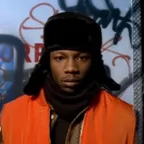
Nouveau Western
The American western transposed to Saint-Denis. Gainsbourg/Bardot sample, critique of cultural imperialism without invective. The sustained method in its geopolitical reach.
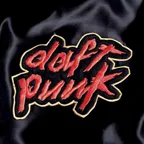
Da Funk
The single that took Daft Punk from Glasgow Soma to global Virgin. Five synth notes filtered over a funky kick, and a dog-headed character wandering through Manhattan, filmed by Spike Jonze.
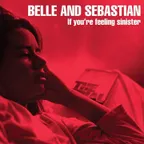
Get Me Away from Here, I'm Dying
3'19 of concise pop song. Classic verse-chorus structure. A girl escaping a party into a book. Murdoch's formula piece — all of B&S in three minutes.

Around the World
Seven minutes, one loop, twenty choreographed ostinatos. Loop discipline at its founding state — Michel Gondry makes visible what sound alone imposes.
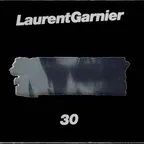
Crispy Bacon
Improbable techno hit of 1997, named on a cassette box in five seconds, video by Quentin Dupieux. Jeff Mills will find the title stupid; Garnier will keep it.
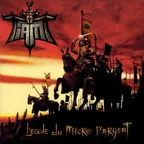
Demain c'est loin
9'04". Two verses with no chorus — Akhenaton then Shurik'n. No hook, no bridge. Ranked #1 in French rap. A text carved like a pharaonic inscription.

Prix Choc
The opener of *Super Discount*. Square filter house, open loop, minimal structure. The track that fixes the Solid label grammar — nonchalant French house without a vocal signature.

The Mononoke Theme
Low strings in ostinato, brass in accumulated crescendo, 3 minutes of orchestral texture before the theme enters. The minimalism permanent at symphonic scale — the Reich/Glass method applied to a hundred musicians.
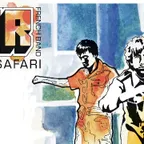
La femme d'argent
Seven instrumental minutes that open Moon Safari and the entire Air discography. The sonic matrix in its purest form.
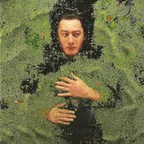
La Nuit je mens
The maturity masterwork. Fauque's text at its maximum fragmentation, Bashung's voice at its deepest in the arc, Fambuena's production that lets everything breathe. Victoires Song of the Year 1999.
Sexy Boy
Three elements — vocoder, Mini-Moog, Höfner bass — and a grammar born in one stroke. The track that introduced Air to the world.

Teardrop
The apex of trip-hop. Looping harpsichord, suspended beat, Liz Fraser of the Cocteau Twins. House M.D. theme (2004-2012). The most-listened track in the discography — and the strangest.
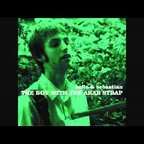
The Boy with the Arab Strap
The grooviest in the catalogue. A nocturnal Glasgow, multiple voices, a discreet folk-disco groove. The chamber permanence holds even when B&S attempts the dance floor.
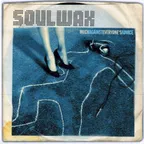
Too Many DJs
A pop-rock song that comments on DJ culture from a rock album. Four years later, the title will become the name of the mashup duo — involuntary prophecy.

Feeling for You
Slowed soul sample, three cutoff steps, sidechain pump. Exemplary of the 1999 filtered grammar — the French Touch as emotion.
Am I Wrong
Stevie Wonder sample (*I Was Made to Love Her*) filtered, dubbed, vocals chopped to a silhouette. French house transforming American soul — the sample as raw material, not as citation.

One More Time
Vocoded disco-house and a liberated climax — Romanthony's voice held by the robot, then released only once. Daft Punk at the summit of pop discipline.
Playground Love
A saxophone solo that floats, two held chords, Thomas Mars's voice that never pushes. The track that will invent, twenty years later, the matrix for Freddie Mercury.
The Man with the Red Face
Twelve minutes of techno-jazz, a saxophonist pushed to the brink, a title that literally names the colour of the soloist's face. The Garnier signature track.

Harder, Better, Faster, Stronger
Four verbs, four adjectives, twenty-one permutations. An Edwin Birdsong loop, a vocoded voice turned into concrete poetry. The grammar of future Kanye West, six years before Stronger.
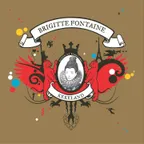
Kékéland
Brigitte Fontaine and -M- in tandem. The permanence of voice-declamation in a 2001 pop-chanson context. The track of the comeback.

One Summer's Day
Solo piano, A major, 2 minutes 19, binary A+B+A structure with no development. The benchmark piece of Hisaishi's melodic minimalism, performed in conservatories worldwide independently of the film.
Starlight (feat. Mani Hoffman)
Filtered disco sample, replayed bass, Mani Hoffman's vocals captured in a bathroom. The second-wave French Touch canon — pop as Trojan horse.
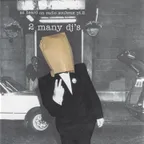
As Heard on Radio Soulwax, Pt. 2
45 tracks in 60 continuous minutes. The mashup-album that invents a format and wins a licensing battle. The object rather than the song.
Diamonds for Her (feat. Kenny Norris)
Second single from The Player. Kenny Norris's voice deeper, funk bass forward — the guest-voice device confirms itself. The signature isn't Hoffman's voice, it's the gesture.
Fanny Ardant et moi
The first hit, the founding manifesto. An imaginary everyday life with an actress as song architecture — the citation-process in its purest state.
The Sound of Violence
Rock riff grafted onto house, Steve Edwards's voice at the centre. Proof that a studio can absorb a song without betraying its groove.
Lady Brown (feat. Cise Starr)
The anchor of Metaphorical Music. Sample from Luiz Bonfá (The Shade of the Mango Tree), classical guitar loop held over three minutes, Cise Starr of CYNE on top. The founding Nujabes pattern — 30 million Spotify streams, day one of the doctrine.
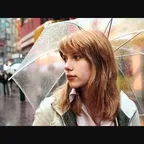
Alone in Kyoto
A track-bridge between two bodies of work. Written for Sofia Coppola's Lost in Translation, placed as Talkie Walkie's outro. Place becomes emotion.
Battlecry (feat. Shing02)
Opening theme of the anime Samurai Champloo (Shinichirō Watanabe, 2004–2005). The beginning of the Nujabes / Shing02 collaboration that leads to Luv(sic) Pt 3. The track through which the majority of the Western audience discovered Jun Seba — via Adult Swim broadcast (Cartoon Network, May 2005). Punchier drum kit than usual, loop-architecture intact.
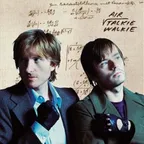
Cherry Blossom Girl
Three and a half minutes of perfect pop. The balance point where songwriting, instrumentation and production align effortlessly.

La Ritournelle
Seven minutes, four chords, Tony Allen on drums, a floating deep voice. La Ritournelle is Tellier's most celebrated track — and the simplest in its setup.
Le Baiser Modiano
The literary citation elevated to the adjective. Modiano is no longer a subject — he is a sentimental texture, a way of kissing.
NY Excuse
Dance-punk that takes its title literally: the track was written so a record label would fly Stephen Dewaele to New York, where Nancy Whang (LCD Soundsystem) was waiting.
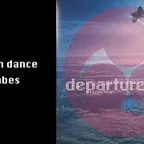
Aruarian Dance
Three minutes, a Laurindo Almeida classical-guitar loop held like a mantra, restrained MPC drum kit. No verse, no featuring. The Nujabes gesture in its purest state — and the canonical track of the lo-fi hip-hop that followed.
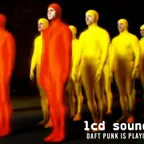
Daft Punk Is Playing at My House
3'47" of TR-808 and spoken singing. The literal bridge track between New York and Paris — two projects seeking to make something new from something old, in the same year.
E Talking (Nite Version)
Self-remix of Any Minute Now, Nancy Whang (LCD Soundsystem) vocal added. #27 UK charts — the Dewaeles' biggest single, manifesto of the Nite Version format.
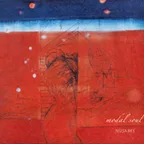
Feather (feat. Cise Starr & Akin)
First track of Modal Soul — the opener that sets the album's tone. Cise Starr on melodic lead vocal, Akin on counter-melody, a soft loop and a restrained MPC drum kit. Neither dark nor euphoric: just tender. Over 50 million Spotify streams, one of Nujabes' most-played tracks.
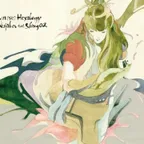
Luv(sic) Pt 3 (feat. Shing02)
Philosophical climax of the Luv(sic) series begun in 2001. Aki Takase loop, Shing02's bilingual text on the commodification of hip-hop and the duty of tribute. The meta-track: it says what Nujabes does.

Toop Toop
Dominant bass, pitched voice, rhythmic pattern cut to the bone. A lesson in less-is-more in an era saturated with electro maximalism.
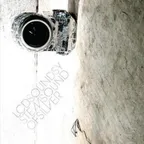
All My Friends
7'37" of confession about ageing. The piano ostinato that never lets go, the voice that holds what it has to say. The summit of the anti-charisma permanence.
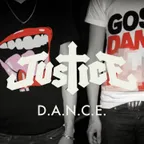
D.A.N.C.E.
A children's choir, a Michael Jackson gesture-list, a near-classical melody over an electro-disco kick. The track that made Justice simultaneously club and pop.
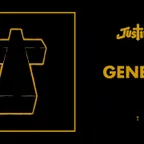
Genesis
3'54" of electro-classical music without a single voice. The saturated harpsichord that opens the album — sonic manifesto before the first word.
Divine
Produced by Guy-Manuel de Homem-Christo, built on the Beach Boys and Giorgio Moroder, sent to Eurovision 2008 in English. Divine is the track where Tellier goes international — and controversial.

Le Grand Amour
Piano ostinato, near-spoken voice, text on the ordinary duration of a love. The piano-as-illustration in its most stripped-back form.
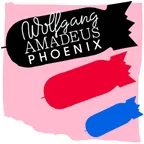
1901
The absolute pivot hit. Phoenix's irreproachable pop mechanism at peak efficacy — without ever betraying itself.
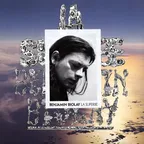
La Superbe
Title track of the 2009 masterpiece. A faux pas-de-deux between resignation and grace, signed the same year as the divorce from Chiara Mastroianni.
Lisztomania
The opening single of Wolfgang Amadeus Phoenix. European Romantic vocabulary, 21st-century indie pop, and the viral origin of a decade of fan-edits.
Profite
Duet with Vanessa Paradis on La Superbe. A whispered carpe diem in two voices, written by a man who just divorced for a woman who is just divorcing.
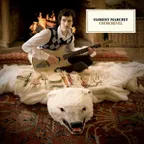
Roissy
Duet with Jane Birkin. A banal separation narrated by two cracked voices that cross without ever meeting.
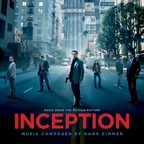
Time
4 minutes 35. Four chords in A minor, never modified, repeated indefinitely with progressive accumulation of instrumental layers. The climax is structural, not harmonic. The most copied formula in post-2010 trailer music.
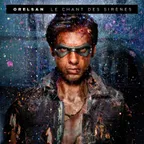
Suicide social
Seven minutes. Orelsan attacks every French social category over a Skread looped beat. Inspired by Edward Norton's harangue in Spike Lee's 25th Hour. The thesis track.

Get Lucky (feat. Pharrell Williams, Nile Rodgers)
Four minutes, a guitar loop played live by Nile Rodgers, a Pharrell Williams chorus. Number one in 32 countries. French loop-discipline carried to the mainstream pop format without a single capitulation.
Giorgio by Moroder
Nine minutes. Giorgio Moroder narrates the night he invented electronic disco; then Daft Punk reply by doing exactly what he invented. The meta-track of the body of work — tribute becomes the structure itself.

Le lac
The pivot track of the entire career. Simple folk, a refrain that rises without an overloaded climax — the Doré formula in its purest state.
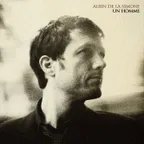
Un homme
Autobiographical portrait in pure piano-voice. The less there is, the more precise it becomes. The 2003 gesture carried to its limit ten years later.
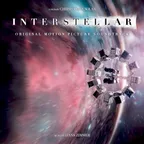
Cornfield Chase
2 minutes 11. Church organ, piano, arpeggios in additive succession. Glassian minimalist structure. Composed without seeing the film, from a Nolan letter about fatherhood. The Nolan-Zimmer collaboration at its experimental extreme.

Coco câline
The danceable single where the androgynous voice is most audible. Folk-electro pop without altering the signature — the Doré formula in its most expansive register.
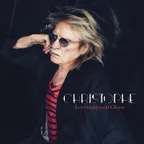
Tangerine
Synthetic drone, falsetto voice intact at 70, Alan Vega as presence. Open structure with no chorus — Christophe steps outside pop while remaining pop.
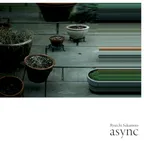
async
Six minutes. A loop that drifts slightly with each pass. Asynchronous time as musical thesis. Permanent 2 at its most precise statement: the consciousness of death translated into cyclical structure.
Basique
The 2017 monster hit. Three minutes in single-fixed-shot, 'tout est dit' chorus, observation of adult daily life. The track that consecrates Orelsan as radio standard without diluting him.
Is It Always Binary
Single from From Deewee. Bright synth lead, hammered live drums, slogan-chorus voice. The track that makes the continuous album readable as a single.

Tout va bien
The anxiety track of La fête est finie. Skread + Stromae production, video shot in Kiev, ironic-reassuring chorus. Adult self-deprecation applied to contemporary anxiety.
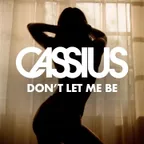
Don't Let Me Be
Owlle's voice on an ambient-house pad, open filter, no crescendo. Inverted inverse of Feeling for You — same grammar, opposite effect.
Comment est ta peine ?
The post-lockdown summer hit of 2020. A simple question as title, twenty million streams, two Victoires de la Musique 2021.

Billie (loving arms)
The trilogy's radio single. Billie Marten samples covering Billie Ray Martin, house build that opens Fred again.. to the wide audience without diluting the method.
L'odeur de l'essence
The political lead single of Civilisation. 2 min 30 on climate, polarisation, fragmentation. Released 17 November 2021, media debate two days later, 2022 Original Song Victoire.
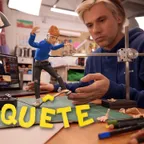
La Quête
The melodic single from Civilisation. Search for meaning, more sung chorus, restrained beat. Civilisation's radio accessibility after the political shock of L'odeur de l'essence.
Marea (we've lost dancing)
The trilogy's manifesto. Sample of a Boiler Room speech by The Blessed Madonna in March 2020 — 'we've lost dancing' — laid on a house pad as the effort to find what was lost.

De justesse
Four ages, four deaths narrowly avoided, and a harmony that passes close by without ever resolving.
Delilah (pull me out of this)
The track that speaks of a panic attack in a club, sample of Delilah Montagu's kitchen-live of Lost Keys. The trilogy closes on its most emotional piece.
Freddie Mercury
7'15 of talk-singing on upright piano. Air's Virgin Suicides transposed to the living room. The track does not build toward a climax — it lasts.
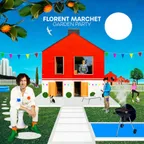
Paris-Nice
A paternal rejection embedded in the same flat register as a herbal tea and a redone parquet floor. Nicolas Mathieu in song form.

Rumble
The 2023 off-trilogy hit, triple-credit Skrillex / Fred again.. / Flowdan. Dubstep, UK grime, global club beat — the track that consecrates Fred mainstream.
adore u
The Ten Days opener, first long release post-trilogy. Sampled Obongjayar voice, restrained club beat, assumed shift toward song without giving up the club.
La femme d'argent
Seven instrumental minutes that open Moon Safari and the entire Air discography. The sonic matrix in its purest form.
Sexy Boy
Three elements — vocoder, Mini-Moog, Höfner bass — and a grammar born in one stroke. The track that introduced Air to the world.
Playground Love
A saxophone solo that floats, two held chords, Thomas Mars's voice that never pushes. The track that will invent, twenty years later, the matrix for Freddie Mercury.
Alone in Kyoto
A track-bridge between two bodies of work. Written for Sofia Coppola's Lost in Translation, placed as Talkie Walkie's outro. Place becomes emotion.
Cherry Blossom Girl
Three and a half minutes of perfect pop. The balance point where songwriting, instrumentation and production align effortlessly.
Gaby oh Gaby
The voice is born here. Nasal-deep phrasing over a rock riff, deliberately opaque Bergman text. The track that changed French song in 1979.
La Nuit je mens
The maturity masterwork. Fauque's text at its maximum fragmentation, Bashung's voice at its deepest in the arc, Fambuena's production that lets everything breathe. Victoires Song of the Year 1999.
Le Grand Amour
Piano ostinato, near-spoken voice, text on the ordinary duration of a love. The piano-as-illustration in its most stripped-back form.
Un homme
Autobiographical portrait in pure piano-voice. The less there is, the more precise it becomes. The 2003 gesture carried to its limit ten years later.
Get Me Away from Here, I'm Dying
3'19 of concise pop song. Classic verse-chorus structure. A girl escaping a party into a book. Murdoch's formula piece — all of B&S in three minutes.
The Boy with the Arab Strap
The grooviest in the catalogue. A nocturnal Glasgow, multiple voices, a discreet folk-disco groove. The chamber permanence holds even when B&S attempts the dance floor.
La Superbe
Title track of the 2009 masterpiece. A faux pas-de-deux between resignation and grace, signed the same year as the divorce from Chiara Mastroianni.
Profite
Duet with Vanessa Paradis on La Superbe. A whispered carpe diem in two voices, written by a man who just divorced for a woman who is just divorcing.
Comment est ta peine ?
The post-lockdown summer hit of 2020. A simple question as title, twenty million streams, two Victoires de la Musique 2021.
Comme à la radio
8'04 of spoken-word over Art Ensemble of Chicago free jazz. Voice as percussion among percussions. The piece that fixes the Fontaine grammar for sixty years.
Kékéland
Brigitte Fontaine and -M- in tandem. The permanence of voice-declamation in a 2001 pop-chanson context. The track of the comeback.
Feeling for You
Slowed soul sample, three cutoff steps, sidechain pump. Exemplary of the 1999 filtered grammar — the French Touch as emotion.
The Sound of Violence
Rock riff grafted onto house, Steve Edwards's voice at the centre. Proof that a studio can absorb a song without betraying its groove.
Toop Toop
Dominant bass, pitched voice, rhythmic pattern cut to the bone. A lesson in less-is-more in an era saturated with electro maximalism.
Don't Let Me Be
Owlle's voice on an ambient-house pad, open filter, no crescendo. Inverted inverse of Feeling for You — same grammar, opposite effect.
Les Mots bleus
Amber falsetto, Jarre lyrics, Beach Boys harmonics. The track that proves the renaissance — pop-3-minute format, entirely new material.
Tangerine
Synthetic drone, falsetto voice intact at 70, Alan Vega as presence. Open structure with no chorus — Christophe steps outside pop while remaining pop.
Da Funk
The single that took Daft Punk from Glasgow Soma to global Virgin. Five synth notes filtered over a funky kick, and a dog-headed character wandering through Manhattan, filmed by Spike Jonze.
Around the World
Seven minutes, one loop, twenty choreographed ostinatos. Loop discipline at its founding state — Michel Gondry makes visible what sound alone imposes.
One More Time
Vocoded disco-house and a liberated climax — Romanthony's voice held by the robot, then released only once. Daft Punk at the summit of pop discipline.
Harder, Better, Faster, Stronger
Four verbs, four adjectives, twenty-one permutations. An Edwin Birdsong loop, a vocoded voice turned into concrete poetry. The grammar of future Kanye West, six years before Stronger.
Get Lucky (feat. Pharrell Williams, Nile Rodgers)
Four minutes, a guitar loop played live by Nile Rodgers, a Pharrell Williams chorus. Number one in 32 countries. French loop-discipline carried to the mainstream pop format without a single capitulation.
Giorgio by Moroder
Nine minutes. Giorgio Moroder narrates the night he invented electronic disco; then Daft Punk reply by doing exactly what he invented. The meta-track of the body of work — tribute becomes the structure itself.
Prix Choc
The opener of *Super Discount*. Square filter house, open loop, minimal structure. The track that fixes the Solid label grammar — nonchalant French house without a vocal signature.
Am I Wrong
Stevie Wonder sample (*I Was Made to Love Her*) filtered, dubbed, vocals chopped to a silhouette. French house transforming American soul — the sample as raw material, not as citation.
Roissy
Duet with Jane Birkin. A banal separation narrated by two cracked voices that cross without ever meeting.
De justesse
Four ages, four deaths narrowly avoided, and a harmony that passes close by without ever resolving.
Freddie Mercury
7'15 of talk-singing on upright piano. Air's Virgin Suicides transposed to the living room. The track does not build toward a climax — it lasts.
Paris-Nice
A paternal rejection embedded in the same flat register as a herbal tea and a redone parquet floor. Nicolas Mathieu in song form.
Billie (loving arms)
The trilogy's radio single. Billie Marten samples covering Billie Ray Martin, house build that opens Fred again.. to the wide audience without diluting the method.
Marea (we've lost dancing)
The trilogy's manifesto. Sample of a Boiler Room speech by The Blessed Madonna in March 2020 — 'we've lost dancing' — laid on a house pad as the effort to find what was lost.
Delilah (pull me out of this)
The track that speaks of a panic attack in a club, sample of Delilah Montagu's kitchen-live of Lost Keys. The trilogy closes on its most emotional piece.
Rumble
The 2023 off-trilogy hit, triple-credit Skrillex / Fred again.. / Flowdan. Dubstep, UK grime, global club beat — the track that consecrates Fred mainstream.
adore u
The Ten Days opener, first long release post-trilogy. Sampled Obongjayar voice, restrained club beat, assumed shift toward song without giving up the club.
Time
4 minutes 35. Four chords in A minor, never modified, repeated indefinitely with progressive accumulation of instrumental layers. The climax is structural, not harmonic. The most copied formula in post-2010 trailer music.
Cornfield Chase
2 minutes 11. Church organ, piano, arpeggios in additive succession. Glassian minimalist structure. Composed without seeing the film, from a Nolan letter about fatherhood. The Nolan-Zimmer collaboration at its experimental extreme.
Rydeen
The mechanism of world techno-pop. Composed by Yukihiro Takahashi, embodied by all of YMO — and notably by Hosono's synthetic bass, the invisible backbone of the most-played track in the YMO discography.
Sports Men
The maximum bifurcation point. False falsetto voice, angular Roland synthesisers, structure that refuses to resolve as a song. The moment Hosono takes off from YMO while retaining the electronic language but directing it towards concept-art-pop.
Je danse le Mia
Single #1 France in 1994. Michel Gondry video. George Benson sample. Marseille nostalgia from the 1970s–80s that becomes a national hit — the unlikely victory of suburban Marseille rap on the charts.
Demain c'est loin
9'04". Two verses with no chorus — Akhenaton then Shurik'n. No hook, no bridge. Ranked #1 in French rap. A text carved like a pharaonic inscription.
The Mononoke Theme
Low strings in ostinato, brass in accumulated crescendo, 3 minutes of orchestral texture before the theme enters. The minimalism permanent at symphonic scale — the Reich/Glass method applied to a hundred musicians.
One Summer's Day
Solo piano, A major, 2 minutes 19, binary A+B+A structure with no development. The benchmark piece of Hisaishi's melodic minimalism, performed in conservatories worldwide independently of the film.
Le lac
The pivot track of the entire career. Simple folk, a refrain that rises without an overloaded climax — the Doré formula in its purest state.
Coco câline
The danceable single where the androgynous voice is most audible. Folk-electro pop without altering the signature — the Doré formula in its most expansive register.
D.A.N.C.E.
A children's choir, a Michael Jackson gesture-list, a near-classical melody over an electro-disco kick. The track that made Justice simultaneously club and pop.
Genesis
3'54" of electro-classical music without a single voice. The saturated harpsichord that opens the album — sonic manifesto before the first word.
Crispy Bacon
Improbable techno hit of 1997, named on a cassette box in five seconds, video by Quentin Dupieux. Jeff Mills will find the title stupid; Garnier will keep it.
The Man with the Red Face
Twelve minutes of techno-jazz, a saxophonist pushed to the brink, a title that literally names the colour of the soloist's face. The Garnier signature track.
Daft Punk Is Playing at My House
3'47" of TR-808 and spoken singing. The literal bridge track between New York and Paris — two projects seeking to make something new from something old, in the same year.
All My Friends
7'37" of confession about ageing. The piano ostinato that never lets go, the voice that holds what it has to say. The summit of the anti-charisma permanence.
Unfinished Sympathy
The founding track of trip-hop. Wally Badarou sample, Will Malone live strings, Shara Nelson vocals, West Pico Boulevard single-take. The entire genre in four minutes fifteen.
Teardrop
The apex of trip-hop. Looping harpsichord, suspended beat, Liz Fraser of the Cocteau Twins. House M.D. theme (2004-2012). The most-listened track in the discography — and the strangest.
Caroline
The card-game sustained metaphor held across the entire track — ace of clubs, queen of hearts, the jack. Permanence 1 in its chemically pure form, in 1991.
Nouveau Western
The American western transposed to Saint-Denis. Gainsbourg/Bardot sample, critique of cultural imperialism without invective. The sustained method in its geopolitical reach.
Lady Brown (feat. Cise Starr)
The anchor of Metaphorical Music. Sample from Luiz Bonfá (The Shade of the Mango Tree), classical guitar loop held over three minutes, Cise Starr of CYNE on top. The founding Nujabes pattern — 30 million Spotify streams, day one of the doctrine.
Battlecry (feat. Shing02)
Opening theme of the anime Samurai Champloo (Shinichirō Watanabe, 2004–2005). The beginning of the Nujabes / Shing02 collaboration that leads to Luv(sic) Pt 3. The track through which the majority of the Western audience discovered Jun Seba — via Adult Swim broadcast (Cartoon Network, May 2005). Punchier drum kit than usual, loop-architecture intact.
Aruarian Dance
Three minutes, a Laurindo Almeida classical-guitar loop held like a mantra, restrained MPC drum kit. No verse, no featuring. The Nujabes gesture in its purest state — and the canonical track of the lo-fi hip-hop that followed.
Feather (feat. Cise Starr & Akin)
First track of Modal Soul — the opener that sets the album's tone. Cise Starr on melodic lead vocal, Akin on counter-melody, a soft loop and a restrained MPC drum kit. Neither dark nor euphoric: just tender. Over 50 million Spotify streams, one of Nujabes' most-played tracks.
Luv(sic) Pt 3 (feat. Shing02)
Philosophical climax of the Luv(sic) series begun in 2001. Aki Takase loop, Shing02's bilingual text on the commodification of hip-hop and the duty of tribute. The meta-track: it says what Nujabes does.
Suicide social
Seven minutes. Orelsan attacks every French social category over a Skread looped beat. Inspired by Edward Norton's harangue in Spike Lee's 25th Hour. The thesis track.
Basique
The 2017 monster hit. Three minutes in single-fixed-shot, 'tout est dit' chorus, observation of adult daily life. The track that consecrates Orelsan as radio standard without diluting him.
Tout va bien
The anxiety track of La fête est finie. Skread + Stromae production, video shot in Kiev, ironic-reassuring chorus. Adult self-deprecation applied to contemporary anxiety.
L'odeur de l'essence
The political lead single of Civilisation. 2 min 30 on climate, polarisation, fragmentation. Released 17 November 2021, media debate two days later, 2022 Original Song Victoire.
La Quête
The melodic single from Civilisation. Search for meaning, more sung chorus, restrained beat. Civilisation's radio accessibility after the political shock of L'odeur de l'essence.
Baby Love Child
Sparse ballad, Nomiya's bare voice, minimal arrangement — covered in Futurama (2002), oblique diffusion of Japanese pop toward America.
Sweet Soul Revue
Break-beat soul, Bacharach strings, Nomiya's spoken-sung voice — the single that exported Pizzicato Five: Kao campaign 1993, then Jury Duty soundtrack 1995.
Merry Christmas, Mr. Lawrence
The Japanese minor pentatonic scale harmonised in the Western manner. A six-bar melody that became a global classic. The most precise East-West cultural bridge of 20th-century music.
async
Six minutes. A loop that drifts slightly with each pass. Asynchronous time as musical thesis. Permanent 2 at its most precise statement: the consciousness of death translated into cyclical structure.
La Ritournelle
Seven minutes, four chords, Tony Allen on drums, a floating deep voice. La Ritournelle is Tellier's most celebrated track — and the simplest in its setup.
Divine
Produced by Guy-Manuel de Homem-Christo, built on the Beach Boys and Giorgio Moroder, sent to Eurovision 2008 in English. Divine is the track where Tellier goes international — and controversial.
Too Many DJs
A pop-rock song that comments on DJ culture from a rock album. Four years later, the title will become the name of the mashup duo — involuntary prophecy.
As Heard on Radio Soulwax, Pt. 2
45 tracks in 60 continuous minutes. The mashup-album that invents a format and wins a licensing battle. The object rather than the song.
NY Excuse
Dance-punk that takes its title literally: the track was written so a record label would fly Stephen Dewaele to New York, where Nancy Whang (LCD Soundsystem) was waiting.
E Talking (Nite Version)
Self-remix of Any Minute Now, Nancy Whang (LCD Soundsystem) vocal added. #27 UK charts — the Dewaeles' biggest single, manifesto of the Nite Version format.
Is It Always Binary
Single from From Deewee. Bright synth lead, hammered live drums, slogan-chorus voice. The track that makes the continuous album readable as a single.
Starlight (feat. Mani Hoffman)
Filtered disco sample, replayed bass, Mani Hoffman's vocals captured in a bathroom. The second-wave French Touch canon — pop as Trojan horse.
Diamonds for Her (feat. Kenny Norris)
Second single from The Player. Kenny Norris's voice deeper, funk bass forward — the guest-voice device confirms itself. The signature isn't Hoffman's voice, it's the gesture.
Fanny Ardant et moi
The first hit, the founding manifesto. An imaginary everyday life with an actress as song architecture — the citation-process in its purest state.
Le Baiser Modiano
The literary citation elevated to the adjective. Modiano is no longer a subject — he is a sentimental texture, a way of kissing.