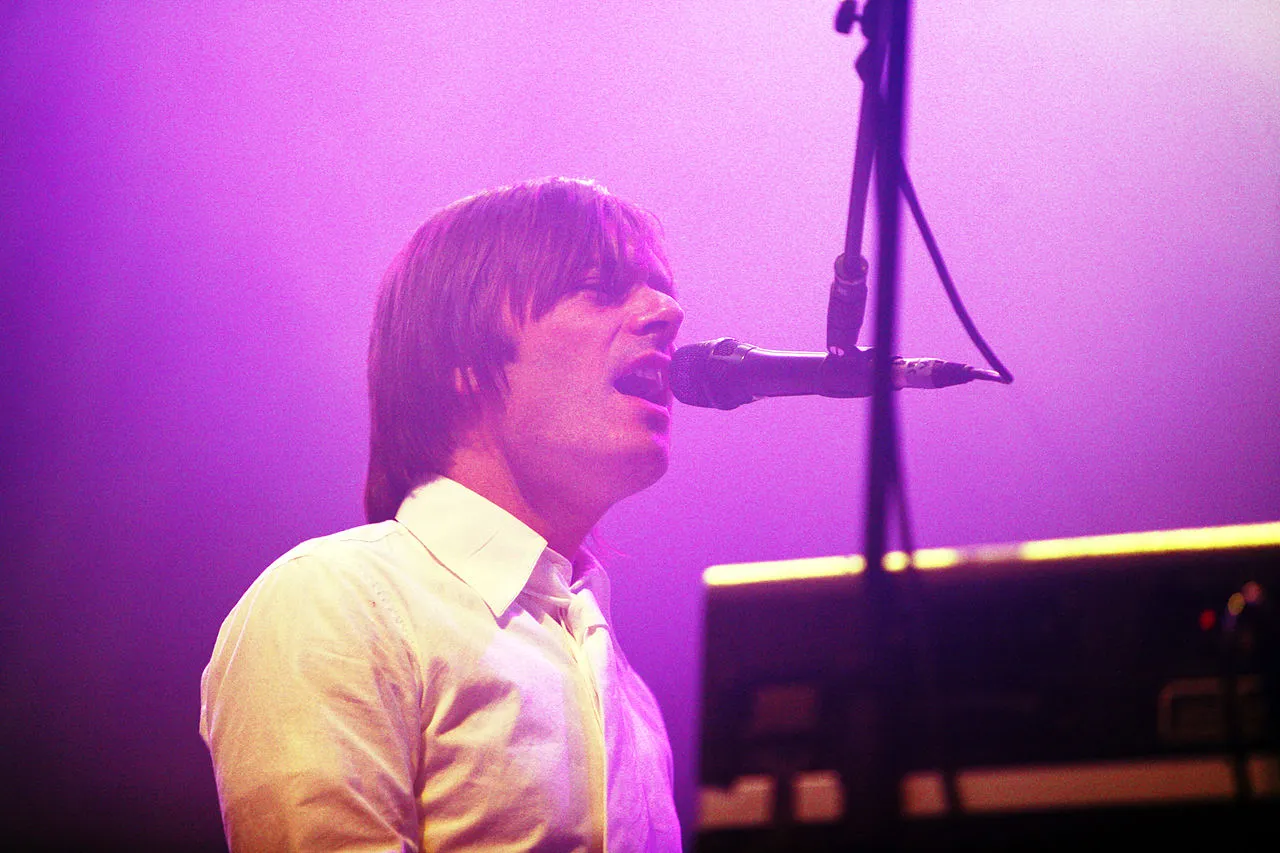
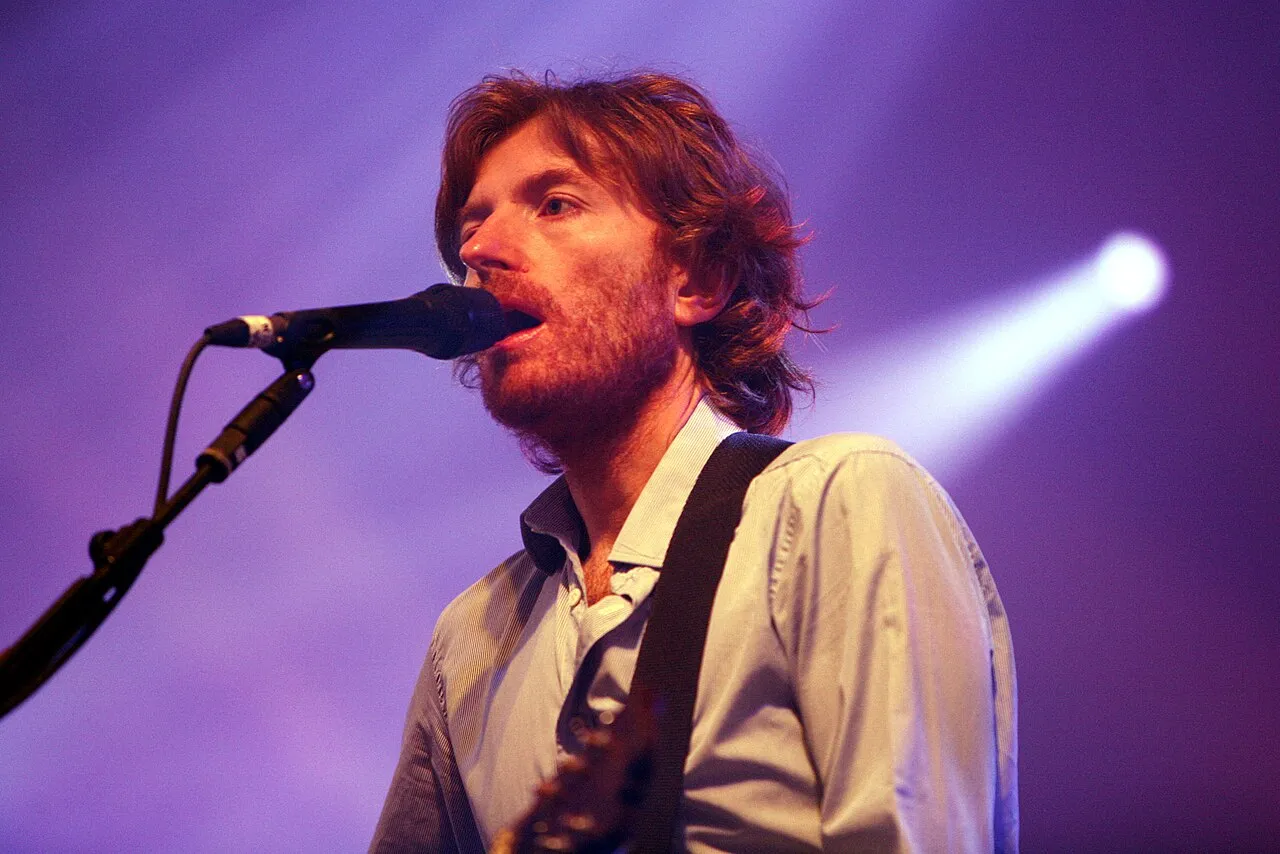
Air
Versailles — Chamber-electronica
Eleven years, five albums and one soundtrack that set a grammar — a chamber-electronica where the instrumental carries the narrative and vintage timbres tell of a future that already feels like a memory. A body of work that shaped a generation, all the way down to Florent Marchet's Garden Party twenty years later.
Why a timbre invented an era
Air did not write the dance-floor French Touch of Daft Punk or Cassius. Air wrote the other one. The one you listen to on a Sunday, the window open onto a quiet street, coffee going cold. That grammar — French chamber-electronica — came out of their Versailles studio in 1998 and has not left pop music since.
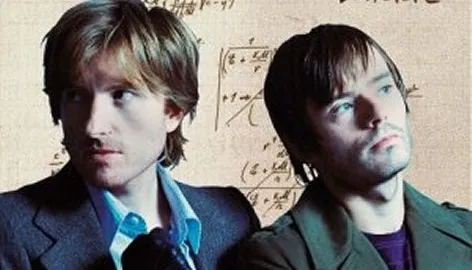
The duo formed by Nicolas Godin and Jean-Benoît Dunckel (two former students of architecture and mathematics, Parisians who adopted Versailles) set down, across five albums, a signature you recognize within two bars. The imitators are many; none of them fools anyone. It isn’t a formula, it’s a crease — shaped by the friction of two stubborn constraints.
The six records that follow show how these two constants play out — from the matrix masterpiece (Moon Safari) to the score turned into an object-album (Virgin Suicides), from the experimental turn (10 000 Hz Legend) to the mastered pop return (Talkie Walkie), from the orchestral ambition (Pocket Symphony) to the studio retreat (Love 2). Eleven years, and then a chosen silence.


◆ Musicological studies
The work’s tracks examined closely — device, structure, procedure, lineage, reading under the permanences.
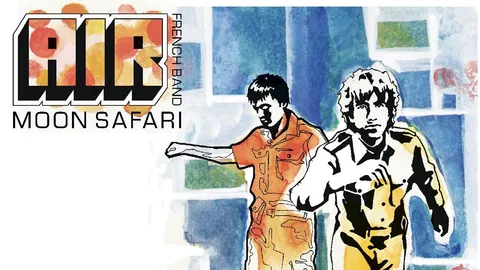

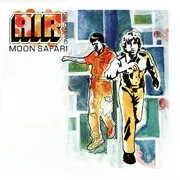
Moon Safari
The matrix. The entire vocabulary is invented in one stroke.
First album from the duo. Versailles, two kids from the classe préparatoire science track turned musicians, releasing a record that invents a timbre — the one that will define the “chamber” wing of the French Touch, as opposed to the club French Touch (Daft Punk, Cassius).
The setup
Mini-Moog, Wurlitzer, Vocoder, Höfner bass, Mellotron. Not a single digital plug-in: all analog, in Godin and Dunckel’s personal studio. For the voice, they invite Beth Hirsch, an American passing through Paris — voice laid down, almost spoken, never up front. Success is immediate: Sexy Boy explodes as a single, the album becomes one of the best-selling of the French Touch.
"Air invented a music that hadn’t been heard since Vangelis and Jean-Jacques Perrey — a future that already sounded like a memory.”— paraphrase of several period critics
The grammar set down for twenty years
Everything is here: the voice that is only a timbre, the instrumental that carries the narration, the analog synth charged with nostalgia, the medium tempo, the suspended harmony that does not resolve. The four albums to follow will only explore corners of this room, without ever moving out.
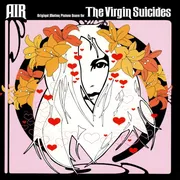
The Virgin Suicides
The score that becomes an object-album. Adolescent suspended time.
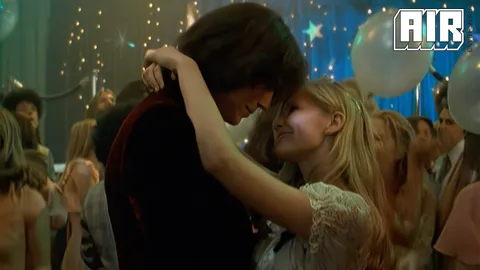
Not a studio album. The soundtrack to Sofia Coppola’s first film, released a year and a half after Moon Safari. A commission that becomes an object in its own right — a record listened to as an album, cited as an album, analyzed as an album.
The production context
Coppola, a Moon Safari fan, contacts Air for her first directorial work — the adaptation of Jeffrey Eugenides’s novel. The duo locks themselves in with a single instruction: suspended time. No movement, no dramatic progression, no climax — the opposite of what a Hollywood score usually demands. Air writes thirteen tracks, including a sung single with Thomas Mars (frontman of Phoenix, future husband of Coppola) under the pseudonym Gordon Tracks: Playground Love.
"A soundtrack that does not illustrate the film, it doubles it — like an extra layer of memory.”— Sight & Sound, paraphrase
The invention of an atmosphere
Fender Rhodes, Mellotron, harpsichord, synthetic strings, alto saxophone solo. No marked beat, no bass up front, no crescendo. The effect is neurological before it is musical: the brain settles into a stasis that exactly renders the sensation of the novel and the film — adolescence as a time that does not pass.
The Coppola/Mars marriage in 2011 (they met on the shoot) closes the biographical loop. But it is the musical object that remains: a record still cited as a peak of the French “chamber-electronica” grammar.
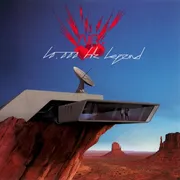
10 000 Hz Legend
The pivot. Heavier, more experimental, harder to love.
The second solo album, after Moon Safari’s massive success and Virgin Suicides’s consecration. Air refuses to repeat the formula. The result divides — it is the least consensus album of their discography, the most experimental, the most difficult.
The refusal of consensus
Aggressive vocoders, heavy bass lines, longer structures, unusual guests (Beck on The Vagabond, Jason Falkner on How Does It Make You Feel). Where Moon Safari floated, 10 000 Hz Legend presses down. Where Virgin Suicides suspended, this record weighs. Critical reception is mixed — Pitchfork pans, Les Inrocks support half-heartedly. The mainstream public doesn’t buy.
"The album where Air refused to be Air. Misunderstood on release, re-evaluated since as one of their most ambitious.”— paraphrase, retrospective reading
Why this album matters
Without 10 000 Hz Legend, Talkie Walkie would not have been a return — it would have been a sequel. The 2001 gap conditions the “return to pop” of 2004: the duo has tested the limits of its own grammar, pushed it to rupture, and can now come back to the form with authority.
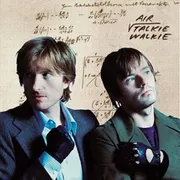
Talkie Walkie
The return to form. Pop, compact, perfectly written.
Third solo album. After the experimental detour of 10 000 Hz Legend, Air returns to pop — but with a new authority. Talkie Walkie is the album that reconciles everything: Moon Safari fans find their duo again, 10 000 Hz Legend defenders recognize the matured writing.
The compact writing
Eleven tracks, 43 minutes — the shortest and densest album of the discography. No filler. Cherry Blossom Girl, Alpha Beta Gaga, Surfing on a Rocket: three singles that chain together in a grammar brought back to essentials. Production entrusted to Nigel Godrich (Radiohead), who helps structure what was until then organized by instinct.
"The album where Air stops inventing in order to settle in. Not a compromise: a maturity.”— paraphrase, 2004 review
The stabilized signature
Talkie Walkie marks the moment the Air grammar becomes a standard. The songs gain in melodic clarity without losing their instrumental thickness. It’s the album you lend to someone who doesn’t know Air — the synthesizing one.

Pocket Symphony
The orchestral ambition. Quieter, more instrumental, more settled.
Fourth studio album. Three years after Talkie Walkie, Air pushes the grammar toward the orchestral chamber. More present strings, koto, shamisen (Godin learned these instruments), more written arrangements. Two notable vocal guests: Jarvis Cocker (Pulp) on One Hell of a Party, Neil Hannon (Divine Comedy) on Somewhere Between Waking and Sleeping.
The tone
The duo’s quietest album. No hit, no obvious single, no track that stands out. Pocket Symphony lets itself be heard as a suite, in order, without haste. It is almost a return to the logic of Virgin Suicides — a record that suspends time rather than punctuating it.
"An album not listened to for its tracks, but for its atmosphere. That is exactly the project.”— paraphrase, 2007 review
The constants pushed toward the written
Where the previous albums built their textures by successive studio layers, Pocket Symphony gives the impression of arrangements scored in advance. The strings are no longer an effect — they are a composition. It is the moment Air comes closest to what would be a contemporary chamber music.
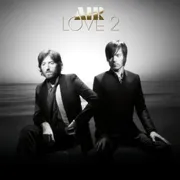
Love 2
The weary distillation. The final studio album. All instrumental, or nearly so.
Fifth and final studio album. Recorded at Atlas (Godin and Dunckel’s personal Paris studio) after their split from Source/EMI. No more major label, no more celebrity vocal guest. Air returns home to Air.
The withdrawal
No obvious single, no marketing campaign, no massive tour. Sing Sang Sung is the album’s only radio track, and it already sounds like a self-reference. The rest is instrumental, very instrumental — the writing returns to the grammar laid down on Moon Safari, but without the freshness of invention. It is an album of adult authors speaking their own language.
"The album where Air closes in on itself. Not a failure, not a fall — a chosen withdrawal.”— paraphrase, 2009 review
The end of the studio arc
After Love 2, Air will not release another studio album. Three projects will follow — the restored Méliès Voyage dans la Lune soundtrack (2012), a sound installation for a museum (Music for Museum, 2014), occasional collaborations. But the album form is over. Eleven years, six records, and the decision to stop — a rare act in electronic pop.
After Love 2: studio silence. Eleven years, six records, a grammar offered to the world, and an adult decision to stop when you have finished saying what you had to say.
A body of work in three movements
Eleven years of studio career, six records, a silence held since 2009. The trajectory falls into three clear movements — each movement testing a different dimension of the grammar laid down all at once in 1998.
What never changes
Two constants run across the three movements. The instrumental carries everything — the voice is never the engine. Vintage timbre speaks of today — Mini-Moog and Mellotron tell of a present that resembles a 1970s future that never arrived. These two gestures, set down in 1998, have not moved an inch in eleven years.
The legacy that isn’t finished
Air’s influence on global electronic pop is incalculable. Sampha’s minimalism, Bonobo’s acoustic electronica, Phoenix’s chamber-pop (whose frontman Thomas Mars sings on Playground Love), and — twenty years later — the upright-piano-and-voice of Florent Marchet’s Garden Party, where the Virgin Suicides soundtrack is explicitly cited as the matrix for the track Freddie Mercury.
A body of work short by accident, long by effect — still writing other works long after its silence.
The map
Six records orbiting the two constants. Click an album to see how it plays them out.
Vintage timbre: Mini-Moog, Wurlitzer, vocoder, Höfner bass — fully analog.
Position: the matrix. The whole vocabulary invented at once.
- La femme d'argent Seven instrumental minutes that open Moon Safari and the entire Air discography. The sonic matrix in its purest form. Read the analysis →
- Sexy Boy Three elements — vocoder, Mini-Moog, Höfner bass — and a grammar born in one stroke. The track that introduced Air to the world. Read the analysis →
Vintage timbre: organ, wah guitar, 70s strings.
Position: the grammar holds outside the song-album. Standalone object-record.
Vintage timbre: same palette pushed toward saturation.
Position: experimental rupture. Testing the limits.
Vintage timbre: Nigel Godrich production, more acoustic.
Position: maturity. Return to pop song.
- Alone in Kyoto A track-bridge between two bodies of work. Written for Sofia Coppola's Lost in Translation, placed as Talkie Walkie's outro. Place becomes emotion. Read the analysis →
- Cherry Blossom Girl Three and a half minutes of perfect pop. The balance point where songwriting, instrumentation and production align effortlessly. Read the analysis →
Vintage timbre: shamisen, koto, fortepiano — orchestral ambition.
Position: goldsmithing. Arranger's precision.
Vintage timbre: same palette, stripped-back mix.
Position: retreat. Last studio album; chosen silence after.