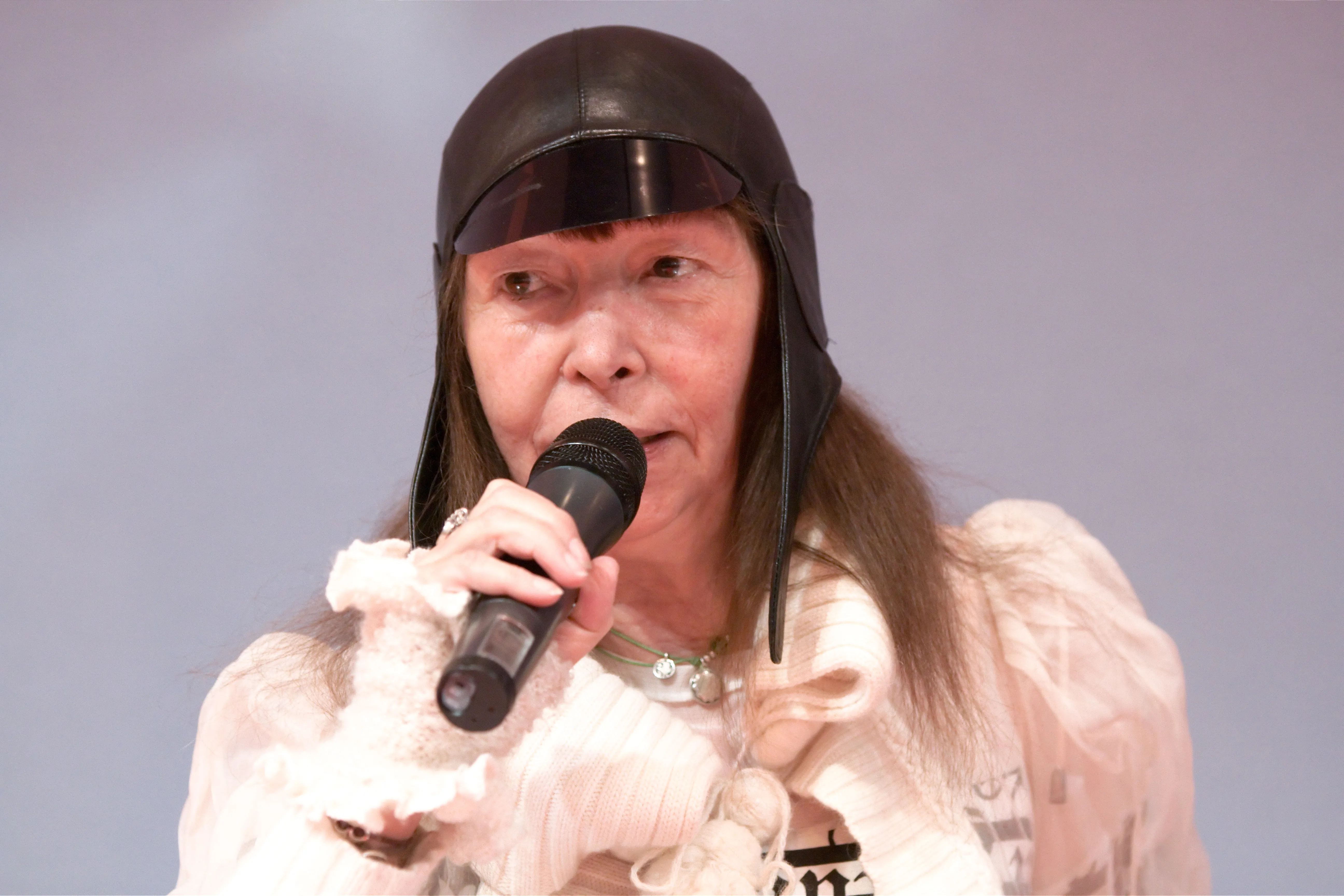
Brigitte Fontaine
Paris — Avant-garde chanson
Sixty years of uncompromising radicalism without concession, without a return to the center. Brigitte Fontaine does not sing in the conventional sense — she declaims, chants, whispers, cries. The voice is treated as a percussive instrument, delivery as primary rhythm. From Comme à la radio with the Art Ensemble of Chicago (1969) to Kékéland with Sonic Youth and Noir Désir (2001) — the same grammar, always new materials.
Why sustained radicalism is a category of its own
Sixty years without concession. Not one album of commercial reconciliation, not one return to the centre, not a single song written to please a radio programmer. Brigitte Fontaine may be the most singular artist in French song — not because she invented something inaccessible, but because she held what she had invented.
She arrives in Paris in 1960, meets Higelin, performs in avant-garde theatres, signs with Saravah in 1968. That same year she establishes the foundations of her grammar: the declamatory voice, surrealist poetic text, acid humour. In 1969, with Areski Belkacem and the Art Ensemble of Chicago, she records Comme à la radio — absolute masterpiece, Grand Prix du Disque from the Académie Charles Cros. Then the relative silence of the 1980s. Then the comeback of Kékéland in 2001 at the age of 62 — gold record, collaborators Sonic Youth and Noir Désir. Then Terre neuve in 2020.
The editorial question is not “why Brigitte Fontaine?” but “why here?” Because in a collection covering hip-hop, electronic music and French Touch, Fontaine is the reminder that French song also has a radical branch — contemporary with American avant-gardes, as demanding as them, and yet anchored in the French language like nothing else.
The four albums that follow — Brigitte Fontaine est… folle ! (1968), Comme à la radio (1969), Brigitte Fontaine (1972), Kékéland (2001) — show how these two permanences traverse radically different sonic devices without ever bending to any of them.
One fragile bridge with other artists in this collection: Florent Marchet also has moments where speech replaces song (Freddie Mercury, 2022 — 7’15 of talk-over on upright piano). But where Marchet is naturalist and domestic, Fontaine is surrealist and transgressive. The bridge holds technically, not spiritually.


◆ Musicological studies
The work’s tracks examined closely — device, structure, procedure, lineage, reading under the permanences.
Brigitte Fontaine est... folle !
The founding grammar. Voice as object, text as autonomous score.
First true solo album. Recorded at Saravah, the independent label created by Pierre Barouh — the same label that would produce Comme à la radio the following year. Arranged by Jean-Claude Vannier, future architect of Gainsbourg and Birkin’s L’Enfant assassin des mouches.
The approach
Fontaine comes from the stage — Théâtre de l’Odéon, performances with Higelin — and this album is above all a theatrical gesture captured on record. The tone is declamatory, ironic, surrealist. The voice moves through melodies rather than holding them: this is not a singer interpreting songs, it is a reciter inhabiting a text.
The humour is acid, the relationship to popular culture distanced. La Perdrix invokes folk song only to deconstruct it. La Nuit est noire establishes a direct poetic surrealism, closer to Prévert than to Brassens.
“Fontaine sings with a radical irony unlike anything being made in France at that moment.”— specialized press, 1968
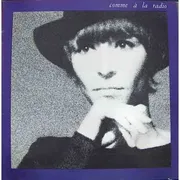
Comme à la radio
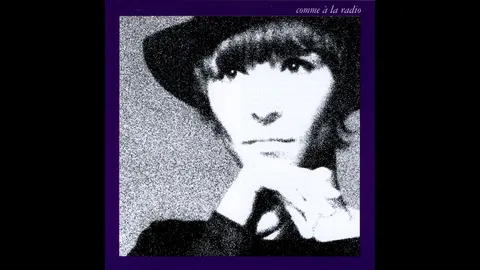
The absolute masterpiece. Spoken-word over free jazz. The encounter that fixes the grammar.
Recorded following a series of concerts at the Théâtre du Vieux-Colombier with Areski Belkacem and the full Art Ensemble of Chicago — Don Moye, Lester Bowie, Roscoe Mitchell, Joseph Jarman, Malachi Favors. Five musicians at the height of their powers, inventors of the most radical free jazz available in 1969. Produced by Pierre Barouh at Saravah.
The approach
Grand Prix du Disque, Académie Charles Cros, 1969. The centrepiece — the title track — runs 8 minutes and 4 seconds. Brigitte Fontaine delivers her text over Areski’s percussion and the Art Ensemble’s free brass. Not a conventionally sung note. The melodic line is the verbal delivery, the tonic accents of French transformed into rhythm.
This is an improbable encounter between French surrealist chanson and the most adventurous American free jazz. It should not hold together. It does, and this is precisely what makes the album an absolute reference.
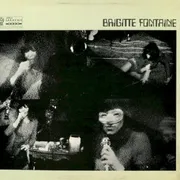
Brigitte Fontaine
The eternal return. Voice-declamation meets the orchestra without dissolving.
First self-titled album — a singular gesture: naming a record after yourself asserts that the work is the artist. Recorded with the orchestra of Jack Diéval, a French jazz pianist and discreet arranger who brings an unprecedented orchestral sophistication to the Fontaine corpus.
The approach
The album is often overlooked in retrospectives that jump directly from 1969 to 2001. This is a mistake. It documents something essential: Fontaine’s grammar can cohabit with a traditional orchestra without bending to the codes of mainstream French chanson. Declamation remains the central gesture. The strings do not illustrate the text — they carry it at a distance.
L’Éternel retour is a melancholic waltz — Fontaine speaks over three repeated chords where others would sing with a chorus. L’Amour sets spoken-word over dense post-Romantic orchestration. The cohabitation is real, without compromise.
Resistance through silence
Between 1973 and 1994, Brigitte Fontaine continues to exist artistically — L’Incendie (1974), Vous et Nous (1977) with Areski, Les Églantines sont peut-être formidables (1980) — but gradually fades from commercial visibility. The 1980s are nearly silent discographically.
This is not a crisis. Not an abandonment. It is something else: the refusal to make concessions in order to remain visible. The record market of the 1980s does not know where to place a woman who declaims rather than sings, who collaborates with African-American jazz musicians, who writes surrealist texts without a chorus. Fontaine does not yield — she waits.
The period is not a void but an active resistance. While mainstream French chanson manufactures smooth hits, Fontaine maintains a stage presence, continues working with Areski, and teaches by her very existence that it is possible to sustain a radical project over time without capitulation.
The return comes by an unexpected route: in the 1990s, Beck and Sonic Youth rediscover Comme à la radio (1969) and cite it as a founding reference. The rehabilitation comes from alternative America, not from France. Genre humain (1995) and Les Palaces (1997) begin the renaissance. And in 2001, Kékéland — with Sonic Youth themselves — closes the circle.
This crossing confirms Permanence 2: Fontaine does not seek collaboration with those who can make her visible. She waits for the right encounter, however long the wait.
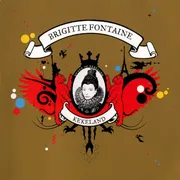
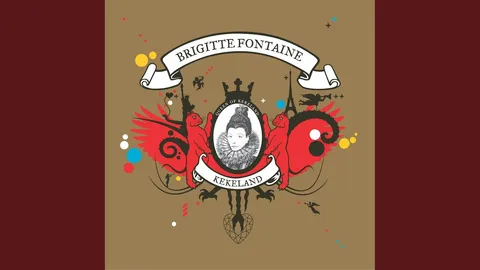
Kékéland
The improbable comeback. Gold record at 62. Radical collaboration across an entire generation.
Brigitte Fontaine is 62 in 2001. Thirty years after Comme à la radio, she signs to Virgin Records and records with the most improbable representatives of international alternative rock: -M- (Matthieu Chédid), Sonic Youth (Lee Ranaldo and Thurston Moore), Noir Désir (Bertrand Cantat), Archie Shepp, and always Areski Belkacem, her partner since 1969.
The approach
130,000 copies sold. Gold record. No. 10 on the French SNEP chart. Her first major commercial success. The paradox is absolute: the most radical artist of her generation becomes a commercial phenomenon at the age when most retire.
What holds the album together: Fontaine does not bend to her collaborators — she remains the centre. On every track, whatever the sonic material (rock, jazz, chanson, electronic), the voice-declamation is the primary gesture. Sonic Youth brings its dissonances, Noir Désir its urgency — but it is Fontaine one hears.
“Kékéland proves that the grammar invented in 1969 crosses genres, generations, labels and continents.”— press synthesis, 2001
A body of work in four movements
Viewed from a distance, Brigitte Fontaine’s discography reads as an undeviating trajectory. Four movements, two permanences that never vary, an artistic project identical to itself since 1968 — traversing opposing sonic materials as though their opposition did not exist.
What never changes
Two permanences traverse all four movements and never yield: speech before song and radical collaboration. The first: Fontaine declaims, chants, whispers — never a conventional chorus, never a melodic line sustained to please. The second: each album is an improbable encounter — the Art Ensemble of Chicago, Sonic Youth, Noir Désir — but it is always Fontaine’s voice that remains at the centre, invariant.
The singularity in this collection
Brigitte Fontaine is the most isolated artist in this collection. Neither electronic, nor hip-hop, nor French Touch. She belongs to a different branch of French culture — that of the theatrical avant-gardes of the 1960s, of Saravah, of poetic surrealism. Her isolation here is precisely her value: she widens the perimeter of what French song can be.
The sole fragile link is with Florent Marchet — via spoken-over-music technique (Freddie Mercury, 2022). But Marchet is naturalist where Fontaine is surrealist, domestic where she is transgressive. The bridge holds technically, not in spirit. Sobriety is the honest position: Brigitte Fontaine stands alone.
The map
Four albums orbiting the two permanences. Click an album to see how it deploys them.
Radical collaboration: Saravah as laboratory, Higelin, Jean-Claude Vannier as arranger.
Position: founding grammar. Everything that follows stems from this.
Radical collaboration: Art Ensemble of Chicago + Areski Belkacem. Grand Prix du Disque 1969.
Position: absolute masterpiece. The piece that fixes everything.
Radical collaboration: Jack Diéval, jazz pianist — the unexpected choice.
Position: often overlooked pivot. Proof through the orchestra.
Radical collaboration: -M-, Sonic Youth, Noir Désir, Archie Shepp — 4 worlds in 1 album.
Position: gold record at 62. The definitive demonstration.