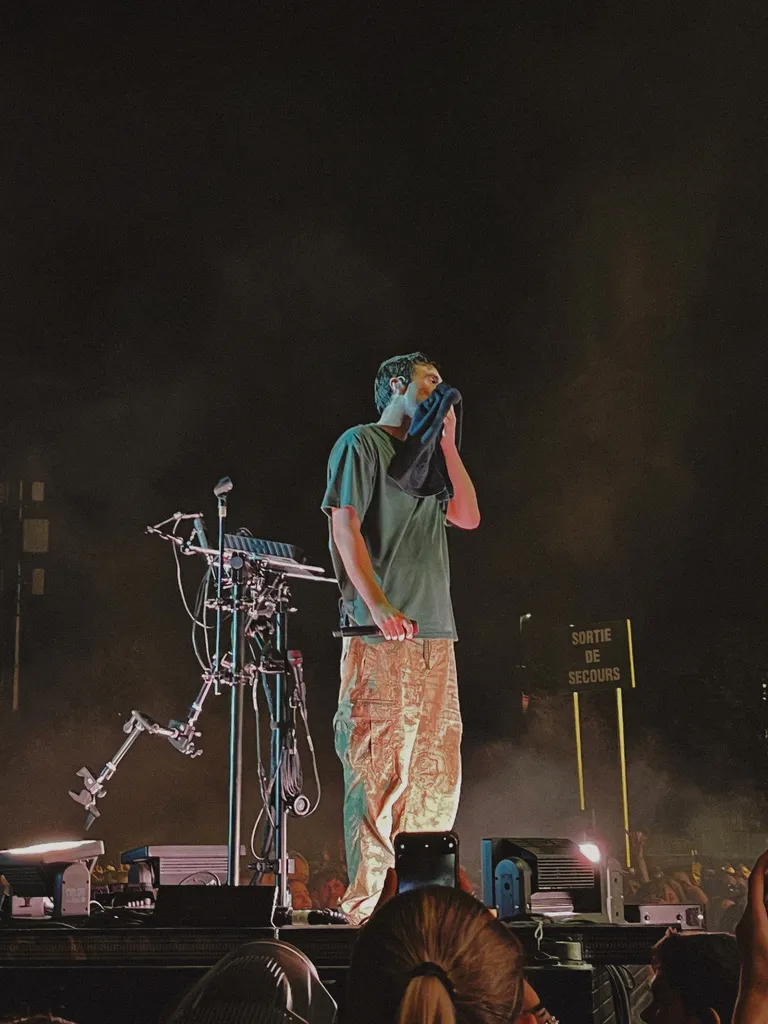
Fred again..
London — Sample-diary pop
Six years, four albums, an autobiographical trilogy (Actual Life 1, 2, 3) followed by a fourth volume (Ten Days), a Boiler Room set that becomes a TikTok phenomenon, and before all that, a former protégé of Brian Eno turned Drake producer. Fred Gibson, under the name Fred again.., sets a project on two simple gestures: the sample as diary and pop electronics as therapy.
Why the diary is the work
Fred Gibson didn’t sign his first album until 27. He had already produced Drake, mixed for Brian Eno, written with Stormzy and Ed Sheeran. When in 2020, mid-lockdown, he decides to turn his phone into a studio and his voicemails into samples, he moves an invisible body of work (background production) into a signed one — under the name Fred again... The Actual Life trilogy that follows lays a simple, almost embarrassingly direct device: each track is named after someone, and reuses that person’s exact timbre.
Before that, ten years of apprenticeship. Brian Eno spots Fred at 16, invites him to Music for Airports-style sessions at home in Notting Hill. For a decade, Fred is a shadow producer — uncredited as a star, but the signature behind records that count (Headie One, Stormzy, FKA twigs, Drake Honestly Nevermind early sessions, Ed Sheeran). This pre-history explains everything that follows: when Actual Life arrives in 2021, Fred already has a veteran’s studio command — he just chooses to use it for a personal project.
The four records that follow show how these two gestures play out — from the first Actual Life conceived in strict lockdown (April-December 2020), to the second matching club reopenings (February-October 2021), to the third crossing the Boiler Room and viral year (2022), to ten days (2024) stepping out of the trilogy without disowning it. Between Actual Life 2 and Actual Life 3, a structuring event: the Boiler Room set of 29 July 2022, which tips Fred again.. from niche producer to international dance figure.
In the cartographies collection, one solid bridge: Cassius. Both projects share a studio-ecosystem architecture — Zdar spent his life producing others (Phoenix, Beastie Boys, Cat Power) while signing Cassius; Fred did the same for Drake, Eno, Headie One before Actual Life. Two invisible producers who one day decide to sign in their own name. Not the same sound, but the same author’s tip-over.


◆ Musicological studies
The work’s tracks examined closely — device, structure, procedure, lineage, reading under the permanences.
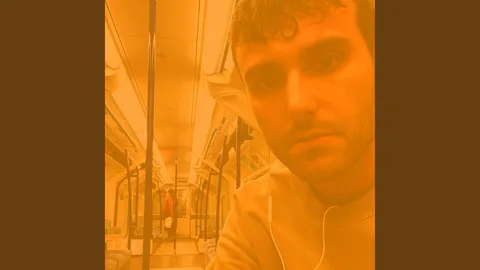
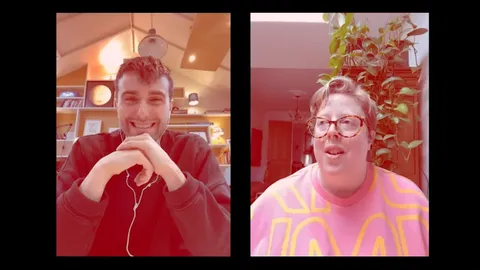
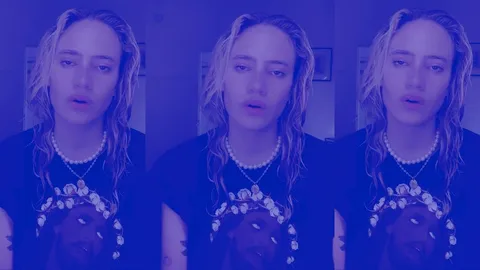
Actual Life (April 14 - December 17 2020)
The trilogy begins. A pandemic sonic diary turned into a record.
First album under the name Fred again... Released 30 April 2021 on Atlantic Records, conceived and recorded between 14 April and 17 December 2020 — the first nine months of the pandemic. The title’s dates are not decoration: they are the exact session boundaries, and each track bears the first name of the person whose vocal moment it samples.
The device
Fred Gibson, 27, isolated at home in London, records his life. Voicemails received during lockdown, fragments of Zoom calls, friends’ Instagram videos. Each sample becomes a track named after its speaker: Marea (we’ve lost dancing) samples The Blessed Madonna’s Boiler Room speech; Carlos (make it through) samples a voicemail from Carlos O’Connell (Fontaines D.C.); Diana (you don’t even know) samples Diana Ross. The method is radical: music’s raw material is the life around oneself.
”I wanted to make an album where every track would be a letter to someone. The diary why? Not to forget those nine months.”— paraphrase Fred Gibson, Pitchfork 2021
Actual Life 2 (February 2 - October 15 2021)
The second volume. The diary continues, the format is confirmed.
Seven months after Actual Life. Released 19 November 2021. Bounds: 2 February - 15 October 2021. The first album was a surprise — this one is awaited, and confirms the format isn’t a one-shot but a discipline.
The device
Same method, but the world has shifted: clubs reopen, the return of social life blurs the raw material. Fred captures fewer isolated moments and more reunions — voices coming back, parties starting again. Billie (loving arms) samples Billie Marten; Faisal (envelops me); Berwyn (all that i got is you). The album is more club, more collective than the first.
”The first was made in a bedroom. The second is made with others coming back into the room.”— paraphrase, Fred Gibson, BBC Radio 1, 2021
Boiler Room — the viral tip-over (29 July 2022)
On 29 July 2022, Fred again.. plays his first Boiler Room in London. The set lasts about an hour. Captured by the usual Boiler Room cameras, uploaded to YouTube a few days later, it reaches nearly a million views in less than a week and explodes on TikTok and Instagram in the months that follow. Before that 29 July, Fred again.. is a name in the UK dance scene. After, a global phenomenon.
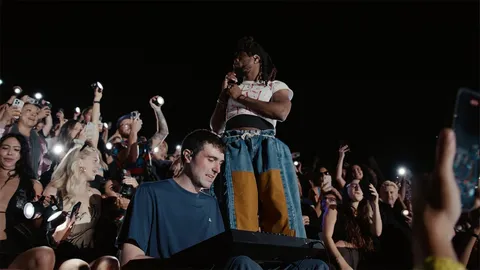
The set itself is intense: Fred plays unreleased tracks, much of Actual Life 3 as preview (the album drops three months later), and improvises some passages on the MPC pad. The camera catches a decisive detail: Fred dances, sings, almost cries during the set. Not the DJ behind the decks — a musician living his tracks as their first listener. This bodily, transparent presence becomes an instant signature.
”I was almost helpless, present. As if I no longer controlled my own set.”— paraphrase, Fred Gibson on his Boiler Room, later interview
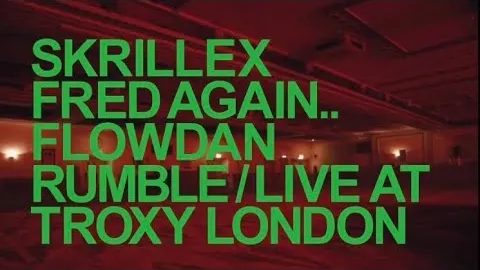
The event structures everything that follows. Actual Life 3 drops in October 2022 in a radically different climate from the first album — 2023 tour venues sell out everywhere. The triple-set with Skrillex and Four Tet at Madison Square Garden in February 2023 (announced spontaneously on Instagram, sold in hours) extends the dynamic. The single Rumble with Skrillex and Flowdan (January 2023) enters the UK Top 10.
But the Boiler Room’s most lasting effect may be aesthetic, not commercial. Before 2022, the DJ-set is a mature, codified format with its expected gestures (the hooded entry, the stoic mixing, the chef’s drop). Fred’s set offers something else: a musician incapable of hiding his emotion. This transparency becomes a model for the generation of DJ-producers that follows. Ironic distance ceases to be mandatory.
And for Fred himself, the Boiler Room shifts the raw material of Actual Life 3: fewer vocal samples of friends at home, more captures of parties he plays. The diary method broadens. The subject is no longer just an isolated producer’s private life during pandemic; it is also the feedback effect of this work on the community it created. The diary becomes recursive.
Actual Life 3 (January 1 - September 9 2022)
The trilogy closes. The Boiler Room year, the work becomes phenomenon.
Third and final volume of the trilogy. Released 28 October 2022. Bounds: 1 January - 9 September 2022. The album is conceived during the year the Boiler Room set (July 2022) tipped Fred again.. from dance niche to TikTok / Instagram phenomenon. The diary discipline holds despite the chaos.
The device
Same method, but with shifted raw material: Fred now captures the parties he plays. Bleu (better with time) samples Bleu Clair; Eyelar (free me); Delilah (pull me out of this) samples Delilah Montagu (kitchen live of Lost Keys). The album is more emotional — post-Boiler Room exhaustion is felt. The trilogy closes on a more intimate movement than the first two.
”I wanted this album to be the faithful image of that year. The year when everything happened at once and I still had to stay myself.”— paraphrase, Fred Gibson, Rolling Stone 2022

ten days
Off-trilogy. Leaving the Actual Life format without forgetting it.
Fourth album. First after the end of the Actual Life trilogy. Released 6 September 2024 on Atlantic. The title ten days is deliberately ambiguous: no precise dates as before, just a round number that could mean sessions or mental states. Fred steps out of the diary discipline without disowning it.
The device
No more name-samples. No more date-bounds. But the conversation-sample method remains: adore u with Obongjayar, places to be with Anderson .Paak, just stand there. Fred opens to vocal collaborations — invited voices take more space, which moves the album toward classic pop. But the studio signature (cracked kick, sub bass, tender vocal samples) stays recognisable.
”I had to leave Actual Life so I wouldn’t become the guy who does Actual Lifes. But I wanted to keep the thing that made Actual Life alive.”— paraphrase, Fred Gibson, NPR 2024
A body of work in four movements
Six years, four albums, a closed autobiographical trilogy, a fourth volume that steps out, a Boiler Room turning a niche into a global phenomenon. The trajectory breaks into four clear movements — each testing a different dimension of the founding thesis: the sample is the diary, pop electronics is the therapy.
What never changes
Two permanences cross the four movements. Sample as diary — from Actual Life where every track bears a first name, to ten days where Obongjayar’s and Anderson .Paak’s voices are captured as moments rather than produced as performances. Pop electronics as therapy — from pandemic-as-structuring-lack to post-Boiler-Room exhaustion as material, the club is always summoned for care.
The bridge that holds
One solid bridge in the collection: Cassius. Zdar spent his career producing others (Phoenix Wolfgang Amadeus Phoenix Grammy 2009, Cat Power, Beastie Boys, Kindness) while signing Cassius. Fred did the same — Drake, Eno, Headie One, Sheeran, FKA twigs — before signing Fred again.. at 27. Two invisible producers who one day tip into their own name. The pop-electronic project is different (filtered French Touch vs diary-house), but the economy of the author is the same: ten years for others, one day for oneself without renouncing the rest.
The work is in progress. Ten Days suggests Fred will open toward song without leaving the club. The next step can take any form — a fifth Actual Life, a rock album, a film score. The device set in 2020 (sample the life around oneself, turn the diary into pop) stays open enough to absorb anything.
The map
Four records orbiting the two constants. Click an album to see how it plays them out.
Pop-as-care: the club summoned when it doesn't exist, as structuring lack.
Position: matrix. The diary-house format is invented.
Pop-as-care: less lack, more return; clubs reopening.
Position: consolidation. Proves this isn't a one-shot, it's a discipline.
Pop-as-care: Delilah says "pull me out of this" — post-Boiler-Room exhaustion.
Position: emotional closure of the trilogy.
Pop-as-care: less club, more song — pop-as-care broadens.
Position: off-trilogy. Stepping out of the format without disowning it.
- adore u The Ten Days opener, first long release post-trilogy. Sampled Obongjayar voice, restrained club beat, assumed shift toward song without giving up the club. Read the analysis →
- Rumble The 2023 off-trilogy hit, triple-credit Skrillex / Fred again.. / Flowdan. Dubstep, UK grime, global club beat — the track that consecrates Fred mainstream. Read the analysis →