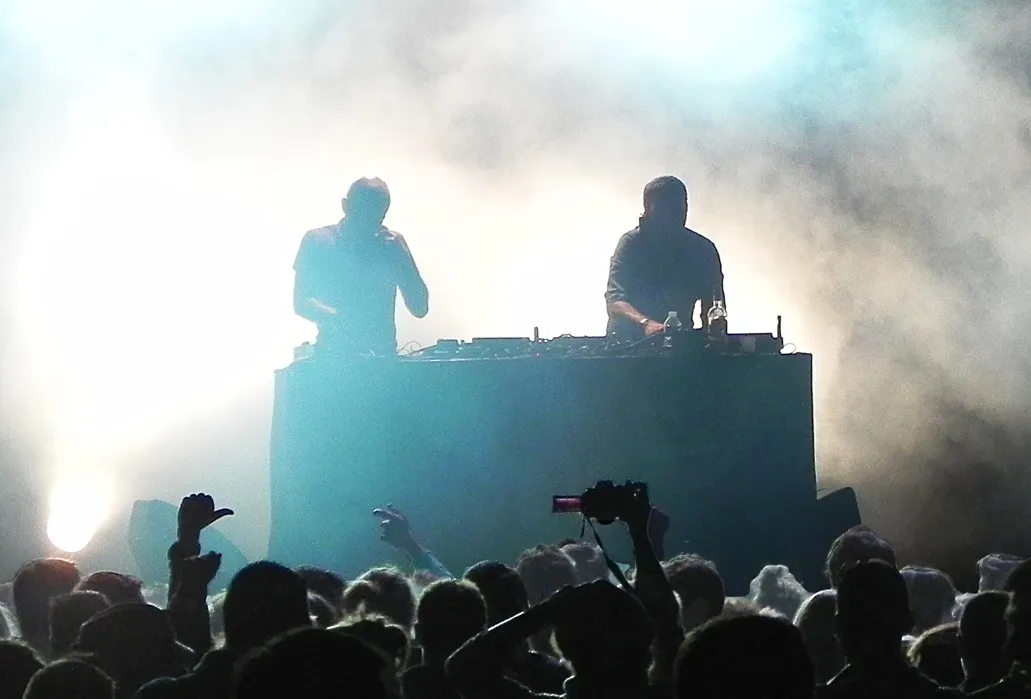
Cassius
Paris — French Touch
Twenty-three years, six studio albums (counting Pansoul by Motorbass, the founding workshop) and a duo that refused to settle — French Touch, pop, electro, meditative house. A body of work that holds because it stands on two gestures: the studio as instrument and groove before signature. Involuntary closure in June 2019, eight days apart.
Why the studio is the instrument
Cassius did not play an instrument. Philippe Zdar and Hubert Boombass played a signal chain. The low-pass filter on automation, SSL-series compression, sidechain, tape saturation — those are their strings. Twenty-three years, six albums (counting Pansoul), one constant: the track is born at the desk, not at the keyboard or the guitar.
The duo forms in Paris in the late 1980s around La Funk Mob, a club collective where Zdar meets Étienne de Crécy and, with him, lays down Pansoul in 1996 as Motorbass. Three years later, Cassius 1999 crystallises the warm filtered French Touch — together with Daft Punk’s Homework and Air’s Moon Safari, one of the three mother-records of the genre. Then the refusal: they will not stay the guardians of a formula.
The six records that follow show how these two permanences play out — from the Motorbass workshop (Pansoul) to the manifesto (1999), from the song turn (Au Rêve) to the club return (15 Again), from the collaborative return (Ibifornia) to the involuntary epilogue (Dreems). Between 15 Again and Ibifornia, a ten-year silence — not a pause, but the duo mutating into a studio ecosystem.
The French Touch ecosystem has axes. The chamber axis — in Air, vintage timbre carries narration; in Cassius, the filter does the same by arithmetic. The dancefloor axis — in Laurent Garnier, mental techno imposes long-form discipline; in Cassius, groove imposes its own discipline in short forms. Neighbouring rigors, shared refusal of the easy hook.


◆ Musicological studies
The work’s tracks examined closely — device, structure, procedure, lineage, reading under the permanences.

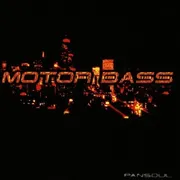
Pansoul
The founding workshop. The filtered grammar is forged here, three years before Cassius.
Before Cassius, there is Pansoul. Philippe Zdar and Étienne de Crécy, under the name Motorbass, release in 1996 the record that — with De Crécy’s Super Discount (1996) and Daft Punk’s Homework (1997) — crystallises what will soon be called the filtered French Touch. This is not yet Cassius, but it is already Zdar’s hand on the desk.
The device
French disco and funk samples slowed, filtered, reinjected into a 118–122 BPM house grid. No vocals, or only scraps of samples. The track tells nothing — it unfolds a loop and lets it breathe. Zdar begins here to build the studio chain that will become, with Motorbass Studio in Paris, a reference for Phoenix, Cat Power, Beastie Boys and Kindness productions.
"Pansoul isn’t after a hook. It’s after the pump, the pocket, the breath of the filter. A record to live in — not one to listen to once.”— paraphrase, contemporary press
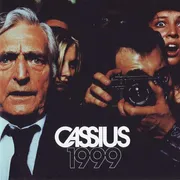
1999
The manifesto. Warm French Touch against the robotic one.
The album that gives the duo its name and the genre its moment. A few months before Daft Punk’s Discovery, Cassius posits another French Touch: where Daft Punk leans robotic, Zdar and Boombass stay warmly human. Sampled voices breathe, sidechain pumps without crushing, the bass has a funk seat that recalls Chic as much as Chicago.
The device
Disco and soul sampling, permanent low-pass filter automation, Motorbass chain compression. The black sleeve and Virgin typography frame a graphic object as minimal as the musical grammar. Lead single La Mouche earns MTV Europe Music Awards nominations; Cassius 1999 reaches the UK Top 20.
"Cassius 1999 is the French Touch at peak warmth — not yet tired of itself, not yet self-parody.”— paraphrase, contemporary press
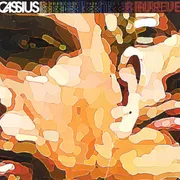
Au Rêve
The song turn. The duo invites voices and derails the purists.
Three and a half years after 1999. Cassius takes the turn no one expects: song. They invite Jocelyn Brown, Steve Edwards, Ghostface Killah, Leroy Burgess — soul, rap and garage-house voices. French Touch purists cry betrayal. In hindsight, Au Rêve anticipates by ten years the pop turn of electronic producers (Justice, late Chemical Brothers).
The device
The filter recedes. The voice, long a sample, becomes a lead. Drums go organic, rock guitar shows up (The Sound of Violence). But the Motorbass chain is unchanged — same compressors, same saturations, same rhythmic grids. The duo tests whether the song can carry the studio signature. Answer: yes — at the cost of a lukewarm reception.
"Au Rêve disappoints 1999 fans and doesn’t yet win over the pop mainstream. It will take ten years to be re-read as a hinge.”— paraphrase, retrospective reviews
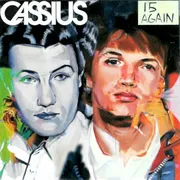
15 Again
The club return. A programmatic title — fifteen years back.
Four years after Au Rêve. Cassius returns to the club, explicitly. The programmatic title — 15 Again — states the return to pulse, to the floor, to the 1988–1991 energy of La Funk Mob. The record is more direct, less polished-smooth. It crosses paths with the emerging Ed Banger era (Justice, SebastiAn, Boys Noize).
The device
Saturation foregrounded, kick more frontal, synth melodies assumed. The voice returns to a secondary role (pitched samples, choirs). But the production stays Motorbass: nothing is dirty, everything pumps and reads clean. The paradox of the album: rougher in intent, still as precise in execution.
"Toop Toop is Cassius at their best — a groove you can’t turn down, built with almost nothing.”— paraphrase, 2006 press
Ten years of productive silence — 2006–2016
Between 15 Again (2006) and Ibifornia (2016), Cassius release no album. But to say the duo goes silent would be false. On the contrary — it is the decade where Zdar is everywhere.
2009: Zdar mixes Wolfgang Amadeus Phoenix. The record wins the Grammy for Best Alternative Album. Phoenix, fellow Versaillais and friends of the duo since the 1990s, owe Zdar much of the album’s pop clarity. From there the commissions chain up.
Cat Power, Beastie Boys, Kindness, Hot Chip, Kitsuné releases, The Rapture, Breakbot. The Motorbass studio in Paris becomes a French reference for international productions. Boombass, on his side, pursues side projects and solo production. The Cassius duo still exists — they tour occasionally, release the odd single — but the album, the format that defined them, recedes.
This album-silence is not a pause. It is the work mutating into a studio ecosystem. Zdar’s influence diffuses through ten, twenty, thirty records he does not sign but which carry his hand. The Motorbass chain becomes an indirect signature — you recognise his compression, his filter, his way of letting a voice breathe.
When Ibifornia arrives in 2016, with Pharrell, Cat Power, Mike D, it is logical: the artists Zdar has produced return, this time as guests. The duo that sampled becomes the duo that invites. Ten years earlier, unimaginable. Ten years of studio made it natural.
And when Dreems closes the arc in 2019, it is also a reading of that silence: the meditative, open, settled album that ends the work would not have been written without that decade of maker’s retreat. The Motorbass chain has calmed — it has finally produced a record that barely pumps, that accepts opening the filter and letting through.
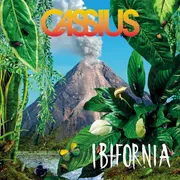
Ibifornia
The collaborative return. Ten years of silence, then Pharrell, Cat Power, Mike D.
Ten years after 15 Again. In between, Zdar has become one of France’s most in-demand producer-mixers — Phoenix (Wolfgang Amadeus Phoenix, 2009, Grammy), Cat Power, Beastie Boys, Kindness, Hot Chip, Kitsuné. The duo returns with a collab album: Pharrell Williams, Cat Power, Mike D (Beastie Boys), Ryan Tedder (OneRepublic), Matthieu Chédid. The title is a portmanteau, Ibiza + California — the global dance axis assumed.
The device
Cassius no longer samples — they invite. The Motorbass chain is still there, but now binds strong vocal personalities. The house grid still holds the skeleton, dressed in voices, guitars, rap. Lukewarm reception: too pop for 1999 nostalgics, not radical enough for the post-EDM era. Yet the record logically extends Au Rêve.
"Ibifornia is an album of confidence: Cassius have nothing left to prove about French Touch, so they play at being conduits.”— paraphrase, 2016 press
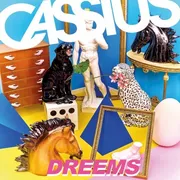
Dreems
The involuntary epilogue. Zdar dies two days before release.
On 19 June 2019, Philippe Zdar dies from an accidental fall off a Parisian building. He is 52. Two days later, on 21 June, Dreems is released as scheduled. The album was not conceived as a testament — it was written, finished, mastered before the event. But it becomes, involuntarily, a readable epilogue.
The device
Return to a more stripped form than Ibifornia. Fewer features, more instrumental. Meditative house, sometimes ambient, median tempos, filter wide open. The sidechain pump — signature of 1999 — is almost absent. In its place: space, grain, circulating time. This is not a record that ends a career; it is a record that breathes, and simply stops where it stops.
"Dreems is the calmest Cassius ever published. Heard after Zdar’s death, it becomes, unplanned, a right goodbye.”— paraphrase, press obituaries, June 2019
A body of work in four movements
Twenty-three years, six pivot records (counting Motorbass’s Pansoul), a decade of productive silence, and an involuntary closure in June 2019. The trajectory splits into four clear movements — each testing a different dimension of the grammar forged at the desk.
What never changes
Two permanences cross the four movements. The studio is the instrument — from Pansoul to Dreems, a signal chain writes the music. Groove precedes signature — Cassius refuse to settle in a style, but groove (funk, house, disco, pop, ambient) remains the final judge. If it doesn’t groove, it doesn’t ship.
The bridges that hold
The French Touch of 1996–2000 is an ecosystem more than a genre. Air posed a chamber grammar — vintage timbres, distant voices, median tempos — whose demand for sound-as-matter Cassius shares. Both duos, from Versailles and Paris, answer the same question: how to be a musician without playing? Air picks analog timbres; Cassius fabricates timbres through filtering. Two answers, one discipline.
Laurent Garnier, at the other end of the axis, defends mental techno and the long-form DJ set. Cassius defend filtered groove and the album format. Two dancefloor disciplines, two asceses — the bridge runs through groove-as-requirement and the refusal of the easy hook. Even when Cassius sign La Mouche, the construction is more rigorous than it sounds.
The epilogue is involuntary but fitting. Zdar dies two days before Dreems’s release, at 52, from an accidental fall. The record was not planned as testament, but it reads like one: the Motorbass chain no longer pumping, opening the filter, letting through. A body of work that closes on its most open point — house as meditation.
The map
Six records orbiting the two constants. Click an album to see how it plays them out.
Groove: filtered disco/funk samples at 118-122 BPM, no vocals.
Position: founding workshop. Grammar born before the Cassius name.
Groove: Feeling for You, La Mouche — hits carried first by the pocket.
Position: manifesto. Warm French Touch at its peak.
Groove: same funk/house grids under song formats.
Position: pop turn. Derails purists, anticipates by 10 years.
Groove: Toop Toop — less-is-more demonstration.
Position: club return. Meets the nascent Ed Banger era.
Groove: house grid holds under Pharrell, Cat Power, Mike D.
Position: return after 10 years. Diffuse ecosystem.
Groove: slowed, meditative, almost absent.
Position: involuntary epilogue. Zdar dies 2 days before release.