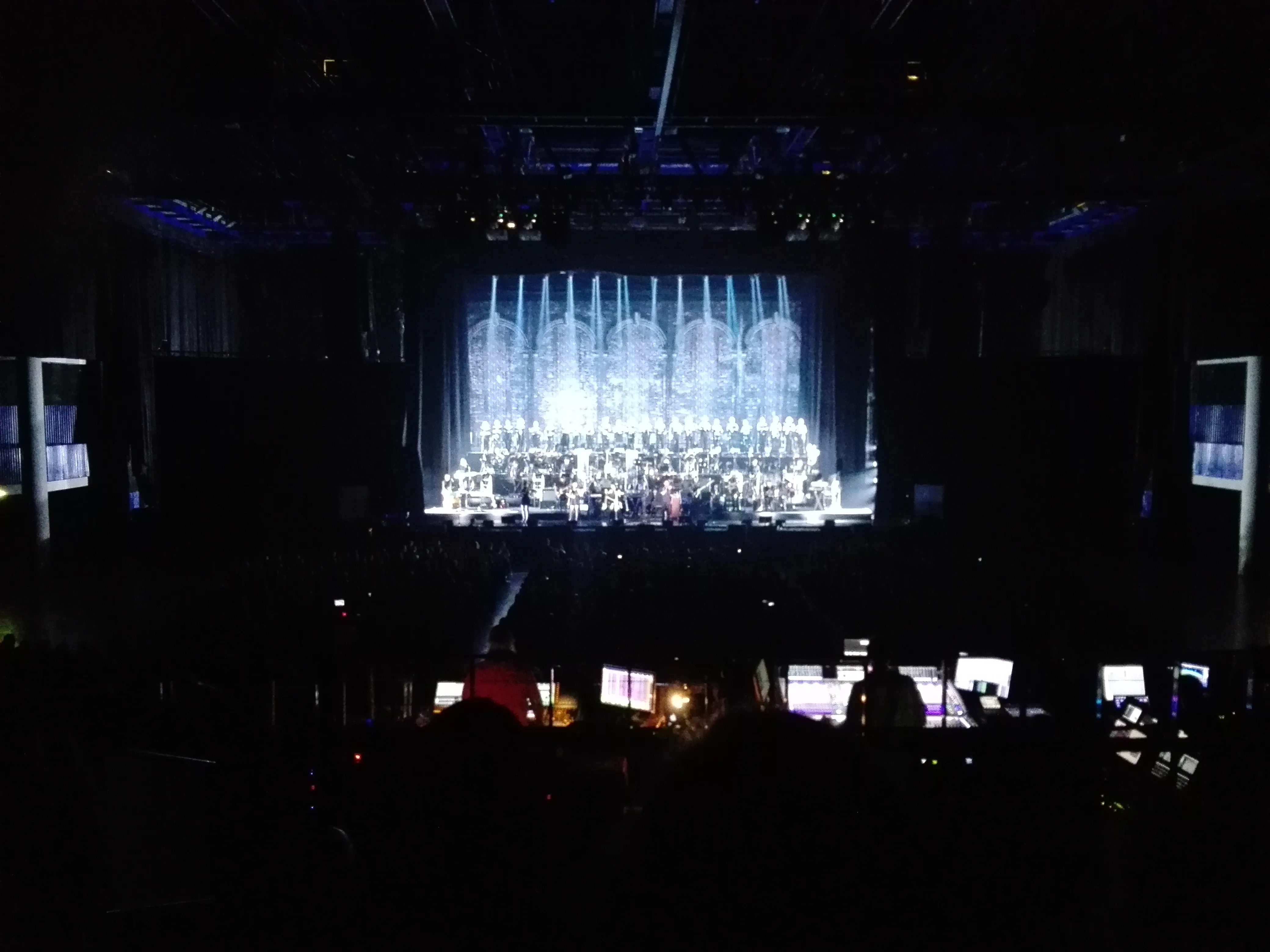
Hans Zimmer
Frankfurt → Los Angeles — Orchestral-electronic film score
From Rain Man (1988) to Dune: Part Two (2024), Hans Zimmer reconfigured film scoring through a single structural decision: treating the orchestra as studio production material. Born in Frankfurt in 1957, trained in London, based in Los Angeles where he founded Remote Control Productions, he stamps each major score with two permanent gestures — the orchestra manipulated as a synthesiser and the simple ostinato as the only emotional architecture needed. From the Oscar-winning Lion King (1994) to the generational BRAAAM of Inception (2010) and the cosmic organs of Interstellar (2014), his grammar has reconfigured two generations of film composers and trailer sound designers.
Why the ostinato is enough
Hans Zimmer broke with the film music tradition by posing a single question: what if emotion arises from repetition rather than development? John Williams builds melodic themes — Star Wars, Schindler’s List, Indiana Jones — that develop, vary, return transformed. Bernard Herrmann built counterpoint, dissonances, sophisticated harmonic progressions. Zimmer chose a third path: the simple ostinato, repeated indefinitely, with progressive accumulation of layers. No extended melodic theme. No development. A 4-note motif, a 4-chord progression, a rhythm — and the crescendo does the rest.
Born in Frankfurt in 1957, trained in London in 1980s recording studios (Krisalis, then his meeting with Stanley Myers), Zimmer moved to Los Angeles and co-founded Remote Control Productions (formerly Media Ventures) with Jay Rifkin in 1989. The idea is simple and revolutionary: treat film music like a pop or electronic record production — with layered arrangements, sampling, timber processing, modular studio sessions rather than single-take orchestral recording sessions. This gesture — the orchestra as studio material rather than as interpretive ensemble — is the first permanent that runs through his entire body of work.
The five pivot albums that follow trace the arc: The Lion King (1994) — the founding Oscar, South African choirs integrated into the Hollywood orchestra; Gladiator (2000) — the vocal-orchestral grammar with Lisa Gerrard; The Dark Knight (2008) — two notes, nine minutes, pure tension; Inception (2010) — the pop ostinato and the generational BRAAAM; Interstellar (2014) — the Glassian minimalist organ, the experimental peak. Each pivot tests a new variation of the two permanents. None of them abandons them.
Hans Zimmer stands alone in this collection — no other artist operates in his register. He is the film composer, where the other cartographies cover pop, club, and chanson française. His singularity in the collection is precisely his isolation of register.


◆ Musicological studies
The work’s tracks examined closely — device, structure, procedure, lineage, reading under the permanences.
The Lion King
Academy Award for Best Original Score 1995. Hollywood orchestra meets South African choirs — the ostinato as founding gesture.
1994. Zimmer is 36, Remote Control Productions is growing in Los Angeles, and Walt Disney entrusts him with the score for its most ambitious film since Fantasia. Jeffrey Katzenberg’s brief: incorporate authentic African musical elements — not decorative folklorisation. Zimmer partners with Lebo M., a South African singer and composer, who brings choirs in Zulu, Xhosa and Sotho — languages that sound like no language in a Hollywood film had ever sounded before.
The result is an unprecedented hybridisation. The opening seconds of Circle of Life state the problem: a solo voice call in Lingala (Nants’ ingonyama bagithi Baba), followed by an a cappella Zulu choir, before the full orchestra enters at bar 17. This is not world music as décor — it is a musical grammar built from two equal sources. The Circle of Life ostinato (two bars of strings and brass, repeated 40 times over 4 minutes 30) is the first canonical example of Zimmer’s ostinato permanent.
The device
Zimmer uses the studio for the first time as a place of synthesis rather than merely recording. The African percussion is sampled and re-layered over the live orchestra. Lebo M.’s choir is recorded separately in South Africa, then mixed with the London Philharmonic Orchestra. The result sounds coherent because both sources share the same architecture: a base ostinato, additive layers, a climax through accumulation. The same mechanics as techno — just with Spear and Moog.
“I wanted the music to be African from the inside, not African as decoration. Lebo M. brought something I couldn’t write myself.”— Hans Zimmer, USC School of Cinematic Arts (2016, paraphrase)
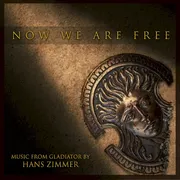
Gladiator
Collab Lisa Gerrard. Now We Are Free. The vocal-orchestral grammar that becomes Zimmer's signature.
Six years after The Lion King, Zimmer attempts a historical epic with Ridley Scott. The constraint is radical: no identifiable Western music — Scott wants something that sounds neither Roman, nor Greek, nor medieval European. Zimmer calls Lisa Gerrard, co-founder of Dead Can Dance, to bring a voice that belongs to no known language. Gerrard sings in “glossolalia” — an invented language she developed alone in adolescence, a vocal melody without semantics.
The result is Now We Are Free: a voice that seems to come from everywhere and nowhere, carried by a string orchestra in a cyclic four-chord ostinato. Musically, it is an 8-bar loop repeated with variations of density (sometimes voice alone, sometimes full orchestra) for 4 minutes 45. The structure is identical to that of Circle of Life six years earlier — but the emotional register is radically different: here, it is the universality of loss, not the celebration of life.
The device
Zimmer first records the orchestra with the harmonic structure fixed, then asks Gerrard to improvise over it — without a score, without pre-established lyrics. Gerrard’s voice becomes one more instrument in the orchestral texture, treated at the mixing desk with the same care as the strings. Permanent 1 (orchestra = material) is here applied to the human voice: Gerrard is not a singer interpreting a melody, she is a timbre source added to the studio device.
“Lisa brought something emotionally true that transcended words. When she sang, you didn’t know what she was saying — but you knew exactly what she meant.”— Hans Zimmer, BBC Desert Island Discs (2014, paraphrase)
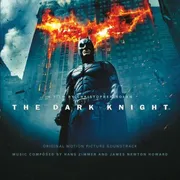
The Dark Knight
Collab James Newton Howard. Why So Serious? — 9 minutes on two notes. The orchestra as a machine of pure tension.
2008. Nolan shoots the most ambitious film of the Batman trilogy. The constraint given to Zimmer and James Newton Howard is unprecedented: the Joker must have no melodic theme — no melody the audience could hum, no humanising musical signature. The Joker’s music must be pure tension, without resolution, without melody.
Zimmer’s solution: two notes. B-flat and B-natural — a semitone of dissonance. Played on a cello whose strings have been threaded through with a pencil (preparation à la John Cage), the sound produced resembles a drifting oscillator more than a bow on a string. These two notes, repeated for 9 minutes in Why So Serious?, build tension through simple persistence. No harmonic development, no counterpoint: only two notes in growing dissonance.
The device
Permanent 1 is here taken to its extreme: an acoustic instrument (cello) is transformed into an oscillator by a mechanical intervention (the pencil). The orchestra does not “play” a conventional film score — it produces sound like an analogue machine. Zimmer said in interview that the Joker theme had to sound like a bow drawn to the brink of breaking. Why So Serious? is that metaphor made literal.
“For the Joker, I didn’t want a theme. I wanted you to not know what was coming next — because he doesn’t either. Two notes. That’s all he needs.”— Hans Zimmer, NPR Music Tiny Desk (2017, paraphrase)
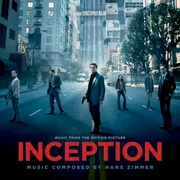
Inception
Time, Mind Heist. The generational BRAAAM. The 4-chord ostinato that reconfigured trailer music for a decade.
2010. Nolan conceives Inception as a film about nested dream levels — each level has its own tempo, its own physics, its own temporal density. The musical constraint: the score must express this nesting without being illustrative. Zimmer refuses to write a theme per level — that would be too legible, too didactic. He seeks instead a musical structure that embodies the idea of infinite repetition with variation of density.
The solution: four chords in A minor (Am — C — G — F), repeated indefinitely, with a progressive increase in instrumental density. For 4 minutes 35, Time never leaves these four chords — but the emotional effect is total because each repetition adds an instrument, a register, a layer. The climax at 3’00” is reached through pure accumulation. No modulation, no bridge, no harmonically different coda. This is the ostinato permanent formulated with the precision of an equation.
The device
The BRAAAM — that slowed-down brass sound that invaded trailer music from 2010 — is not in the film itself but in the official trailer, built from Édith Piaf’s Non, Je Ne Regrette Rien slowed to an extreme. Zimmer is not directly the author of the BRAAAM as heard in trailers — but the grammar he formulates in Inception (crescendo by accumulation, ostinato + growing density) was extracted and amplified by an entire post-2010 trailer music industry.
“‘Time’ is the piece I had the most trouble finishing — because it should never begin and should never end. It should just… be there.”— Hans Zimmer, USC School of Cinematic Arts (2016, paraphrase)
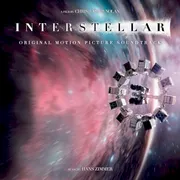
Interstellar
Church organs, minimalist arpeggios. Cornfield Chase, Mountains, No Time for Caution. The Nolan-Zimmer collaboration at its experimental extreme.
2014. Nolan sends Zimmer a single letter: one page on the relationship between a father and his child, with no mention of space, black holes, or interstellar travel. “Write the music for this letter.” Zimmer composes without seeing the film, without knowing the synopsis, solely from this emotional intention. The result is Cornfield Chase — two minutes eleven, solo church organ and piano, Glassian minimalist structure.
For the first time in his career, Zimmer almost entirely abandons the orchestra. The principal instrument is the Wanamaker Grand Court Organ (Philadelphia), one of the world’s largest pipe organs — whose bass registers reach frequencies below the threshold of human hearing (16 Hz). The organ is mixed at the limit of saturation to sound “cosmic” rather than ecclesiastical. Permanent 1 (orchestra as synthesiser) is here applied to a mechanical instrument: the organ is processed in the studio until it loses its acoustic identity.
The device
The structure of Cornfield Chase is in additive succession à la Philip Glass: a 4-note motif on piano (arpeggio), reprised on organ an octave lower, then multiplied in density with the addition of choral voices and strings. There is no harmonic development: the motif remains identical until the end. This is the ostinato permanent in its most pared-back form — a single 4-note motif, 2 minutes 11, crescendo by addition. Nothing else.
“Nolan said to me: ‘I don’t want science-fiction music. I want music about what it means to be human.’ The organ seemed the most human instrument — it’s made of air.”— Hans Zimmer, NPR Music Tiny Desk (2017, paraphrase)
A body of work in four movements
From Rain Man (1988) to Dune: Part Two (2024), Hans Zimmer has written more than 150 film scores. Two Oscars, five nominations, ten Golden Globes. But the trajectory is not one of accumulated rewards — it is one of progressive deepening of two founding gestures, tested album after album, until their most stripped-back formulation in Interstellar (2014) and their extension into new territory in Dune (2021).
What never changes
Two permanents cross all four movements. The orchestra treated as a synthesiser — from 1988 to 2024, every major score applies electronic studio tools to the orchestra: sampling, looping, timber processing, compression, saturation. The violence of The Dark Knight (prepared cello), the cosmology of Interstellar (over-compressed organ), the alien dimension of Dune (invented instruments) are three variations of the same founding gesture. The ostinato signature as emotional architecture — from Circle of Life (1994, 2 bars, 40 repetitions) to Cornfield Chase (2014, 4 notes, 2’11”) by way of Time (2010, 4 chords, 4’35”), every peak of the body of work rests on a simple motif repeated and amplified. No Williams-style thematic development. The loop as argument. Accumulation as climax.
Position in the collection
Hans Zimmer has no solid factual bridge with the other artists in this collection. His register — orchestral-electronic film music — has no equivalent here. One cultural coincidence is worth noting: in 2010, Daft Punk composed the score for Tron: Legacy (Walt Disney, same orchestra-electronic grammar, same tension between live music and studio processing) while Zimmer was composing Inception. Two parallel grammars, in the same year, addressing the same question — how to fuse orchestra and electronics — with no direct collaboration or documented influence in either direction. The coincidence says something about the era, not the artists. Zimmer remains alone in his register.
What connects Zimmer to the collection is not a particular artist but a method: loop discipline. In Daft Punk, the loop is the architecture of electronic pop. In Zimmer, the loop is the architecture of cinematic emotion. The ostinato permanent is structurally identical to the loop permanent — a simple motif, repeated, amplified. Two radically different musical worlds, one fundamental grammar. That may be the most honest bridge: not between artists, but between methods.
The map
Five scores orbiting the two permanents. Click an album to see how it declines them.
Ostinato: Circle of Life — 2 bars, 40 repetitions, Academy Award for Best Score. The founding formula.
Position: first global peak. Lebo M. + African choirs. The grammar is there, entire, from 1994.
Ostinato: Now We Are Free — 8 bars, 4 chords, 4'45", emotion through accumulation.
Position: Ridley Scott + Lisa Gerrard collab. The vocal-orchestral grammar as signature.
Ostinato: two notes (B-flat / B-natural), 9 minutes, no development. Pure tension.
Position: James Newton Howard collab. The Joker with no melodic theme. The ostinato permanent at its extreme.
Ostinato: Time — Am–C–G–F, 4'35", climax at 3'00" through pure accumulation. The most copied formula post-2010.
Position: the generational BRAAAM. Nolan trilogy, central movement.
Ostinato: Cornfield Chase — 4 notes, organ alone, 2'11", additive succession à la Philip Glass. The permanent in its purest form.
Position: composed without seeing the film, from a Nolan letter. The experimental peak.