
Julien Doré
Alès — French folk-pop
Sixteen years of folk-pop built on a rare discipline: sobriety as a position. Born in Alès, in the Gard, revealed by the Nouvelle Star competition in 2007, Julien Doré could have been a television footnote. He chose to be a songwriter — and to observe the world close at hand with the precision of a chansonnier and the lightness of a minimalist. Six albums, millions of listeners, an immediately recognisable voice — and a constant refusal of pop grandiloquence.
Why the voice precedes the words
Before you have understood the lyrics, you have recognised the voice. That is the Doré fact. Slightly high for a man, doubled at the octave in the production, it settles in before the words, before the text, before the song itself. You know who is singing before you know what is being sung.
Julien Doré was born in Alès, in the Gard, on 7 July 1982. He grew up in the Cévennes — a France away from the centre, rural and tenacious. The Nouvelle Star competition in 2007 could have fixed him in the identity of the candidate-turned-singer. He chose something else: to be a serious chansonnier, observing the ordinary world with a minimalist’s precision and a portraitist’s tenderness.
Sixteen years, six albums, millions of listeners. His editorial position is rare in mainstream French pop of the 2010s: neither claimed lyricism (Stromae), nor electro-performance (Christine & the Queens), nor purely acoustic nostalgia. Doré occupies a between-space — folk-pop as tender observation — without that between-space resembling a compromise. It is a position.
These two constants run through the six pivot albums that structure this cartography, from Ersatz (2008) to Imposteur (2024). They survive the post-Nouvelle Star emergence, the authorial affirmation of Bichon and Løve, the folk-electro opening of &, the intimate tightening of Aimée, through to the covers loop of Imposteur.
An editorial link connects this cartography to that of Vincent Delerm: two singer-songwriters who observe ordinary France with a sociologist’s precision. But the territories are opposed. Delerm maps the cultivated intra-muros Paris — Haussmann apartments, café crème, literary citations. Doré maps the Cévennes, the dogs, the seashores. One observes from the centre; the other from the rural margin. Two parallel ethics of the gaze, never crossing.


◆ Musicological studies
The work’s tracks examined closely — device, structure, procedure, lineage, reading under the permanences.

Ersatz
The opening position. A songwriter before a reality-TV winner.
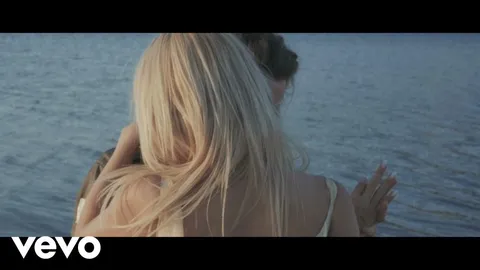
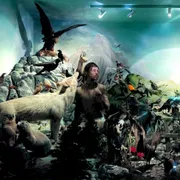
One year after the Nouvelle Star 2007 competition, Julien Doré releases Ersatz — German for “substitute”, “surrogate”. The title is already a position: the album is not a confirmation of the competition, it is a bifurcation. Doré gathers around him the composers of Cocoon (Morgane Imbeaud, Mark Daumail), Babx, and David Scrima — authors from the French independent scene, not variety producers. The gesture is clear.
The album is predominantly original compositions. A single cover — Serge Gainsbourg’s SS in Uruguay — signals an acknowledged lineage with the French chanson of the oblique and the transgressive. The rest is chamber folk-pop, soberly produced, where Doré’s voice — already singular, already high-pitched, already recognisable — finds its footing.
The device
Predominantly acoustic productions, light arrangements (guitars, discreet strings), voice exposed without digital protection. Les Bords de mer is the manifesto song: stripped folk, sensory-descriptive text, no distancing effect. Bouche pute reveals the provocateur Doré, capable of an arresting title without manufactured scandal. Acacia (co-written with Cocoon) anticipates the refined formula of Løve.
“A genuine surprise: this guy who came out of reality TV can actually write.”— Les Inrocks, 2008 (paraphrase)
Platinum disc (260,000 copies sold). Victoire de la musique — revelation album of the year 2009. The escape from reality TV is complete.
Bichon
The affirmation as songwriter. He signs his own texts, and they hold.
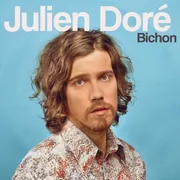
Bichon is the first album on which Julien Doré signs or co-signs all the texts. This is not a detail: it is the difference between being sung and being a singer. The album proves that the collaboration with Cocoon and Babx on Ersatz was not a crutch — it was a training ground. Doré learned to write by writing with others.
Kiss Me Forever becomes a summer hit of calculated lightness — bilingual text (French/English), instantly memorable refrain, folk production without overproduction. Les Limites takes the counterpoint: stripped folk, text on the impossibility of going further, voice exposed without a net. Two songs, two proofs of versatility.
The device
Production more refined than Ersatz but still sober. Acoustic guitars dominating, light percussion, a few discreet keyboard pads. Doré’s voice is carefully handled — the octave doublings, already present on the first album, are more systematic here. It is on Bichon that the vocal treatment as signature is definitively established.
“Doré proves he is not an accident. Bichon is the real debut.”— Télérama, 2011 (paraphrase)
Løve
Diamond disc. The Doré formula proves it can reach a mass audience without compromise.
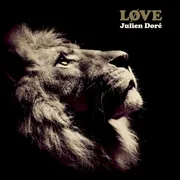
Løve — the title with its Nordic ø signalling a folk-pop that looks beyond France — is the absolute breakout record. Over one million copies sold in France. Diamond disc. Le lac becomes one of the most-streamed singles of the French decade. This success does not come from a change of direction: it comes from the perfection of a formula already at work since Ersatz.
Le lac is simple folk. Acoustic guitar, doubled voice, a few discreet pads. The text is an observation of a Cévennes landscape — the water, the light, the proximal nature. No explicit metaphor, no lesson. The track works because it forces nothing: it lets the image do the work. Paris-Seychelles is its counterpoint: a more rhythmic pop, expanded geography (from Paris to the Seychelles in imagination), same sobriety of production.
The device
Production slightly broader than Ersatz and Bichon — some string arrangements, keyboards more present — but still centred on the voice. The album confirms Doré’s implicit rule: never an arrangement denser than the voice requires. The folk-pop blend finds its optimal balance here: enough texture to reach a mass audience, enough space for the voice to breathe.
“Le lac proves that simplicity is the hardest form.”— Libération, 2013 (paraphrase)
The album remains a landmark in French pop of the decade: the moment when a minimalist folk formula proved capable of reaching one million people. Not through compromise — by remaining itself.

&
The folk-electro maturity. The voice remains the primary instrument, even as the arrangements expand.
& — minimal title, pure ampersand — is the album of claimed maturity. Three years after the triumph of Løve, Doré could have made Løve 2. Instead he introduces cautious electronic elements — some synths, slightly denser productions — without ever altering the signature. The result is a folk-electro pop that remains recognisably Doré.
Coco câline is the central single. A danceable track, muted production, text about a summer love. The octave vocal doubling is here at the foreground of the mix — more audible than on any other title in the discography. It is paradoxically in this most pop track that the vocal constant is most explicit. Sublime & Silence and Clémentine complete the picture of an artist who has found his balance.
The device
Mixed productions: acoustic guitars + discreet synthesisers + light electronic percussion. The voice remains at the centre, never overwhelmed by the arrangements. The implicit rule of Løve is maintained: the voice determines the density of the arrangement, not the other way around. This respect for hierarchy is what allows the album to open towards electro without falling into overproduction.
“Coco câline is simultaneously the most danceable and the most Doré track in the entire discography.”— RTL, 2016 (paraphrase)
Aimée
Lockdown as revealer. The intimate tightened around home, animals, essential bonds.
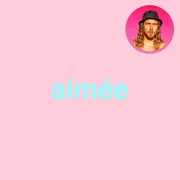
Aimée is named after Julien Doré’s dog — present on the cover. The album was recorded during the lockdown period (2020). This context could have produced a manifesto record about confinement, crisis, the world on pause. Doré does the opposite: he tightens the focus on what is immediately present, without trying to make it a symbol.
La fièvre is a lockdown love song — intimate, almost whispered. Nous is a two-voice declaration. Nous deux completes the triptych. The album constructs a mapping of essential bonds from inside a flat: love, the dog, windows, the habits that hold. No grandiloquence, no lesson. A close gaze at the world that remains when the world stops.
The device
The most stripped-down productions since Ersatz. The cautious electro of & gives way to piano-voice and acoustic guitar. Doré’s voice is recorded close — bedroom intimacy rather than studio distance. The octave doubling persists, but discreet, as if not to disturb the surrounding silence. This is the album that confirms the vocal constant is not a production technique — it is a way of being.
“He doesn’t make a grand crisis record. He makes an ordinary one. That takes more courage.”— Télérama, 2020 (paraphrase)
The album is released 4 September 2020, in the full context of the pandemic. Its sobriety is not a response to the crisis — it is the continuation of an editorial position that predates the crisis. And that is precisely why it holds.
Imposteur
The formal loop: sixteen years after Ersatz, a covers album closes and reopens the question of identity.
Imposteur is an entirely covers album — 17 tracks, available in three editions (black, red, gold) with different bonus tracks per edition. The word “imposteur” is a programme title: singing what one has not written may be a form of imposture. Or perhaps the most honest form of imposture — one that clearly states it is borrowing.
The formal loop is striking. Ersatz (2008), the first album, was built around external composers and contained a Gainsbourg cover. Imposteur (2024), the sixth, is entirely covers. Between the two: sixteen years of affirming oneself as a songwriter, signing one’s own texts, constructing a voice. The final covers album does not erase this trajectory — it illuminates it retrospectively. One truly borrows only when one knows what it means to own something.
The device
Eclectic repertoire spanning chanson française and international pop. Doré’s voice — androgynous, doubled at the octave — is the instrument of translation: it passes other people’s songs through its own colour without altering them. This is the vocal constant put to the test of an external corpus: does the Doré voice exist independently of Doré’s words? Imposteur’s answer is yes.
“The most honest imposture: taking other people’s songs and singing them with your own voice.”— editorial observation
The album is released in three colour editions — black, red, gold — with exclusive bonus tracks per edition. This care for the physical object, rare in the dominant streaming era, says something about Doré’s relationship to music as artefact, not only as stream.
A body of work in four movements
Seen from a distance, the discography reads as a patient demonstration. Four movements, two constants, a formula born improbably from a television competition and deployed over sixteen years without ever yielding to grandiloquence. Julien Doré made sobriety a discipline — and the discipline held.
What never changes
Two constants run through the four movements: the androgynous voice as signature instrument and folk-pop as tender observation of the world close at hand. These are the two invariants. Everything else — bare folk production (Ersatz), acoustic pop (Bichon, Løve), electro opening (&), intimate chamber (Aimée), covers (Imposteur) — is the disposition of the moment. The method does not change.
What is striking is that the voice of Imposteur (2024) is identical to that of Ersatz (2008). Not aged, not forced, not transformed. Simply placed. Sixteen years of fidelity to a voice colour — without ever claiming it as a “brand” — is a rare form of artistic integrity.
Cross-artist bridge: Doré and Delerm
The cartography of Vincent Delerm and that of Julien Doré share the same ethics of the gaze: two singer-songwriters who observe ordinary France with precision, without explanatory lyricism, without distant irony. Delerm maps cultivated intra-muros Paris — Haussmann apartments, café crème, Modiano as adjective. Doré maps the Cévennes and animal France — the lakes, the dogs, the seashores.
The geography diverges radically, but the method converges: both refuse the manifesto, both let the concrete do the work. This parallel is not a similarity — it is a counterpoint. Two ways of observing France, from opposing territories, with the same refusal of the grand gesture.
The map
Six albums orbiting the two constants. Click an album to see how it deploys them.
Observation: seashores, Parisian evenings, concrete images without ironic distance.
Position: voluntary bifurcation post-Nouvelle Star. The declaration of a songwriter.
Observation: limits, small dogs, ordinary space as affective territory.
Position: first album entirely signed by Doré. The authorial affirmation.
Observation: the Cévennes lake, water, proximal nature without forced metaphor.
Position: Diamond disc (1M+). Apogee of the formula. Sobriety as triumph.
Observation: summer love, gentle tenderness, the ordinary in a slightly electronic context.
Position: controlled folk-electro opening. Claimed maturity.
Observation: the dog Aimée, windows, essential bonds under lockdown.
Position: intimate tightening. Refusal of the grand crisis record — the ordinary as resistance.
Observation: the choice of covers as an indirect portrait of the Doré universe.
Position: formal loop. Sixteen years after Ersatz, covers close and reopen the question of identity.