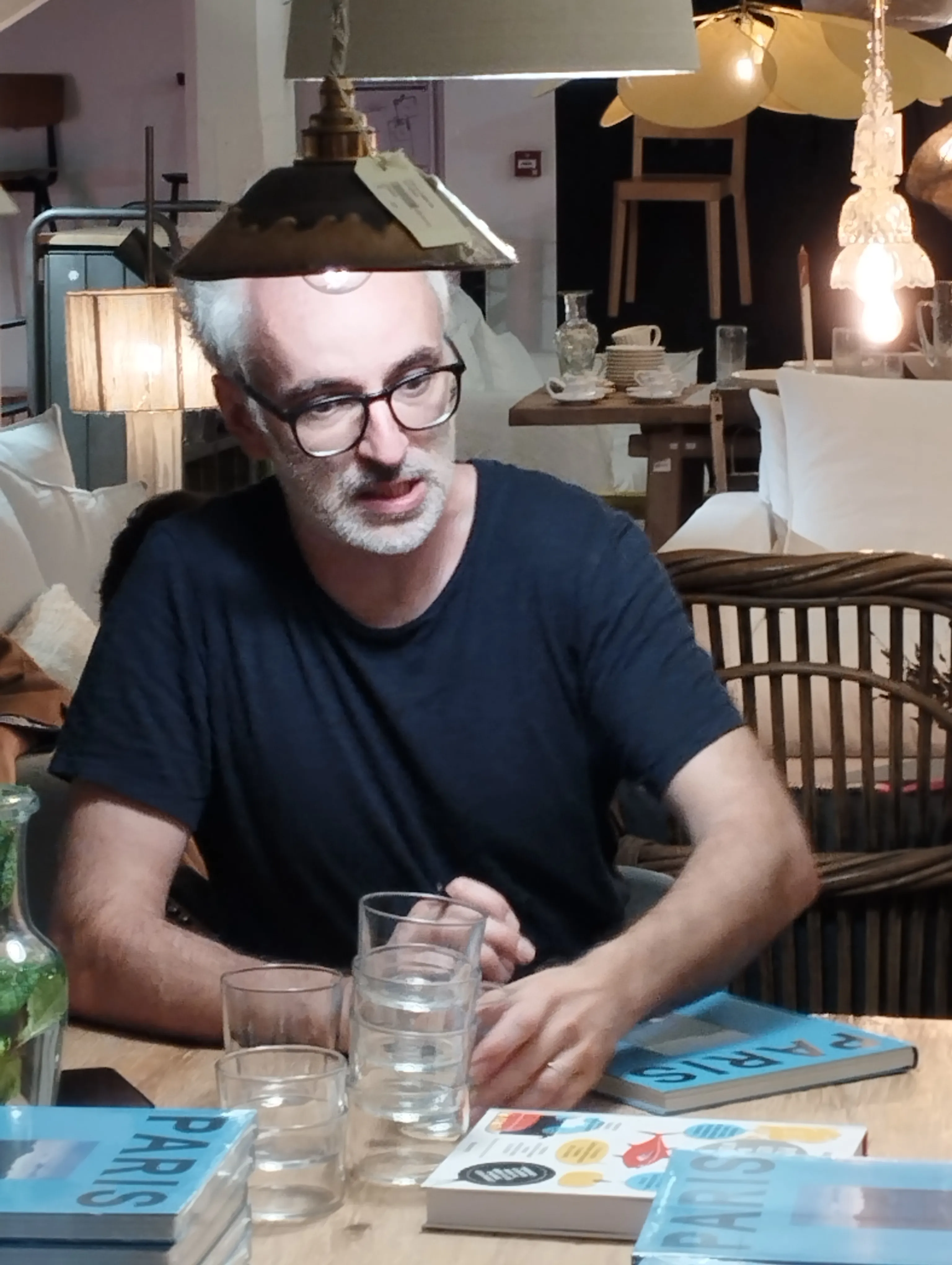
Vincent Delerm
Évreux — Literary piano-chanson
Twenty-three years of songs built on a singular process: the proper noun as emotion. Fanny Ardant, Modiano, Bourdieu, Varda — citations do not ornament the text, they are the text. On the other side, the meticulous observation of a social milieu — café crème, Vélib, Haussmann apartments — with the precision of a sociologist who lives on his own fieldwork.
Why a proper noun can be enough
Fanny Ardant. Two words. No adjective, no verb, no context-setting. And yet something happens — a precise emotion, an identifiable type of seduction, a sentimental tonality you recognise without ever having formulated it. That is the Delerm process: letting the proper noun do all the work.
Vincent Delerm occupies a singular territory in chanson française: that of the writer who sings — not in the sense of poetry, but in the sense of a literary method applied to song. Son of novelist Philippe Delerm (La Première Gorgée de bière, 1997), he inherits an ethics of the fragment: the minuscule as revealer, the everyday detail as portal to something larger. But where the father celebrates small pleasures with gentle benevolence, the son catalogues them — with a mild self-irony that immunises against any sentimentality.
His other, complementary gesture is the domestic observation of bourgeois-bohemian Paris: café crème, Vélib, Haussmann apartment, the self-help section at the FNAC. A precise social milieu, observed with the precision of an entomologist who lives inside his own terrarium.
These two constants run through the six pivot albums that structure this cartography, from 2002 to 2025. They survive the prepared piano of Les Amants parallèles, the geographic expansion of Panorama, the fresco-form of 2025. The process is all the more solid for never having claimed to be anything else.
An editorial link connects this cartography to that of Florent Marchet: two singer-songwriters of the same generation (1975–1976), same register of social observation, same refusal of explicit lyricism. Marchet maps suburban France from the Berry region; Delerm maps cultivated Paris from the 6th arrondissement. Different territories, one shared ethics of the gaze.


◆ Musicological studies
The work’s tracks examined closely — device, structure, procedure, lineage, reading under the permanences.
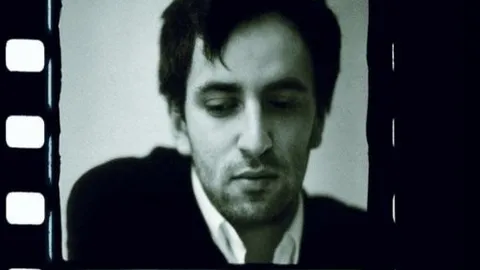
Vincent Delerm
The founding manifesto. The proper noun as emotion, set down from the very first song.
Released in May 2002, this debut is one of those rare first albums that does not announce what the artist might become — it already is what it will always be. Piano-stride warmth, chamber arrangements (violin, trumpet, double bass), a slightly childlike voice. And that immediately recognisable process: name Fanny Ardant, and everything is said.
The album won the Victoire de la Musique in the “Revelation of the Year” category in 2003. Delerm entered the French chanson landscape not as an outsider but as an inevitability — as though the song he proposed had always existed without anyone yet knowing it.
The device
Upright piano plus chamber arrangements: short strings, discrete brass, light percussion. The model is that of chanson rive gauche from the 1960s (Brassens, Brel, Barbara) revisited by someone who grew up with Truffaut and Modiano on their bedside table. Production is stripped but never austere — there is warmth in every arrangement, an attention to sonic detail that prefigures the prepared piano obsession to come.
The formula
One well-known proper noun (actress, writer, public figure) plus one invented domestic everyday life equals one song. The formula seems simple, almost naïve. It is in fact of a formidable precision: the proper noun summons a shared emotion without needing to describe it. To name Fanny Ardant is already to say everything about a certain kind of elegant, melancholic, cultivated seduction. Delerm inherits from his father — novelist Philippe Delerm — the art of the fragment that contains the whole.
“Album of the revelation of the year. Delerm has invented something: using proper nouns as affective materials.”— French specialised press, 2002
A perfectly coherent album, perhaps too much so. Some critics noted that Delerm had invented everything at once — and that his following six albums would be the patient deployment of what was already there, complete, in 2002.
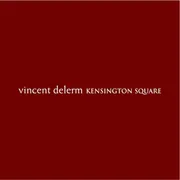
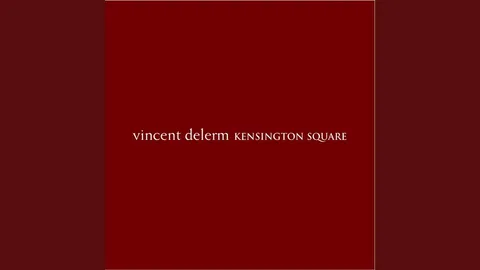
Kensington Square
The citation-process reaches the adjective. Modiano is no longer a name, he is a texture.
Two years after the debut, Delerm confirms without repeating himself. Kensington Square — a London square, but the album remains resolutely Parisian — deepens the literary-citation method to a formal invention: in Le Baiser Modiano, the novelist is no longer the song’s subject, he has become an adjective of sentimental texture.
The success of the first album could have led Delerm toward a comfortable confirmation record. He chooses instead to refine the process — to verify that it holds under greater pressure. The answer is yes.
The device
Arrangements slightly expanded compared to 2002: piano still central, but strings more present, a few discrete electric touches. Delerm seeks a denser sound, less chamber-like, without losing the founding intimacy. The recording remains close — voice in the foreground, never saturated, never distanced by production effects.
The evolution of the process
In Fanny Ardant et moi, the citation is the subject: Fanny Ardant is the imaginary interlocutor, the addressee. In Le Baiser Modiano, the citation has become a qualifier: « un baiser à la Modiano » — the lovers are not kissing like Modiano’s characters, they are kissing in a state that evokes the way Modiano handles time, memory, floating melancholy. This is a considerable logical leap. The citation has moved from the register of reference into the register of language itself.
“Kensington Square confirms that Delerm is not a one-album artist. He has a method, and the method holds.”— Télérama, 2004
Second album of the founding trilogy. The method is confirmed, the audience is there. Delerm has not yet chosen between deepening and rupture — he does both at once, quietly.
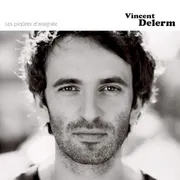
Les Piqûres d'araignée
The peak of the first cycle. Geography widens, pain surfaces beneath the varnish.
The title is a bodily metaphor: the spider bite — a minuscule, persistent pain, mildly venomous, invisible from the outside. This is perhaps Delerm’s most precise album — the one where the gentle irony of the first cycle allows something more anxious to filter through, without ever tipping into darkness.
Third album in four years, still on Tôt ou Tard. Arrangements shift slightly toward a more rock-chanson sound — guitars more present, rhythms more assertive — without abandoning the founding intimacy of the piano. Geography also expands: À Naples il y a peu d’endroits pour s’asseoir takes the album outside Paris for the first time as its exclusive setting.
The device
More generous production than the first two albums: more pronounced bass, layered arrangements, a few discrete studio effects. The sound changes but the gaze stays the same. Delerm is not trying to reinvent himself — he is trying to hold his line under greater sonic pressure. The experiment succeeds: the method of observation is compatible with a more rock-oriented production.
The diffuse pain
The album title signals a shift: the first two albums named places (real or imaginary). This one names a sensation — diffuse, multiple (bites, plural), animal. The Parisian domestic observation begins to turn on itself, to probe what grates beneath the cultivated varnish. Not yet a crisis, but the announcement that comfort is not a destination.
“Les Piqûres d’araignée marks the peak of the early Delerm: the device is perfectly oiled, but one senses for the first time that he is looking for a way out.”— Les Inrockuptibles, 2006
End of the first cycle. Seven years would pass before Les Amants parallèles (2013) — the formal rupture. Delerm has time to let things ripen.
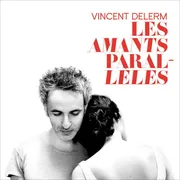
Les Amants parallèles
The radical formal rupture. Prepared piano, Cage extended, comfort abolished.
Seven years separate Les Piqûres d’araignée from this album — time for Delerm to allow something radically different to ripen. Les Amants parallèles is composed entirely for prepared pianos: objects inserted between the strings (screws, felt, pieces of metal) that transform the instrument into a hybrid percussion, close to John Cage and the school of mid-century contemporary music.
A concept album. Duo with Émilie Loizeau. Two voices, two characters, two parallel trajectories that never truly meet — the title is programmatic. This is no longer the 2002 rive-gauche chanson française: this is experimental music theatre.
The device
The prepared piano, as defined by John Cage (1940), produces percussive, metallic, detuned, unexpected sounds. In Delerm’s hands, the use is less avant-garde than Cage’s — he is not trying to destroy the instrument but to displace its warmth. The result is a sound somewhere between acoustic piano, gamelan and wood percussion: familiar and strange at once, like the title.
Why this is a pivot
Delerm demonstrates that his method of observation — the precision of the gaze on the everyday — is not tied to any particular sonic device. The method survives the disappearance of the warm piano-stride, the chamber arrangements, the habitual harmonic comfort. The constants hold even when the timbre is unrecognisable. This is what the formal pivot demonstrates.
“A courageous, unsettling album that clears the air to better prove that the gaze is intact.”— Specialised press, 2013
The album is less frequently performed in concert but critically hailed as an artistically necessary gesture. Delerm does not need to please — he needs to test his limits. The experience will be integrated: later albums return to the acoustic piano, but with the awareness that harmonic comfort is a choice, not an obligation.
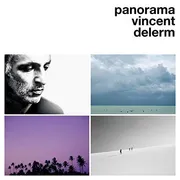
Panorama
Return to an inhabited piano-voice. Geography widens, the gaze grows melancholic.
Panorama — the word denotes a 360-degree view, an overview from an elevated vantage point. This is exactly what the album does: Delerm takes height on his own repertoire, on passing time, on geographies that widen. Six years after the formal rupture of Les Amants parallèles, he returns to the acoustic piano. But it is not the same piano — it is the same instrument inhabited differently.
The album carries a more ample melancholy than its predecessors. The citations are less flashy — Vie Varda is not Fanny Ardant et moi, it is a more discreet, more interior reference, one that presupposes having seen Agnès Varda’s films and having loved them for a long time. The audience has aged with Delerm. So have the references.
The device
Central acoustic piano, but the arrangements are more supple than in 2002–2006: discreet strings, a few light electronic textures, minimalist percussion. The sound is adult, less juvenile than the founding trilogy. Delerm is forty-two. He no longer feigns lightness — he seeks the truth of a lightness earned.
The new-generation citation
Vie Varda cites Agnès Varda (1928–2019) — Nouvelle Vague filmmaker, documentarist, feminist. The song was released in October 2019, seven months after Varda’s death. The reference is contemporary, painful, and serves not to display erudition but to traverse a cultural bereavement. The literary citation has matured: it is no longer the decorative citation of the early years, it is the elegy-citation, heavier.
“Panorama is the album of an artist who has reached maturity: he has nothing left to prove and can allow himself anything.”— Télérama, 2019
Panorama establishes Delerm in a rare position: that of a chanson française artist whose loyal audience has aged with him, and whose references have enriched without being debased. Six albums in, he is still Delerm — but a Delerm who has integrated everything, even the rupture of Les Amants parallèles.
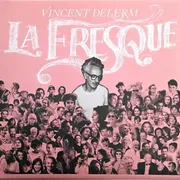
La fresque
The choral gallery. Delerm paints an era, one room at a time.
La fresque — fourteen tracks, June 2025. The word denotes a large-format mural painting: a composite, fragmented work, not meant to be read in a single sweep but which makes sense as a totality. Delerm explicitly embraces the gallery form, the form of multiple portraits, of the wide-angle social chronicle.
This is the sixth pivot album of the cartography — and the most recent. Analytical distance is still lacking, but the direction is readable: Delerm extends the movement of Panorama toward a more choral, more narrative, almost novelistic register. The heritage of his father Philippe Delerm — the novelist of small pleasures — perhaps surfaces here more than in any previous album.
The device
Piano-voice album with varied arrangements track by track. The concept of the “fresco” implies an assumed heterogeneity: the songs do not all sound the same, just as panels of a mural fresco may have been painted at different moments. Unity comes from the gaze, not the sound.
Continuity in the portrait form
The title brings back a tradition of chanson française that excels in social portraiture — Brel (Ces gens-là), Brassens (La mauvaise herbe), Gainsbourg (Couleur café). Delerm enters this lineage but with his own vocabulary: literary and cinematic citations replace caricatures, sociological observation substitutes for satire. Same genealogy, different method.
Provisional close of the cartography. The body of work is ongoing — Delerm is forty-eight in 2025. La fresque is less a conclusion than a new proposition. The cartography will need updating.
A body of work in three movements
Seen from a distance, the discography reads as a patient equation. Three movements, two constants, a method born complete in 2002 and deployed over twenty-three years without ever repudiating itself — nor ever settling for what it already was.
What never changes
Two constants run through the three movements: the literary-cinematic citation as affective material and the domestic observation of the cultivated everyday. These two gestures constitute the true signature. Everything else — warm piano-stride, experimental prepared piano, orchestral arrangements, theatrical duo — is device. The method, however, is invariable.
What is striking is the coherence of the first album with the last. La fresque (2025) uses the same process as Fanny Ardant et moi (2002) — the proper noun as emotional portal, the cultivated everyday as territory. Twenty-three years, no repudiation. No capitulation either.
Cross-artist bridge: Delerm and Marchet
The cartography of Florent Marchet and that of Vincent Delerm share something structurally analogous: two singer-songwriters born a year apart (Marchet in 1975 in Bourges, Delerm in 1976 in Évreux), same refusal of explicit lyricism, same method of using concrete detail as a portal to the universal.
But their territories diverge radically: Marchet maps peripheral suburban France from the Berry region; Delerm maps the intra-muros Paris of the cultivated classes. One observes from the margin, the other from the centre. Both refuse to turn this into a posture. It is in this shared refusal of the manifesto that their bond runs deepest.
The map
Six albums orbiting the two constants. Click an album to see how it deploys them.
Observation: precise, invented Parisian domestic everyday.
Position: founding manifesto. The method stated from the very first song. Victoires 2003.
Observation: cultivated Paris, bookshops, apartments.
Position: refining the process. The citation becomes grammar.
Observation: the Parisian terrarium begins to crack.
Position: peak of the first cycle. Diffuse pain surfaces.
Observation: two characters' everyday, strange sound.
Position: radical formal rupture. Prepared piano, duo, theatrical device.
Observation: expanded geography (Brazil, archipelagos), melancholic gaze.
Position: return to piano, open maturity. An artist with nothing left to prove.
Observation: social fresco, portraits of an era.
Position: provisional close. The body of work is ongoing.