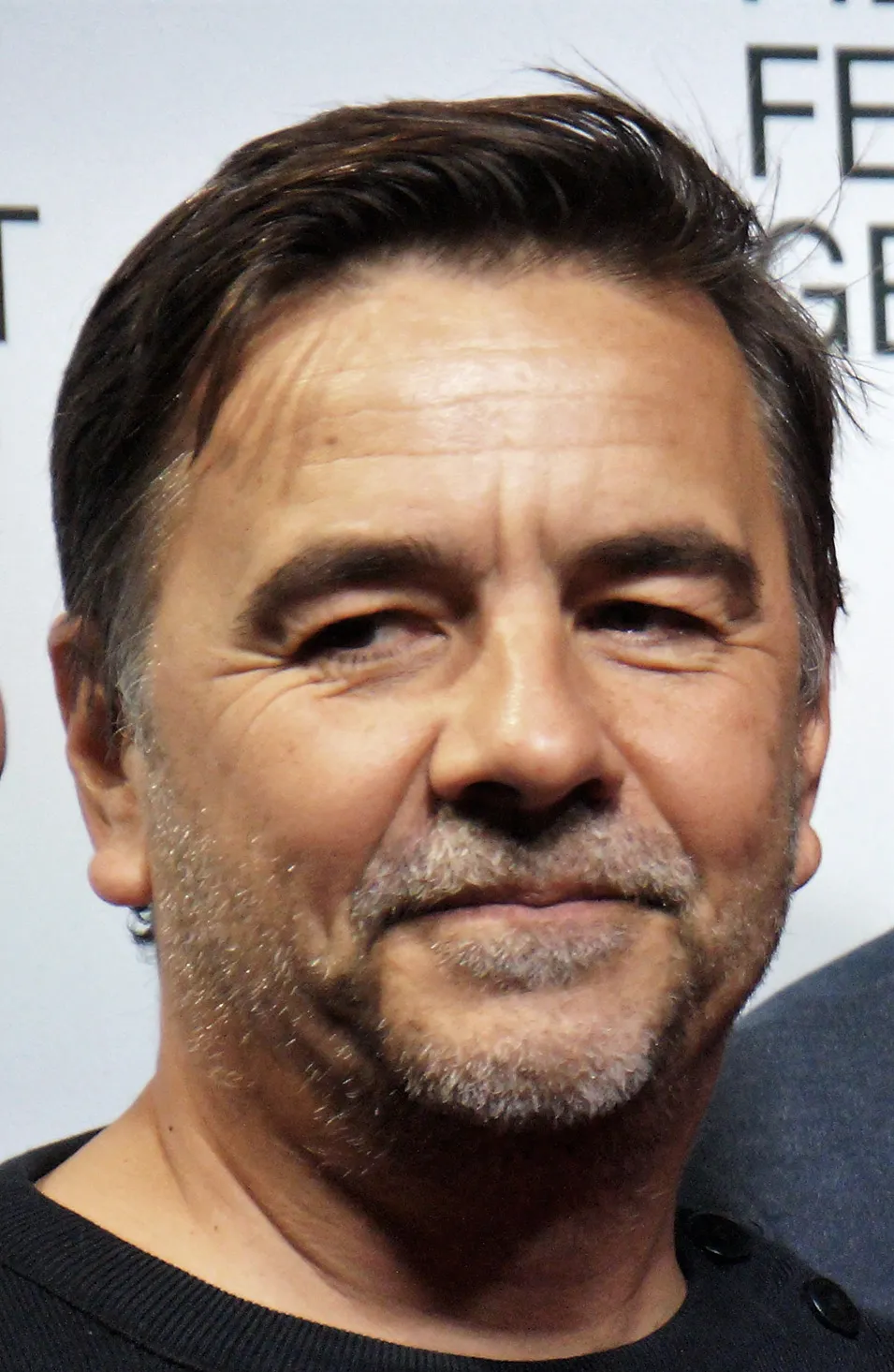
Laurent Garnier
Paris — Techno · Long form
Laurent Garnier is first and foremost a DJ — one of the great names in Europe, resident at Paris's Rex Club since 1992, headliner at the world's biggest techno nights. But he is also an author of albums, a rare thing in club culture. Five pivot records spread over thirty years — from Shot in the Dark (1995) to 33 tours et puis s'en vont (2023) — that write French techno outside the dancefloor single, conceived as a long form where tracks call to each other and answer back.
Why a DJ wrote albums
Techno almost never writes albums. It writes EPs, singles, remixes — short pieces built for DJ sets. The techno album exists, but it is almost always a compilation of tracks that could live on their own. Laurent Garnier made the opposite choice five times in thirty years: compose records that are listened to end to end, track after track, like a continuous set. The result — five pivot albums that write a body of work where his contemporaries wrote only discographies.
Garnier is first known as a DJ — resident at Paris’s Rex Club since 1992, trained in Manchester under Madonna and Frankie Knuckles at Tony Wilson’s Haçienda. His memoir Electrochoc (2013, with David Brun-Lambert) tells the double life — the Technival raves and the airports, the club and the studio. But it is in the album form that he set down what distinguishes him. Two constants hold this scattered body of work together.
The five records that follow play these two constants out across three decades — from the canonical trilogy Shot in the Dark / 30 / Unreasonable Behaviour (1995–2000) that fixes the method, to the experimental turn of The Cloud Making Machine (2005) that pushes the logic to its break with the dance floor, then the great recapitulation of 33 tours et puis s’en vont (2023) that condenses thirty years of archives and collaborations into a triple album.
Garnier writes at the opposite pole from Air, the other major family of French electronic music. Where Air invents a Sunday chamber-electronica, hushed, vocally absent, Garnier writes the Saturday-night techno — frontal, bodily, conceived for the club floor. The two bodies of work intersect rarely at the level of individual tracks and often at the level of the constants: both set their signature across five albums, both choose the long form when pop demands the single. Chamber and club, two French ways of thinking a record as a space.


◆ Musicological studies
The work’s tracks examined closely — device, structure, procedure, lineage, reading under the permanences.


Shot in the Dark
The first testimony. French techno conceived as a record, not as a crate of vinyls.
First studio album. Released on F Communications, the label Garnier has just co-founded with Éric Morand — the house of an entire strand of 1990s French electronic music (St Germain, Shazz, Aqua Bassino, Mr Oizo). Garnier has been DJing for ten years already, resident at the Rex Club since 1992. But this is the first record to bear his own name.
The founding gesture
French techno in 1995 lives on the 12-inch and the EP. Garnier chooses the long format, and he chooses to own it — ten tracks that chain together like a set, with instrumental stretches between the more frontal pieces. Crispy Bacon becomes a massive single on release, carried by a video directed by Quentin Dupieux (the future Mr Oizo) in 1997. But the album does not reduce to its hit — it holds as an arc, with its breaths and its resumptions.
After Shot in the Dark, Garnier moves straight to 30 — as if he needed to accelerate the movement to prove its direction.
30
Age as subject. An early accounting by a DJ looking his decade in the eye.
Second album. Garnier is thirty — he makes it the title, the subject, the structure. Iconic black-on-yellow sleeve, now a visual marker of the F Communications label. Two years after Shot in the Dark, Garnier delivers a denser, more ambitious record that extends the first’s method into a broader narrative arc.
The early accounting
Ten years of DJing condensed into one record. The Rex Club, Manchester’s Haçienda, the first warehouse parties. Garnier composes here as one takes stock — Acid Eiffel asserts itself as the record’s absolute classic, and as one of the peaks of Parisian techno. Nine minutes, an acid-303 line that stretches the Eiffel Tower until it becomes a mental place, not just a postcard. The track blows up Garnier’s status in France.
Three years of silence after 30, then Unreasonable Behaviour — the record where Garnier brings a jazzman into a nine-minute techno track, and where the misunderstanding about the format is lifted for good.
Unreasonable Behaviour
The summit record. A jazz saxophonist walks into a nine-minute techno track, and French techno changes status.
Third album. For many critics, the summit of the body of work. Garnier is thirty-three, with ten years of Rex Club residency behind him and established international recognition. He composes a record that no longer seeks to prove — he sets down, with a calm ambition, a series of titles that enter the canon directly.
The track that changed techno
The Man with the Red Face is the central piece. Nine minutes, slow construction, progressive build, and in the middle of the track, an alto saxophone that takes the total opposite of the format — Philippe Nadaud, a jazz musician invited by Garnier to improvise on the track’s house frame. The result is a piece that no longer belongs to either jazz or techno but to a space that did not exist before it. Since 2000, the track has played in techno sets all over the world. Siraj Javheri’s video, shot in Mumbai in February 2000, makes the track as much an image as a sound.
"Nine minutes that lifted French techno out of the club ghetto.”— paraphrase, Libération 2000
After Unreasonable Behaviour, Garnier lets five years pass. The next record will be the most unexpected — and, for a long time, the most controversial.

The Cloud Making Machine
The pivot. Techno left in the coat-check, jazz, spoken word, musique concrète. Divisive at release, reassessed since as a landmark.
Fourth album. Five years after Unreasonable Behaviour, with Garnier installed as a global dance-floor star, the record takes everyone by surprise — no techno hit, no immediately identifiable track, long stretches that refuse the 4/4, spoken word, musique concrète textures, jazz in the background. The DJ public does not recognize the method. The press splits.
The record that no longer waits for the dance floor
Garnier explains on release that he wanted to make a record you listen to at home, not at the club — but the claim is more radical than that. The Cloud Making Machine tests how far the Garnier method holds when you remove the dance-floor constraint. What remains is precisely the signature: the long form, eclecticism, considered transitions. The album is listened to end to end or not at all — it has no single.
"We expected an Unreasonable II, we got a chamber record.”— paraphrase, Les Inrocks 2005
The reassessment
Ten years later, the record is considered a precursor — of a contemplative techno, a narrative ambient, of what will be called “post-club” in the 2010s. The 2005 controversy reverses: what the press reproached Garnier for (leaving techno) becomes what he is credited with (anticipating a listening space that did not yet exist). It is Garnier’s only solo studio album for eighteen years.
After The Cloud Making Machine, Garnier tours, remixes, publishes Public Outburst (live) in 2007 then Home Box (anthology) in 2015. But no new solo studio album until 2023. Eighteen years of discographic silence, for a return that will act as an accounting.
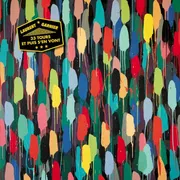
33 tours et puis s'en vont
The recapitulation. Triple album, seventeen tracks, thirty years condensed — with Chilly Gonzales, Miss Kittin, Philippe Nadaud, Alan Vega posthumous.
Fifth album. First solo studio record in eighteen years. Garnier is fifty-seven, and in the meantime has published a book (Electrochoc, 2013), hosted a podcast (It Is What It Is), continued residencies. The return takes the form of a triple album — seventeen tracks spread over three vinyls — that explicitly functions as an accounting.
The sum-accounting
All the families Garnier has traversed in thirty years return on the record. House, Detroit techno, drum’n’bass, downtempo, jazz, chanson, spoken word, ambient. The collaborations make a map: Chilly Gonzales on piano, Miss Kittin on vocals (veterans of the European electronic scene), Philippe Nadaud returning on saxophone twenty-three years after The Man with the Red Face, and above all Alan Vega — voice of Suicide — featured posthumously from vocal archives. The record works as a memory-album while remaining a record of the present.
"One of the best melodic techno records of the year, compositional to an orchestral thickness.”— paraphrase, Resident Advisor 2023
The album’s title lays down the rule: 33 tours et puis s’en vont (literally: 33 turns and then they’re gone). After the triple album, Garnier has not announced a stop — he continues touring, residencies, the podcast. But the record has the shape of a marker: thirty years of albumic writing held end to end, without drift, without compromise with the single format. The two constants laid down in 1995 have not moved.
A body of work in three movements
Thirty years of studio writing scattered around an ongoing DJ practice. The trajectory falls into three clear movements — each testing a different way of applying the two constants: the album as continuous set, and eclecticism as signature.
What never changes
The two constants hold end to end. The album as continuous set — each record is listened to in one sitting, never as an assembly of singles. Eclecticism as signature — a single thread, that of the DJ who chooses. What makes the work recognizable is not a timbre or a rhythm, it’s the nature of the transitions, the taste for internal rupture.
The club side of the French Touch
For thirty years, Garnier has been writing what Air never tried to write. The two bodies of work occupy the two sides of 1990s French Touch — the chamber and the club, the Sunday and the Saturday night. Where Air invents a hushed, vocally absent electronic music to listen to while seated, Garnier composes a frontal, bodily electronica made for the club floor. Taken together, they chart the French space of electronic music of an era — two sensibilities that recognize one another without ever resembling one another.
The map
Five records orbiting the two constants. Click an album to see how it plays them out.
Eclecticism: deep house, jazz, breakbeat in one record.
Position: the manifesto. First album, the long-format commitment.
Eclecticism: techno, house, ambient, drum'n'bass.
Position: consolidation. The work finds its geometry.
Eclecticism: jazz (Philippe Nadaud on sax), mental techno.
Position: masterpiece. The techno-jazz intersection that defines Garnier.
Eclecticism: ambient, dub, electronica, guest vocals.
Position: rupture. The least club record — the most cinematic.
Eclecticism: many collaborations, extreme variety.
Position: summation. An album-compendium that owns eclecticism as signature.