LCD Soundsystem
New York — Dance-punk
Twenty years, four studio albums and a farewell at Madison Square Garden — from LCD Soundsystem (2005), a compilation of DFA singles forged in post-punk Brooklyn, to american dream (2017), a return as continuation rather than nostalgia. LCD Soundsystem rests on two gestures: the anti-charisma voice as method — Murphy sings by speaking, a flat and honest voice that refuses the rock costume — and post-punk + dance citation as architecture — Bowie, Talking Heads, Liquid Liquid, ESG digested until unrecognisable yet still legible. Dance music self-aware of its own history, made by a man who knew too much to pretend otherwise.
Why the flat voice is a decision
LCD Soundsystem did not invent post-punk dance music — New Order, Gang of Four, The Rapture had already crossed the four-on-the-floor kick with angular guitar before 2005. But James Murphy was the first to make that fusion a posture of total honesty, with a voice that refuses the costume and a production that documents its own sources without concealing them. LCD Soundsystem (2005) arrives as an archive-double-album as much as a manifesto: here is what we made, here is where it comes from.
Two founding gestures, constant from 2005 to 2017. First, the anti-charisma voice as method — Murphy sings by speaking, voice deliberately flat in timbre, hesitant in inflection. No vocal performance, no rock costume. The voice says: I am telling you something true. Second, post-punk + dance citation as architecture — Bowie, Eno, Talking Heads, Liquid Liquid, ESG, DAF digested until unrecognisable but still legible, assembled with contemporary club structures. These two permanences are not styles. They are working methods.
The four pivot albums that follow trace the arc: LCD Soundsystem (2005) — the compilation-manifesto, the open catalogue of sources; Sound of Silver (2007) — the monument album, the great clarity; This Is Happening (2010) — the climax before the split, every track aware of its own finitude; american dream (2017) — the return as continuation, darker, more polyphonic, rated 10/10 by Pitchfork.
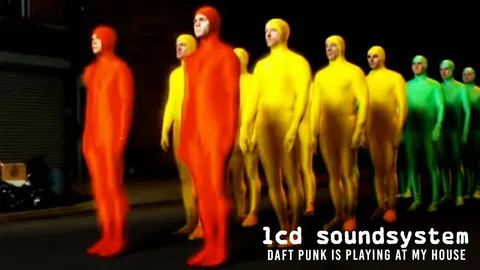
The New York lineage has a precise address. Daft Punk and LCD Soundsystem meet in “Daft Punk Is Playing at My House” (2005) — not as an abstract influence but as a literal bridge: the track names Daft Punk in its title, uses the same vintage drum machines (TR-808), narrates an imaginary party. Two forms of dance music seeking how to engage with the past — from Paris and from New York, in the same year.


◆ Musicological studies
The work’s tracks examined closely — device, structure, procedure, lineage, reading under the permanences.
LCD Soundsystem
The manifesto of productive confusion. Vintage drum machines, New York post-punk, and a voice that lists its references without shame.
In 2005, LCD Soundsystem released its debut album on DFA Records / Capitol — a double record that is essentially a compilation of singles (2002–2004) supplemented with new material. This hybrid format is revealing: Murphy had not yet the means or the inclination to rebuild everything from scratch. He compiles, documents, classifies. The result is a strangely coherent album despite its fragmented genesis — because the voice, the production timbre, and the obsession with vintage drum machines run through everything.
DFA Records (founded 2001 with Tim Goldsworthy) was already a micro-ecosystem: Murphy produced other artists there (The Rapture, !!! / Chk Chk Chk), forging a sound. The label-as-school is visible from this first album: TR-808, TR-606, modular synthesisers, dry guitars in a lo-fi mix that claims its constraints as aesthetic. This is not a poor album — it is an album that chose its poverty.
The device
The double album is structured into two distinct discs. The first is the “studio” album: unreleased or newly recorded tracks, dense production, standard lengths. The second is the singles and remixes disc — “Losing My Edge” (2002), “Yeah” (two versions, 6 and 18 minutes), “Yr City’s a Sucker”. The separation is not strict, but it gives the record the logic of an archive: here is what we made, here is how we think about it now.
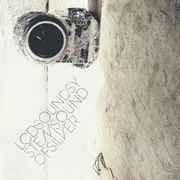
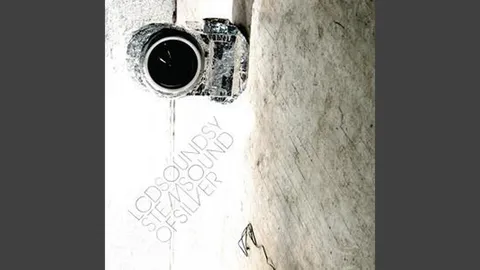
Sound of Silver
The monument album. Eight tracks, some running to nine minutes, that define how much humanity dance music can contain.
Sound of Silver was released on 12 March 2007. Murphy was 37. Over eighteen months, with Tim Goldsworthy (who would leave DFA shortly after), he recorded the first true studio album of LCD Soundsystem — not a compilation, not an archive, but an object conceived as a unit. The result was unanimously recognised as a major work. Pitchfork awarded it 9.2/10. It would finish 11th on their list of best albums of the decade.
What strikes on listening: the generosity of duration. “Get Innocuous!” runs for 7 minutes. “All My Friends” for 7’37”. “Us v Them” for 7’30”. This is not padding — it is a refusal to conclude prematurely. Murphy lets each idea develop to its logical end, as if the track itself knew when it must finish. Long form as trust in the listener.
The device
Sound of Silver is built on the alternation between dance tracks (motorik pulse, four-on-the-floor kicks) and confessional ones (“All My Friends”, “Someone Great”). This alternation is not dramatic contrast — both registers are filtered through the same silvery, cold and precise production. The album is a two-speed machine: some tracks move you physically, others make you realise you have grown old.
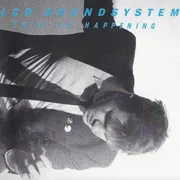
This Is Happening
The climax before the split. Every track knows it might be the last. You can hear it.
This Is Happening was released on 17 May 2010, announced as the final LCD Soundsystem album. Murphy was 40. He produced alone — Goldsworthy had left in 2007. The title is near-meta: this is happening, simultaneously the album and the end of the album. The farewell concert would follow at Madison Square Garden on 2 April 2011 — The Long Goodbye, five hours of music, sold out in minutes.
It is the most crystalline album in the catalogue. The production is the most precise, the most open — every element breathes in the mix. Murphy does not produce for finitude as if it were a tragedy. He produces as if finitude lends every decision a particular clarity. This Is Happening sounds like someone who knows exactly what they are doing and why.
The device
The album opens with its most ambitious track: “Dance Yrself Clean”, 8 minutes, of which three are a whispered intro before the explosion. This opening is a gesture of total trust — Murphy knows you will stay through the first five near-silent minutes because you know something is coming. The reward is proportional to the wait.
The Long Goodbye — Madison Square Garden, 2011
On 2 April 2011, LCD Soundsystem played at Madison Square Garden in New York. A farewell concert, sold out in minutes. Five hours of music. Murphy was 41. The event was called The Long Goodbye.
This was not a simple separation concert. It was a declaration of principle: a band at its peak choosing to stop, not from exhaustion but from the conviction that the end is preferable to repetition. Murphy stated that LCD Soundsystem risked becoming “embarrassing” if it continued — a revealing formulation. The fear of self-parody, of the machine running without fuel. This fear is coherent with the anti-charisma voice: you cannot be Murphy and continue when you have nothing left to say.
The live recording of The Long Goodbye (released 2014) documents that evening across five hours. It is not a nostalgic document — it is a document of truth. You can hear Murphy introducing tracks, speaking to the audience, occasionally losing himself a little. The flat and honest voice, even live, even in front of twenty thousand people.
Four years of silence would follow. Murphy opened a bar in New York (Four Horsemen), became involved in other projects (sonic design for the US Open with IBM, 2013). In 2015, the return was announced. In 2016, Coachella confirmed it. In 2017, american dream.
The Long Goodbye was not a full stop. It was a long comma.
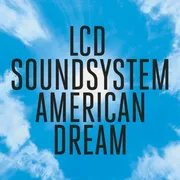
american dream
The return album, but not the nostalgia album. Continuation, not repetition. Pitchfork 10/10.
american dream was released on 1 September 2017. Murphy was 47. The return had been announced in 2015, confirmed at Coachella 2016. Five years of silence after Madison Square Garden. The album was recorded without Tim Goldsworthy (gone since 2007), with increased roles for Nancy Whang and Al Doyle. The first surprise is the title — entirely lower case. This is not stylistic mannerism: it is a political position. The American dream is in lower case because it is modest, or ironic, or broken. The album arrived in full Trump context.
Pitchfork awarded 10/10. Not a loyalty reward — a reward for novelty within continuity. american dream does not sound like LCD Soundsystem trying to replay LCD Soundsystem. It sounds like LCD Soundsystem in 2017, with everything 2017 implies of greater darkness, greater urgency, greater polyphony (Nancy Whang is more central than ever).
The device
The album is darker in its sonic palette. Italo-disco and German new-wave accents in tracks like “Tonite” or “american dream” (the track) evoke Joy Division, DAF, Giorgio Moroder — nocturnal register, cold synthesisers, voice in tension. Nancy Whang sings more, co-constructs tracks rather than merely accompanying. The collective is more audible.
A body of work in four movements
Twenty years, four studio albums, a farewell at Madison Square Garden, and a return rated 10/10. The LCD Soundsystem trajectory divides into four distinct movements — each testing the anti-charisma voice and the post-punk + dance citation in a new context, through to their darker continuation in american dream (2017).
What never changes
Two permanences traverse all four movements. The anti-charisma voice as method — from the honest recitation of “Losing My Edge” to the whisper of “oh baby”, Murphy never plays a character. The voice is flat because truth is flat, because vocal performance would be a betrayal of the subject. This voice is the opposite of Bowie (the costume) and the opposite of Iggy Pop (the body), despite the cited lineages. Post-punk + dance citation as architecture — every album is a historico-musical commentary, legible as such. The sources change from album to album (Talking Heads → Bowie + Eno → DAF → Joy Division), but the method remains the same: take bricks from the past, assemble them with the pulse of the present. DFA Records was the laboratory of this method.
The bridge that holds
One bridge alone is factual and literal: Daft Punk and LCD Soundsystem meet in “Daft Punk Is Playing at My House” (2005) — a track that names Daft Punk in its title, uses the same TR-808 drum machines, narrates an imaginary party. Two projects seeking to make dance music from the past: Daft Punk filtered disco from Paris, LCD Soundsystem cited post-punk from New York. Same generation of fans, same appetite for vintage timbre, two radically different answers. The bridge is inside the song itself. It is the only one that counts.
The map
Four albums in orbit around the two permanences. Click an album to see how it applies them.
Dance citation: TR-808 + Liquid Liquid + ESG. Daft Punk Is Playing at My House — the literal bridge, textual AND sonic. The open catalogue of sources without shame.
Position: compilatory double album. DFA, Brooklyn, 2005. The persona invented before the body of work.
Dance citation: Bowie + Eno (Get Innocuous! → Heroes), Liquid Liquid (North American Scum), Chicago house (long duration). Architecture at its densest.
Position: the monument album. Pitchfork 9.2/10. Goldsworthy + Murphy at their maximum equilibrium.
Dance citation: DAF (Dance Yrself Clean), Chic (All I Want). Citations more integrated, less ostensible, more structural.
Position: announced final album. Crystalline production climax. Madison Square Garden, April 2011.
Dance citation: Joy Division (bass intro of american dream), italo-disco (Tonite), German new wave. More nocturnal register.
Position: return as continuation. Pitchfork 10/10. Nancy Whang central. Trump context — the dream in lower case.