Massive Attack
Bristol — Trip-hop
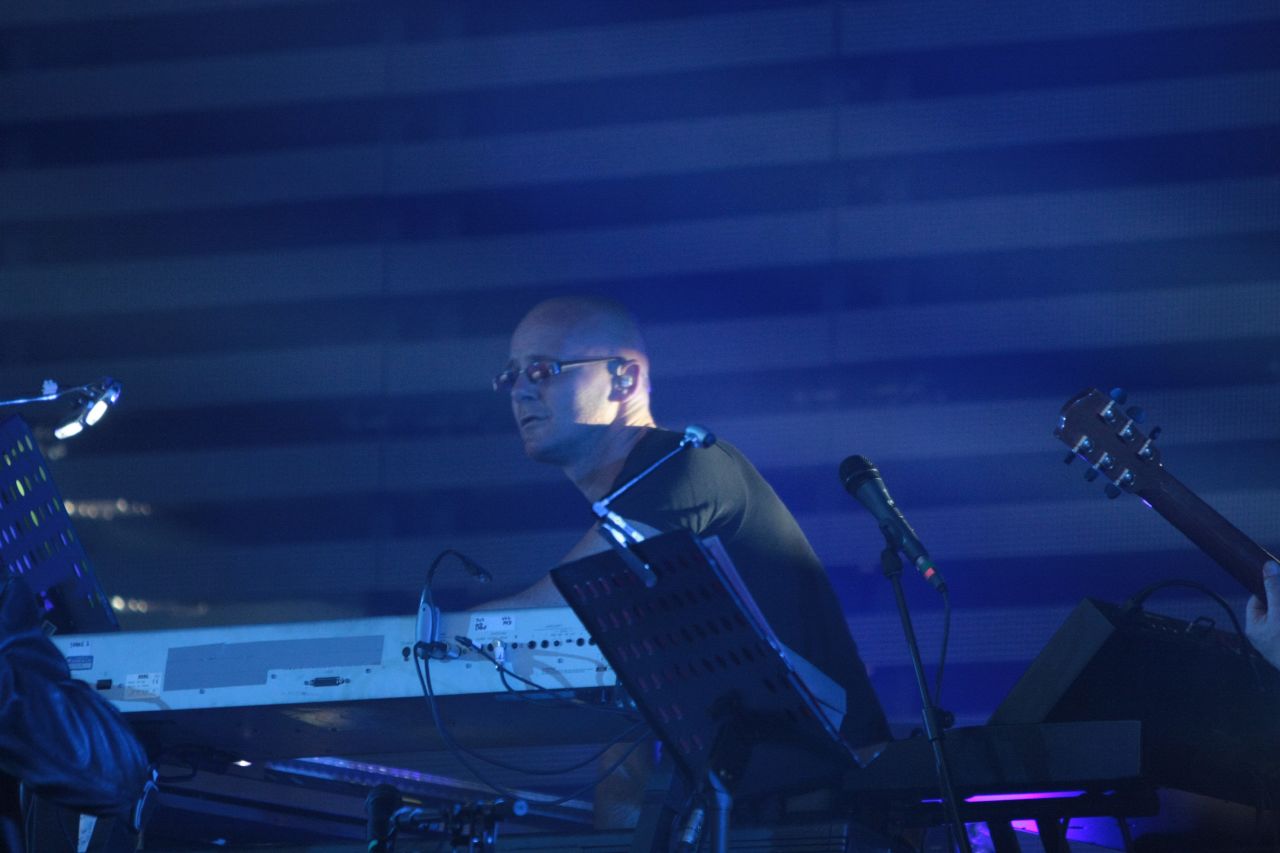
Bristol, 1988. Robert 'Bullet' Del Naja (3D), Grant 'Daddy G' Marshall and Andrew 'Mushroom' Vowles emerge from the Wild Bunch sound-system collective. Hip-hop, Jamaican dub, 70s soul — and something no one has yet named. Blue Lines is released on 8 April 1991: trip-hop begins there, even if the word doesn't yet exist. Five albums across twenty years: Blue Lines (1991), Protection (1994), Mezzanine (1998), 100th Window (2003), Heligoland (2010). Two constants held throughout: the sample as urban mental landscape and the guest voice as writing-by-contrast.
Why the bass is the architecture
Bristol, late 1980s. The Wild Bunch sound-system collective brings together people who have no business being together by every rule of genre: hip-hop MCs, Jamaican dub enthusiasts, 70s soul fans, graphic designers. From this hybrid object emerge, from 1988, Robert ‘3D’ Del Naja, Grant ‘Daddy G’ Marshall and Andrew ‘Mushroom’ Vowles. They sign with Wild Bunch Records and Circa. Blue Lines drops on 8 April 1991. Trip-hop is born, before it has a name. Two constants held across twenty years and five albums: the sample as urban mental landscape and the guest voice as writing-by-contrast.
What Massive Attack does that others don’t comes down to a single gesture: treating the sample as a pigment rather than a quotation. Wally Badarou, Bob James, Isaac Hayes, Jamaican dub rhythms, 70s soul — lifted, fused, dissolved into something new that carries the imprint of its origins without imitating them. Bristol’s dub bass becomes the binding material for everything else. It is an architecture: the sample is the concrete, the bass is the spine, the guest voice is the light entering through a chosen window. The choice of window — who sings — is the central creative decision. Shara Nelson, Tracey Thorn, Liz Fraser, Horace Andy, Hope Sandoval, Sinéad O’Connor, Damon Albarn: each brings a lighting incompatible with the instrumental fabric, and that is precisely why they’re there.
The arc holds in three movements. The invention: Blue Lines (1991) and Protection (1994) lay down the grammar — trip-hop before and after its baptism. The apex: Mezzanine (1998) alone, the monument album, the moment of maximum tension between Mushroom, 3D and Daddy G, and the masterpiece that results. The fragmentation: 100th Window (2003) and Heligoland (2010) — 3D alone, then Daddy G back, in a geopolitically transformed world.
A factual and structural bridge with the collection: Nujabes. Two pioneers of sample-as-meditation across opposite geographies — Bristol and Tokyo, the same period (1991-2010 / 2003-2011). Massive Attack’s dub-bass and Nujabes’ mantra-loop are two variations of the same intuition: the sample is not a quotation, it is an architecture. The contemplative East-West counterpart of the same way of listening to the past.


◆ Musicological studies
The work’s tracks examined closely — device, structure, procedure, lineage, reading under the permanences.
Blue Lines
The invention. Bristol meets slowed-down hip-hop, dub and soul — and trip-hop is born before it has a name.
Bristol, 1988-1991. The Wild Bunch sound-system collective — 3D, Daddy G, Mushroom, but also Tricky, Portishead, Nellee Hooper — splits into distinct groups. Massive Attack sign with Wild Bunch Records / Circa and enter the studio. Blue Lines drops on 8 April 1991. The word ‘trip-hop’ doesn’t yet exist — it would take until 1994, a Mixmag review, for the genre to be named. But everything is there: slowed hip-hop, dub bass, 70s soul samples, voices that are never those of the group themselves.
The device
Nine tracks. Three external voices: Shara Nelson (soul, R&B), Horace Andy (Jamaican roots reggae), rapper Tricky on two tracks. Production: Massive Attack + Jonny Dollar + Nellee Hooper. Identifying samples: Wally Badarou Mambo on Unfinished Sympathy, Bob James Take Me to the Mardi Gras on Safe from Harm. The strings on Unfinished Sympathy were recorded live by Will Malone with 40 musicians at Angel Studios, London. The dub-bass as emotional architecture is already in place on track one.
“An album that redefined what popular music could do with silence, speed and sonic colour.”— NME, retrospectively
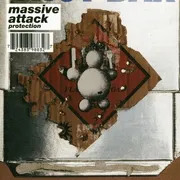
Protection
The softening. The formula refines, the palette warms — Tracey Thorn brings unexpected clarity.
Three years after Blue Lines. Trip-hop now exists as a genre — Tricky and Portishead have released their albums. Massive Attack face pressure: repeat or pivot? They choose to soften the formula. Less raw hip-hop, more ambient soul. The central feat is no longer Shara Nelson (who has gone solo) but Tracey Thorn from Everything But The Girl — clear, almost fragile voice against the usual electronic backdrop. The album drops on 26 September 1994 and reaches number two in the British charts.
The device
Eleven tracks. Voices: Tracey Thorn (Protection, Better Things), Nicolette (Three, Sly), Horace Andy (Hymn of the Big Wheel), Tricky (Karmacoma). The Mad Professor remixed the entire album in 1995 as No Protection — a full dub experiment built on the same foundations. Samples more discreet than in Blue Lines: clean electronics tend to replace raw sampling. The bass remains, but it breathes more.
“Protection may be the Massive Attack record that ages best — its sadness is tender rather than dark.”— Pitchfork, retrospective 2009
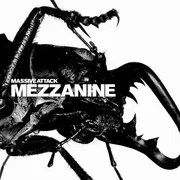
Mezzanine
The monument. Distorted guitars, Liz Fraser suspended in mid-air, Horace Andy darker than ever. The summit.
1998. Internal tensions have reached their peak: Mushroom wants to move toward a more commercial direction, 3D toward something darker and more experimental. Mezzanine is the album of the fracture — and paradoxically, the most accomplished in the discography. Distorted guitars, bass like walls, samples buried under multiple layers. Liz Fraser of the Cocteau Twins sings Teardrop: her ethereal voice against the anthracite electronic fabric, the most extreme contrast gap the group had ever attempted. Mushroom left Massive Attack at the end of recording.
The device
Eleven tracks. Voices: Liz Fraser of the Cocteau Twins (Teardrop, Black Milk), Horace Andy (Angel, Man Next Door). No external featured MC — Massive Attack carry the rhythmic load alone. The novelty: processed guitars invading the fabric (Inertia Creeps, Risingson) — underground dark rock. Samples: Inertia Creeps uses elements from post-punk (Gang of Four, Can). Bristol’s dub-bass merges with rock darkness.
“Mezzanine is not only Massive Attack’s best album — it may be the best album of the 1990s.”— NME, 1998 (paraphrase)
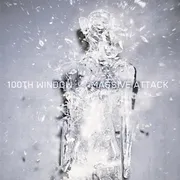
100th Window
The bunker. Mushroom gone, Daddy G absent — 3D alone with Sinéad O'Connor in a post-9/11 world.
2003. Five years after Mezzanine, and the group is no longer the same. Mushroom has left. Daddy G is on hiatus (his wife is expecting, he steps back from the studio). 100th Window is essentially 3D’s solo album — with Neil Davidge as co-producer. The geopolitical context has shifted: 11 September 2001, the Iraq War. The lyrics and visuals carry an unprecedented political weight. The album drops on 10 February 2003, three weeks before the start of the Iraq War.
The device
Ten tracks. Voices: Sinéad O’Connor (Special Cases), Horace Andy (Name Taken), Terry Callier (Everywhen). No Shara Nelson, no Liz Fraser, no Tracey Thorn. The sound is more minimal, more stripped — samples become rare, synths take over. Butterfly Caught is instrumental, Future Proof is almost a 3D solo. The emotional architecture shifts from collective to individual — and you can hear it.
“100th Window sounds like a man alone in a room watching the world collapse through the window.”— Les Inrockuptibles, 2003 (paraphrase)
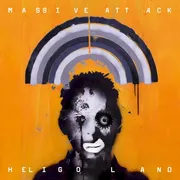
Heligoland
The return. Daddy G back, broader palette — Hope Sandoval, Damon Albarn, a cautious opening to the world.
Seven years after 100th Window. Daddy G has returned. The cast of voices is the widest in the discography: Hope Sandoval (Mazzy Star), Damon Albarn (Blur/Gorillaz), Martina Topley-Bird, Tunde Adebimpe (TV on the Radio), Horace Andy again. The album drops on 8 February 2010 and hits number one in Britain. Heligoland is a small North Sea island off Germany — isolated territory, wind-battered. A metaphor for the group itself: surviving, peripheral, persisting.
The device
Eleven tracks. More open than the three preceding albums: some flashes of light (Hope Sandoval’s gentle folk on Paradise Circus, Damon Albarn’s voice on Saturday Come Slow), but the dark foundation remains. Splitting the Atom is the opening statement: political lyrics, stripped electronics, Horace Andy again. Production (3D, Daddy G, Neil Davidge) is more airy, less sealed than 100th Window. The group breathes again as two.
“Heligoland sounds like a band returning after an interior war — not victorious, but standing.”— The Guardian, 2010 (paraphrase)
What never changes
Movement I — The invention (1991–1994)
Blue Lines and Protection: two albums to lay down a grammar. The first invents trip-hop without naming it: hip-hop slowed to 90 BPM, dub bass as foundations, 70s soul samples (Wally Badarou, Bob James) fused into something new, external voices chosen for their gap (Shara Nelson, Horace Andy). The second softens the formula: Tracey Thorn brings unexpected clarity, samples grow rarer in favour of electronic textures, the darkness tempers. Bristol has found its voice. It’s cold, low, and always chooses someone else to speak for it.
Movement II — The apex (1998)
Mezzanine alone — one album, one entire movement. The internal tensions between Mushroom (who wants more pop) and 3D (who wants more darkness) paradoxically produce the masterpiece. Distorted guitars beneath the bass, samples buried under multiple synth layers, Liz Fraser (Cocteau Twins) whose ethereal soprano floats above the darkest fabric the group has ever built. Teardrop becomes the apex: looping harpsichord, suspended beat, Fraser’s voice — and ten years later, the House M.D. theme. The maximum of both constants simultaneously: the most deeply fused sample and the most extreme voice contrast.
Movement III — The fragmentation (2003–2010)
100th Window (2003): Mushroom gone, Daddy G on hiatus, 3D alone in a post-9/11 world. The most stripped, most political, least collective album. Sinéad O’Connor on Special Cases — a burning political figure against cold electronics. Heligoland (2010): Daddy G has returned. The cast widens (Hope Sandoval, Damon Albarn, Tunde Adebimpe). The palette warms slightly, without ever reaching full sunshine — it’s still Bristol, still night, just one more window open. The group survives its own fragmentation and remains recognisable.
What never changes
Twenty years, five albums, three members become two, sometimes one. What remains invariable: the bass as architecture — it’s there in every album, a cemented foundation on which everything else can sway; and the choice of who sings — never the group itself, always someone else, always someone incompatible with the fabric, always chosen for what they bring that’s different. The two constants are two faces of the same idea: music is a habitable space, and the inhabitants come from outside.
Cross-artist bridge
Massive Attack and Nujabes share, across continents and decades, the same intuition about sampling: it’s not a quotation or a tribute, it’s a building material. Bristol’s dub-bass and Tokyo’s jazz-loop are two different architectures built on the same principle — lifting to construct, not to reproduce. Jun Seba dies in 2010, the very year Heligoland is released. Two bodies of work that cross without touching, in the same space-time, with the same intention.
The map
Five albums orbiting the two constants. Click an album to see how it plays them out.
Voice-contrast: Shara Nelson (warm soul against cold bass), Horace Andy (roots reggae against urban hip-hop).
Position: invention. Trip-hop is born here, nameless.
Voice-contrast: Tracey Thorn (EBTG pop clarity) against trip-hop opacity.
Position: consolidation. The genre tempers, softens.
Voice-contrast: Liz Fraser (Cocteau Twins soprano) against the darkest fabric: maximum gap.
Position: apex. The monument album. Mushroom leaves after.
Voice-contrast: Sinéad O'Connor (burning political fragility) against cold electronics.
Position: 3D solo, post-9/11, the most stripped.
Voice-contrast: Hope Sandoval (Californian folk), Damon Albarn (Blur) — widest cast yet.
Position: Daddy G returns, cautious reopening.