Nujabes
Tokyo — Instrumental hip-hop
Seven years, two solo albums (Metaphorical Music 2003, Modal Soul 2005), a collective anime soundtrack (Samurai Champloo Music Records, 2004–2005) and a third album completed after his death by his close circle (Spiritual State, 2011). Killed at 36 in a Tokyo traffic accident on 26 February 2010, Jun Seba becomes within a decade the author of a worldwide grammar: the sample as jazz meditation and tribute as form.
Why the loop is the work
Jun Seba is twenty-nine when Metaphorical Music is released. He is thirty-six when he dies, on 26 February 2010, in a traffic accident in Nishi-Azabu. Between the two: seven years, two solo albums in his lifetime, one collective anime soundtrack, a third album completed after him by his friends. Seven years to lay down a grammar that today saturates the study playlists of half the world. Before Nujabes, Japanese hip-hop existed (Buddha Brand, Microphone Pager) but stayed within the American orbit. With him, auteur hip-hop born in Tokyo finds its own language: tender, meditative, jazz-soul, built on loops. Two permanent gestures: the sample as jazz meditation and tribute as form.
The work begins in Shibuya. Record-store clerk at Tribe, founder of Hydeout Productions in 1998, Jun Seba spent five years digging through the bins of Brazilian jazz (Luiz Bonfá, Laurindo Almeida) and American spiritual jazz (Yusef Lateef, Dorothy Ashby) before Metaphorical Music was released. The founding gesture holds in one sentence: take an entire loop from an elder, let it spin like a mantra, lay a dry MPC drum kit underneath, and credit the source in liner notes. The sample is not a raw material to be cut up. It is an object to be respected, made audible, transmitted. Hip-hop as a genre lives on the sample, but Nujabes turns it into an ethical project: cite rather than mask.
The arc holds in three movements. Metaphorical Music (2003) lays down the grammar — first solo album after five years of maxi-singles, American underground featurings (Cise Starr, Substantial, Pase Rock), Brazilian jazz and soul samples. The collective soundtrack Samurai Champloo Music Records — Departure / Impression (2004–2005), with Fat Jon, Force of Nature and Tsutchie, brings Nujabes into global anime consciousness via Adult Swim. Modal Soul (2005) is the climax — Aruarian Dance, Feather, Luv(sic) Pt 3. Five years of discretion between Modal Soul and the death, punctuated by EPs (Hydeout Productions 2nd Collection) and singles. On 26 February 2010, the accident. Spiritual State is released on 3 December 2011, completed by Uyama Hiroto, Pase Rock, Substantial, Cise Starr from the unfinished sessions. The work stops, but its grammar keeps producing its effects a decade later.
No solid bridge to establish with the other artists in the collection. The obvious candidate — the loop-meditation side of Premiers Symptômes and Moon Safari by Air — holds on the surface but not at depth: Air builds its instrumentals from played analogue keyboards and basses, Nujabes from explicit samples of prior tracks. The project of tribute to jazz-soul elders (Permanence 2) has no equivalent in the collection. Better hold Nujabes alone than force an approximate parallel. The loop, here, is the work.


◆ Musicological studies
The work’s tracks examined closely — device, structure, procedure, lineage, reading under the permanences.
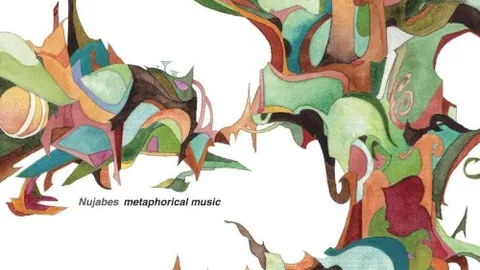
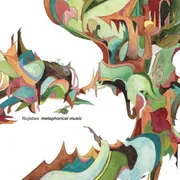
Metaphorical Music
The grammar set. Japanese instrumental hip-hop finds its language — Brazilian jazz loops, soul samples, dry MPC drum kit.
Jun Seba’s first solo album under the Nujabes name. Released 21 August 2003 on his own Hydeout Productions label (founded 1998). Twenty-nine years old, already five years of EPs and compilations. As record-store owner at Tribe (Shibuya), he had combed the bins for Brazilian jazz and American spiritual jazz. The album is a method statement — each track is built on a precise, identifiable loop lifted from an elder he refuses to disguise.
The device
Fifteen tracks, alternating instrumental pieces (Horn in the Middle, Kumomi, Letter from Yokosuka, Beat Laments the World, Summer Gypsy) and rapped-sung pieces with American underground guests: Substantial, Cise Starr of CYNE, Pase Rock, Five Deez and Shing02 (who becomes his main interlocutor). Sole producer: Nujabes. Akai MPC drum kit with round kick and muffled snare, round synth bass, and on top the loop that holds it all — Luiz Bonfá for Lady Brown, Yusef Lateef for Letter from Yokosuka, Brazilian jazz and 70s soul sources for the rest.
Samurai Champloo — the soundtrack that took Nujabes to the world (2004–2005)
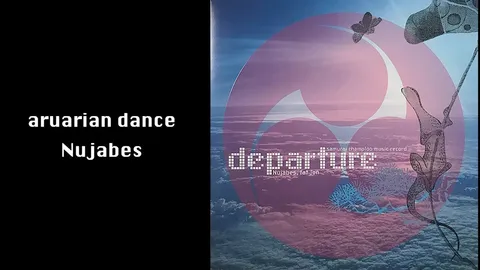
Between Metaphorical Music (August 2003) and Modal Soul (November 2005), a detour that is not a solo album but changes everything. Samurai Champloo, the anime by Shinichirō Watanabe (Manglobe, 26 episodes broadcast on Fuji TV from April 2004 to March 2005), brings together four producers instead of a single composer for its soundtrack: Nujabes, Fat Jon, Force of Nature (KZA and DJ Kent) and Shinji “Tsutchie” Tsuchida of Shakkazombie. The result: four discs on Victor Entertainment — Departure, Impression, Masta, Playlist — that give Japanese instrumental hip-hop its first real international release.
Departure (23 June 2004) — composed and produced by Nujabes and Fat Jon. Includes Battlecry (opening theme, Nujabes feat. Shing02), Aruarian Dance (Nujabes, which will be reused on Modal Soul in 2005), and Shiki no Uta (closing theme by MINMI). Dominant tone: soft, slow, contemplative — the “yin” of the soundtrack according to label notes.
Impression (22 September 2004) — composed and produced by Fat Jon, Nujabes and Force of Nature. More varied in tempos and styles, more energetic — the “yang” of the soundtrack. Includes more rhythmic Nujabes tracks (Mystline) and more club-leaning excursions by Force of Nature.
The structural effect of this interlude is threefold. (1) Adult Swim broadcast from May 2005 (Cartoon Network, United States) takes the name Nujabes from Tokyo to the entire global anime fan-base. The majority of the Western audience discovers Jun Seba this way — not through the solo albums, but through Battlecry as anime opening. (2) Collective writing with Fat Jon, Force of Nature and Tsutchie lets Nujabes test his method alongside other procedures (Fat Jon more effects-heavy, Force of Nature more club). The contrast firms up his own identity: the loop allowed to breathe. (3) The meeting with Shing02 via Battlecry stabilises their duo — the Luv(sic) series, started in 2001, will find its peak on Modal Soul with Pt 3 eighteen months later.
When Modal Soul is released in November 2005, Nujabes is 31, has a global anime audience, a stable writing partner (Shing02) and a grammar confirmed by contrast with that of his peers. The climax-album can happen because the entire reception environment was built during the interlude.
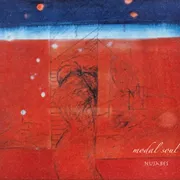
Modal Soul
The masterpiece. Aruarian Dance, Feather, Luv(sic) Pt 3 — the matrix of lo-fi hip-hop as it exists today.
Second solo album. Released 11 November 2005, two years after Metaphorical Music. Thirty-one years old, already recognised — the Samurai Champloo Music Records soundtrack (2004–2005) just carried him to global anime consciousness via Adult Swim. Modal Soul is the climax album of the body of work. Same method, but with more dryness, more pure jazz, and a higher sense of album arc: the instrumental tracks (Aruarian Dance, Reflection Eternal, Mystline) answer the rapped-sung tracks (Feather, Luv(sic) Pt 3, World’s End Rhapsody).
The device
Fifteen tracks. Guests: Cise Starr & Akin of CYNE (Feather), Shing02 (Luv(sic) Pt 3, F.I.L.O.), Apani B Fly (Music Is Mine), Pase Rock. Sole producer: Nujabes. More pure-jazz samples than on the first album: Aki Takase for Luv(sic) Pt 3, Laurindo Almeida for Aruarian Dance, and a spread of American spiritual jazz (Yusef Lateef in particular). Even drier MPC kit, mix that leaves more air around each sample. The loop remains queen — but it breathes more.
”Modal Soul is the linchpin of lo-fi hip hop as we know it, as well as a masterpiece in the larger world of jazzy, sample-heavy instrumental hip hop.”— paraphrase, A Different Feeling (Medium, 2020)

Spiritual State
The work completed by others. Uyama Hiroto, Pase Rock, Substantial, Cise Starr — the circular tribute.
Third solo album, completed after Jun Seba’s death (26 February 2010) by his close collaborators. Released in Japan on 3 December 2011, in the United States in February 2012. Uyama Hiroto handles additional production, mixing and recording, plays live saxophone and piano. Pase Rock, Substantial, Cise Starr and Haruka contribute vocals and writing. Nujabes had laid down the instrumental foundations before his death — the title Spiritual State is his — and the album was meant to land as a direct sequel to Modal Soul.
The device
Fourteen tracks in standard edition; a Tribe edition limited to 500 copies adds two bonus tracks on 7-inch. The tonal colour is colder, more contemplative than Modal Soul — less Brazilian jazz, more American spiritual jazz and electric keys (Rhodes, Wurlitzer). Cise Starr returns on two tracks (2, 9), Pase Rock on two (5, 8), Substantial on two (5, 12). The album inherits the Nujabes method intact: loops left whole, dry drum kit, explicit tribute. But it carries the melancholy of a tomb-record that isn’t one — Seba had laid the tracks; his close circle saw them through out of fidelity, not mourning.
”The album was incomplete upon Nujabes’ death in February 2010, inspiring those close to him to see it finished.”— paraphrase, Wikipedia (Spiritual State)
A body of work in three movements
Seven years, two solo albums in his lifetime, one collective anime soundtrack, a third album finished after him. A tiny body of work by volume, oversized by its consequence: the instrumental lo-fi hip-hop saturating today’s study playlists owes him its vocabulary. The trajectory holds in three movements — each one tests a dimension of the founding thesis: the sample as jazz meditation, tribute as form.
What never changes
Two permanences cross the three movements. The sample as jazz meditation — entire four-to-eight-bar loop, chosen for its melodic beauty, allowed to spin like a mantra, dry MPC drum kit underneath: the same method underwrites Letter from Yokosuka, Aruarian Dance, Luv(sic) Pt 3 and almost all of Spiritual State. Tribute as form — cite rather than mask: the loop stays recognisable, the credit names the source, and when Shing02 raps on Luv(sic) Pt 3 his text makes the duty of honouring the elders its very subject. Without the sample-tribute, there is no track. This ethic distinguishes Nujabes from the DJ-collector: he is a student returning what he received.
Why no cross-artist bridge
No solid bridge appears with the nine other artists in the collection. The obvious candidate — the loop-meditation side of Premiers Symptômes and Moon Safari by Air — holds on the surface (timbre as meditation, loop duration) but not at depth. Air builds its instrumentals from played analogue keyboards and basses; Nujabes builds them from explicit samples of prior tracks. The project of tribute to jazz-soul elders (Permanence 2) has no equivalent in the collection. Better hold Nujabes alone than force an approximate parallel. Editorial sobriety is itself a tribute to his method.
The work is closed, but its grammar keeps producing effects. The 2010s–2020s lo-fi hip-hop, ChilledCow, study playlists, producers Joey Bada$$ and Ta-Ku, the jinsang/Tomppabeats scene: all cite Modal Soul as matrix. The loop, here, is the work — and the work, by letting itself be copied, kept its tribute-promise.
The map
Three albums orbiting the two permanences. Click an album to see how it inflects them.
Tribute: every liner note credits the source.
Position: matrix. The Nujabes language is found — American underground featurings, Brazilian-jazz and soul samples.
Tribute: Shing02's text states the method.
Position: masterpiece. Linchpin of lo-fi hip-hop in the decades that follow.
- Aruarian Dance Three minutes, a Laurindo Almeida classical-guitar loop held like a mantra, restrained MPC drum kit. No verse, no featuring. The Nujabes gesture in its purest state — and the canonical track of the lo-fi hip-hop that followed. Read the analysis →
- Feather (feat. Cise Starr & Akin) First track of Modal Soul — the opener that sets the album's tone. Cise Starr on melodic lead vocal, Akin on counter-melody, a soft loop and a restrained MPC drum kit. Neither dark nor euphoric: just tender. Over 50 million Spotify streams, one of Nujabes' most-played tracks. Read the analysis →
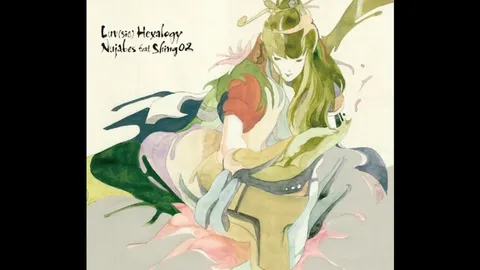
- Luv(sic) Pt 3 (feat. Shing02) Philosophical climax of the Luv(sic) series begun in 2001. Aki Takase loop, Shing02's bilingual text on the commodification of hip-hop and the duty of tribute. The meta-track: it says what Nujabes does. Read the analysis →
Tribute: the entire album is a tribute to the unfinished sessions.
Position: collective completion after Seba's death (26 February 2010).