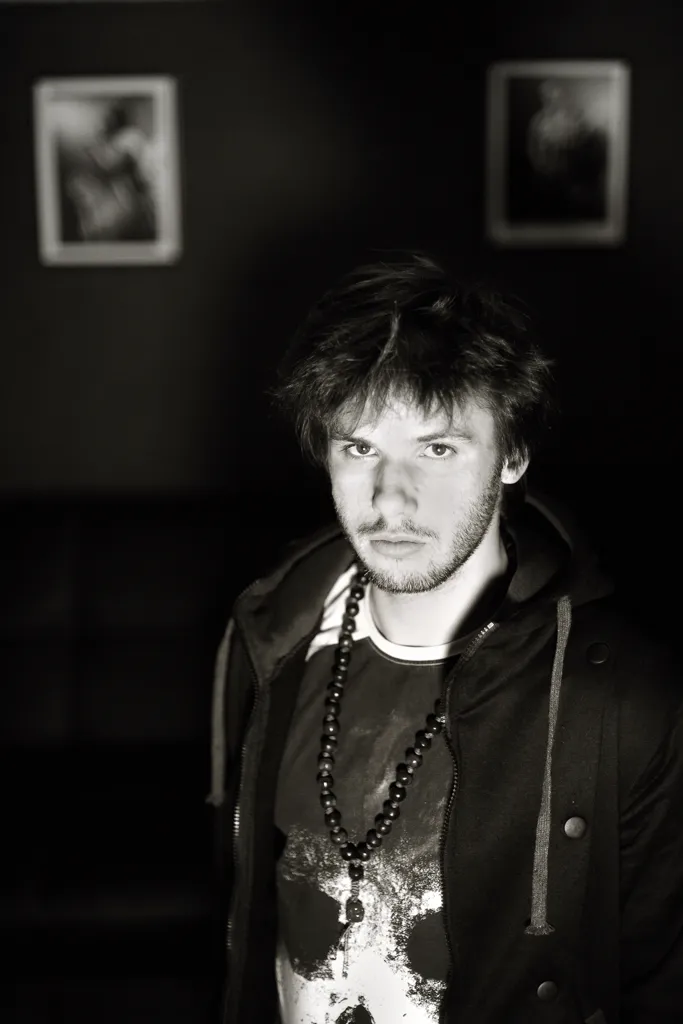
Orelsan
Caen — French Rap
Sixteen years, five studio albums (from Perdu d'avance to La Fuite en avant), a Casseurs Flowters pivot-detour with Gringe, a TV series (Bloqués), a film (Comment c'est loin, 2015), a dual film/album release Yoroï + La Fuite en avant in November 2025. The Caen-based rapper sets two permanent gestures: rap as social observation and self-deprecation as moral strategy.
Why observation is the rap
Aurélien Cotentin is 27 when Perdu d’avance drops. He is 43 when La Fuite en avant drops. In between: sixteen years, five solo albums, one duo album with Gringe, a series, a short film (Comment c’est loin, 2015), a 2021 Amazon documentary that unpacked everything, a feature film (Yoroï, 2025) he co-writes, plays and directs. The Caen rapper has become, in sixteen years, one of the most listened public authors in France. Not by charisma, not by swag — by method. Two permanent gestures: rap as social observation and self-deprecation as moral strategy.
The work begins in scandal. Sale Pute, a 2007 mixtape track recorded at 24, brings him a complaint by Ni Putes Ni Soumises, a trial, a first-instance conviction then an appeal acquittal six years later. The controversy could have buried the project. Instead, it forced him to refine the gesture: how to write social observation without becoming its caricature? The Orelsan answer, set album by album, is self-deprecation. Before judging others, I judge myself. Before saying what’s wrong with France, I say what’s wrong with Aurélien Cotentin.
The five records that follow show how these two gestures play out — from Perdu d’avance (2009) caught between honorable sales and controversy, to Le chant des sirènes (2011) bringing critical recognition, to La fête est finie (2017) tipping to the wide audience, to Civilisation (2021) consecrating the public-author status, to La Fuite en avant (7 November 2025) coupling album and feature film (Yoroï) in a total project. Between Le chant des sirènes and La fête est finie, a crucial detour: Casseurs Flowters with Gringe (2013), Bloqués series (2015), Comment c’est loin film (2015). Before La Fuite en avant, the Yoroï film project (29 October 2025).
In the cartographies collection, one solid bridge: Florent Marchet. The connection is not musical (rap vs piano-chanson) but editorial. Both observe France from its periphery — Caen for Orelsan, Berry for Marchet. Both write as narrators in the cynicism-tenderness register, refusing both complacency and contempt. If Marchet is the suburban-house at upright piano, Orelsan is the social-housing at sample. Same places of attention, different mediums.


◆ Musicological studies
The work’s tracks examined closely — device, structure, procedure, lineage, reading under the permanences.



Perdu d'avance
The founding controversy. Sale Pute, the trial, the apprenticeship of responsibility.
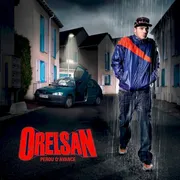
First album. Orelsan is 26. Released 16 February 2009 on 7th Magnitude / Wagram. The album is preceded by the “Sale Pute” controversy — a 2007 mixtape track recorded at 24, complaint by Ni Putes Ni Soumises, trial, first-instance conviction then appeal acquittal (2013). The case structures the entire reception of the record.
The device
Old-school French rap with self-deprecation as weapon. Orelsan stages himself as a Norman suburb loser — Caen, not Paris; social insecurity, not swag. In-house production (Skread, his producer from day one). Singles: Changer, Saint-Valentin. The album sells decently but the Sale Pute shadow blocks critical recognition.
”Perdu d’avance is the album where Orelsan learns to live with a moral bomb he himself laid.”— paraphrase, retrospective press
Emblematic singles: Changer, Saint-Valentin, Soirée ratée. The reception climate (controversy, complaint) blurs the musical reading of the record for years. Only with Le chant des sirènes (2011) does the criticism dissociate the rapper from the case.
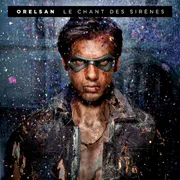
Le chant des sirènes
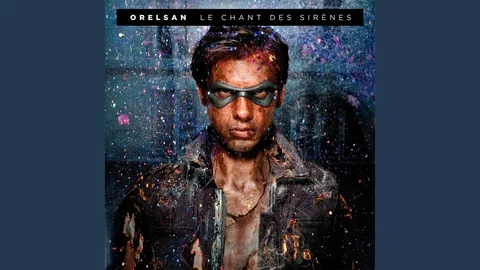
Critical recognition. Suicide social, Raelsan, and the Victoire Révélation 2012.
Second album. Released 26 September 2011 on 3e Bureau / Wagram. Production: Skread alone (the Orelsan-Skread duo is now central). The album is a repositioning after the Sale Pute storm. Tracks are more written, more orchestrated, more self-reflexive. Wins the Victoire de la Musique Album Révélation 2012, first institutional recognition.
The device
Orelsan resumes the Perdu d’avance grammar — anti-hero, Norman suburb, self-deprecation — but opens it toward broader social satire. Suicide social reuses the Edward Norton harangue structure from Spike Lee’s 25th Hour: Orelsan attacks all French social categories, including himself. Raelsan plays the honest self-portrait. Mauvaise idée with Stromae brings the cross-genre hit.
”Le chant des sirènes is the album where Orelsan learns to put himself both in the crosshairs and behind the scope.”— paraphrase, 2011 critique
Casseurs Flowters — the detour with Gringe (2013–2015)
Between Le chant des sirènes (September 2011) and La fête est finie (October 2017), six years of solo silence. But this is Orelsan’s most productive period in terms of format. With his childhood friend Gringe (Guillaume Tranchant), he forms the duo Casseurs Flowters and explores everything that isn’t a solo album: rap duo, series, film, TV format.
Orelsan & Gringe sont les Casseurs Flowters (8 November 2013) — first official duo album after several mixtapes. 22 tracks structured around 24 hours of friendly-marital wandering between two thirty-somethings without a project. Sober Skread/Tristan Salvati beats. Light tone, counter-balance to the heaviness of Le chant des sirènes. Gold-certified, critical and public success.
Bloqués (Canal+, 2015) — series of 80 short episodes (~2 minutes), Orelsan + Gringe as two thirty-somethings stuck on a couch commenting on France. The series is a daily-writing laboratory — each episode demands a mini observation point, sharpening the grammar that will be La fête est finie’s. Aired right before the film.
Comment c’est loin (2015) — feature film written, played and co-directed by Orelsan + Gringe + Christophe Offenstein. Cinema release December 2015. 24 hours in the life of the fictional Casseurs Flowters duo, two label-less rappers who must finish a track before evening. Over 600,000 admissions in France — rare success for a rapper film. The soundtrack album (Comment c’est loin, November 2015) extends the 2013 Casseurs Flowters record.
The structural effect of this interlude is threefold. (1) Daily writing via Bloqués trains Orelsan to condense an observation into 2 minutes — the basis of the Basique method (2017). (2) The film format via Comment c’est loin initiates the grammar that will lead to Yoroï ten years later. (3) The Gringe partnership stabilises Orelsan’s trust network — Skread remains the producer; Gringe remains the writing brother. The duo holds.
When La fête est finie arrives in 2017, Orelsan is 35, six years of diffuse writing behind him, and the trust of a public who now knows him from multiple angles. The wide-audience solo album can drop because all the formative work was done in the interlude.

La fête est finie
The wide audience. Basique, Tout va bien, San — radio maturity without giving up the subject.
Third solo album. Released 20 October 2017, six years after Le chant des sirènes. Skread stays on production. In between: Casseurs Flowters with Gringe (2013), Bloqués series (2015), Comment c’est loin film (2015). The album consecrates Orelsan as a mainstream figure — diamond-certified in France (1 million sales-equivalent), Victoire de la Musique Album of the Year 2018, over 100,000 first-week sales.
The device
Orelsan is 35. The party is over: youth, lightness, easy fame. Tracks address adulthood — anxiety (Tout va bien), mother (San), family (Défaite de famille), the daily (Basique). Skread production more pop, more orchestrated, but doesn’t give up the rap beat — the balance is found between 2000s French rap and mainstream French chanson.
”La fête est finie is the album where Orelsan accepts being an adult speaking to adults — and that’s what makes him, paradoxically, accessible to teens.”— paraphrase, Les Inrocks 2017

Civilisation
The political summit. L'odeur de l'essence, La Quête, and the 2022 Album Victoire.
Fourth solo album. Released 19 November 2021. Production: Skread + collaborators. Civilisation is Orelsan’s political album — climate, polarisation, Internet, democratic disillusion. The lead single L’odeur de l’essence (17 November 2021) explodes in two days, triggering media debate. Wins the Victoire de la Musique Album of the Year 2022, second consecutive. L’odeur de l’essence wins the Original Song Victoire 2022.
The device
Orelsan is 39. Tone shifts radically: self-deprecation stays, but accompanied by a new political gravity. Singles: L’odeur de l’essence (climate, polarisation), La Quête (search for meaning), Du propre, Évidemment. More orchestrated production, beats sometimes absent in favor of text. The release is preceded by the Amazon Prime documentary Montre jamais ça à personne (2021), which exposes the ten-year creative path — combined effect turns the album into a major French cultural event.
”With Civilisation, Orelsan reaches the status of public author — one whose singles become national commentary.”— paraphrase, Libération 2021
Yoroï — the film that precedes the album (2025)
Between Civilisation (November 2021) and La Fuite en avant (November 2025), four years. But these four years are not a pause — they are the workshop of a dual film + album project coupling Yoroï (feature film, 29 October 2025) and La Fuite en avant (album, 7 November 2025).
Yoroï hits theatres ten days before the album. Direction and writing: Orelsan + co-team. Genre: action / adventure / comedy, with a Japanese mystic dimension (yoroï = traditional samurai armor). Orelsan plays the lead. The film is preceded by exclusive previews in Caen 2 October 2025 and at the Grand Rex Paris 16 October — all sold out.
The film has a productive defect: Orelsan is a rapper turning lead actor. This forces a specific posture on the project — not a classic auteur film, not a blockbuster either, but a hybrid object both personal and accessible. Japanese mysticism (samurai armor as protective metaphor) supports an intimate theme: impending fatherhood, fame anxiety, the need for armor.
”La Fuite en avant is not Yoroï’s soundtrack. It’s a full album that shares a universe with the film. Four tracks were initially written for the film; the rest develops in parallel.”— Orelsan, Sony 2025 statement
This precision matters: the album is not derivative. It’s an independent work sharing an emotional matrix with the film. Four tracks are co-textual to the film (notably Yoroï with Thomas Bangalter, and probably Ailleurs, lead album single released 10 November 2025). The other thirteen develop the same themes through different paths: fatherhood, fame fatigue, ambivalence.
The film+album coupling effect is aesthetic as much as industrial. Aesthetically, Orelsan extends his author field — no longer just a rapper, also a filmmaker. Industrially, the dual release constitutes a major French cultural event in autumn 2025 — first cinema week + first album week, saturated media in fifteen days. The album is platinum-certified in six weeks (114,445 sales-equivalent).
And politically, the coupling marks a stage. After Civilisation spoke of French society, Orelsan does a project that speaks of himself — fatherhood, fatigue, Japanese mysticism. The public narrator retreats toward the intimate narrator. La Fuite en avant says its title literally: Orelsan flees forward, toward imaginary Japan, toward the armor, toward the imminent birth of a child. Rap remains the tool. Observation shifts.

La Fuite en avant
The dual project. Album-record extending the Yoroï film, fatherhood, fame, Japanese mysticism.
Fifth album. Released 7 November 2025, Orelsan’s first album on Sony Music (label change after sixteen years on 7th Magnitude / Wagram). 17 tracks. Coupled with the release of the Yoroï film (29 October 2025) which Orelsan co-writes, plays, and directs. The album-film duo constitutes a total artistic project — four album tracks were initially written for the film, the rest develop the same themes in parallel: imminent fatherhood, ambivalence to fame, Japanese samurai mysticism.
The device
Orelsan is 43. Fatherhood approaches. Fame fatigue settles — the 2021 documentary unpacked everything, the Orelsan/Skread couple has been running since 2009. The album seeks a flight forward through Japanese decentring (Yoroï = traditional samurai armor). Unexpected features: Lilas (Ikura) of Japanese band Yoasobi, Yamê, K-pop group Fifty Fifty, rapper SDM, and Thomas Bangalter (Daft Punk) on the title track Yoroï. Certified platinum in six weeks (114,445 copies).
”La fuite en avant is not a Yoroï soundtrack. It’s a full album that shares a universe with the film.”— Orelsan, Sony 2025 statement
A body of work in four movements
Sixteen years, five solo albums, one Casseurs Flowters duo album, a series, two cinema films, two Album Victoires, an Amazon Prime documentary. The trajectory breaks into four clear movements — each testing a different dimension of the founding thesis: rap as observation, self-deprecation as strategy.
What never changes
Two permanences cross the four movements. Rap as social observation — from Perdu d’avance looking at Caen to La Fuite en avant looking at Tokyo, through the France of thirty-somethings (La fête est finie) and the polarised France (Civilisation), Orelsan stays a narrator with a novelist’s eye. Self-deprecation as moral strategy — the antihero holds for sixteen years: from Caen loser to anxious future father. This character continuity is what makes observation-rap credible.
The bridge that holds
One solid bridge in the collection: Florent Marchet. Not a musical bridge (rap vs piano-chanson) but editorial. Both observe France from its periphery — Caen for Orelsan, Berry for Marchet. Both write as narrators in the cynicism-tenderness register, refusing both complacency and contempt. Marchet’s Garden Party (2022, thirteen suburban portraits at upright piano) answers Orelsan’s La fête est finie (2017, thirty-something dailies in French rap). Same places of attention, different mediums. If observational French chanson were to have two sides in the 2020s, it would be these two.
The work is in progress. La Fuite en avant + Yoroï open a new chapter (cinema, fatherhood, Japanese mysticism). The next step can take any form — a sixth solo album, another film project, a Casseurs Flowters return. The device set in 2009 (observation as method, self-deprecation as strategy) stays open enough to absorb anything.
The map
Five records orbiting the two constants. Click an album to see how it plays them out.
Self-deprecation: already there, not yet balanced — Sale Pute controversy forces refinement.
Position: controversial origin. Scandal as catalyst.
Self-deprecation: RaelSan = honest self-portrait. The method is set.
Position: critical recognition. Victoire Révélation 2012.
Self-deprecation: adult antihero — anxious, bad-loving son.
Position: wide audience. Diamond France, Victoire Album 2018.
- Basique The 2017 monster hit. Three minutes in single-fixed-shot, 'tout est dit' chorus, observation of adult daily life. The track that consecrates Orelsan as radio standard without diluting him. Read the analysis →
- Tout va bien The anxiety track of La fête est finie. Skread + Stromae production, video shot in Kiev, ironic-reassuring chorus. Adult self-deprecation applied to contemporary anxiety. Read the analysis →
Self-deprecation: structural, Orelsan includes himself.
Position: public author. Victoire Album 2022, Original Song 2022.
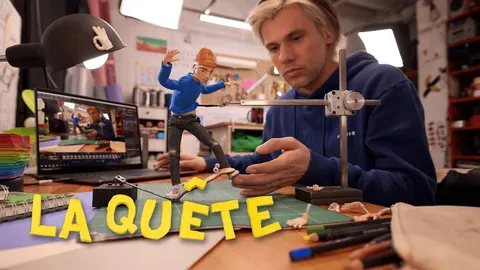
- La Quête The melodic single from Civilisation. Search for meaning, more sung chorus, restrained beat. Civilisation's radio accessibility after the political shock of L'odeur de l'essence. Read the analysis →
- L'odeur de l'essence The political lead single of Civilisation. 2 min 30 on climate, polarisation, fragmentation. Released 17 November 2021, media debate two days later, 2022 Original Song Victoire. Read the analysis →
Self-deprecation: tender — imminent fatherhood, fame fatigue.
Position: total project with Yoroï film. Platinum in six weeks.