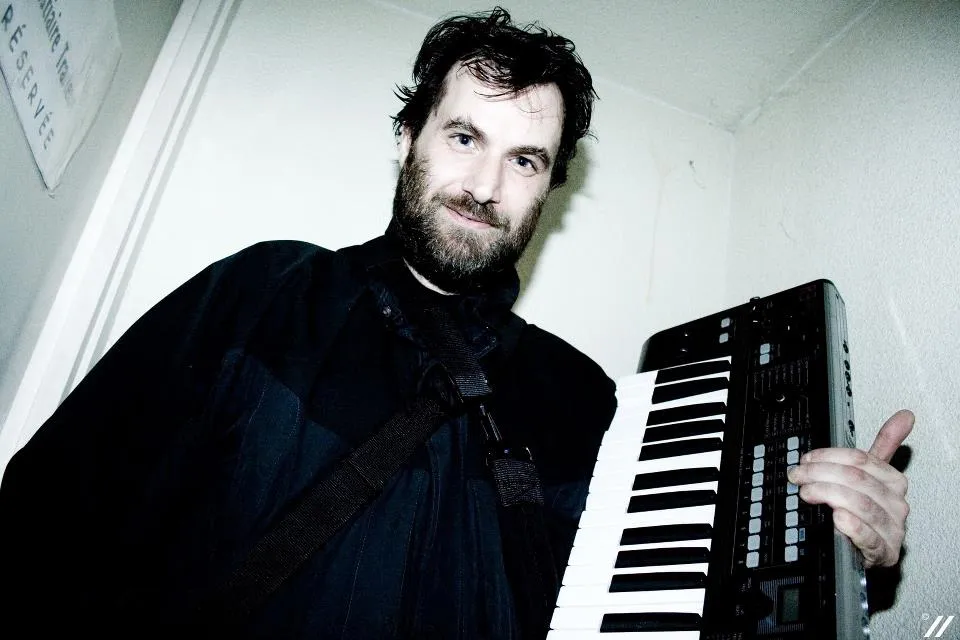
The Supermen Lovers
Paris — French Touch · electronic pop
Twenty-one years, four studio albums, a long productive silence in the middle — and one hit that reached number 2 in two major countries. The Supermen Lovers is the solo project of Guillaume Atlan, second-wave Parisian French Touch, faithful to one gesture: the disco-pop song carried by a guest voice, dressed in a house studio chain. Pop as Trojan horse for French Touch.
Why the guest voice is the signature
The Supermen Lovers is one man — Guillaume Atlan — who almost never sings. The signature is not his voice: it is someone else’s voice placed at the centre of the track. Mani Hoffman on Starlight, Kenny Norris on Diamonds for Her, Lada Redstar and Nina Miranda on Body Double. Atlan stages, writes with the singer, puts the production at the singer’s service. The guest voice is neither an anonymous sample nor a prestige feature — it is a credited collaboration, a sharing of the song’s hearth.
Atlan, trained in piano and solfège from childhood at the Francis-Poulenc conservatory, belongs to the second-wave French Touch. Starlight drops in March 2001 and becomes a global phenomenon — number 2 in France, number 2 in the UK, 2.5 million copies. Atlan composes and produces alone in his small Paris flat, records Mani Hoffman in the bathroom, layers replayed bass and drums around a disco sample. The hit goes worldwide; the gesture stays faithful to itself for twenty years.
Four albums in twenty-one years draw the arc — from the hit and its ecosystem (The Player, 2001-2002) to the refusal of the formula (Boys in the Wood, 2004), from the mature return on an independent label (Between the Ages, 2011) to the closing statement Paris-Kyiv (Body Double, 2022). Between the albums, a continuous output of …Disco EPs, side-projects and remixes (compiled on Alterations in 2014). The album silence is never a productive silence.
The 2001 French Touch ecosystem has its neighbours. Cassius releases Au Rêve in September 2002, six months after The Player. Both records share the same refusal: not to remain the guardians of a working formula. Cassius comes from the clubs and slides toward art-pop; The Supermen Lovers comes from the song and slides toward the long-form album. Two parallel trajectories, one shared ethic of craft.


◆ Musicological studies
The work’s tracks examined closely — device, structure, procedure, lineage, reading under the permanences.

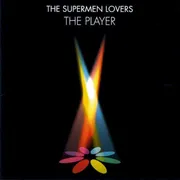
The Player
The hit and its ecosystem. Thirteen disco-pop songs around a guest voice.
The album begins as a single. Starlight drops on 17 March 2001, a year ahead of the album, and becomes a global phenomenon — number 2 in France and the UK, 17 weeks in the UK top 100, 2.5 million copies. Atlan composes and produces alone in a small Paris flat, records Mani Hoffman’s vocals in the bathroom, adds bass and drums around a sample of The Rock (East Coast, 1978). The album, released 1 March 2002 on BMG/Vogue, lays out around the hit twelve more tracks written in the same gesture: disco-pop song, guest voice, radio format.
The device
The whole record is built on one principle: a short disco or funk sample, filtered, looped; an electric bass replayed by Atlan; machine drums; and on top, a credited guest voice who co-writes. Mani Hoffman on Starlight, Kenny Norris on Diamonds for Her. The instrumental tracks (Hard Stuff, Marathon Man, Starter) hold the club line, but the song carries the album. Atlan does not sing — he stages.

Boys in the Wood
The refusal of the formula. A long-form album punctuated by hourly interludes.
Instead of capitalising on Starlight, Atlan goes for a longer, more experimental record. Fifteen tracks, 1h15, marked by hourly interludes (00:00, 03:00, 05:00, 07:00) that turn it into a night-album. Tracks stretch out — Rebirth runs over 10 minutes, The Howling Session comes in two parts — and the radio song gives ground to instrumental pieces. It’s the Au Rêve-by-Cassius gesture transposed: refusing to remain the guardian of a working formula.
The device
The production chain stays the same as in 2002 — sample, filter, replayed bass, machine drums, guest voice — but stretched, slowed, organic. Atlan adds longer sequences, atmospheric pads, breaks. Guest voices recede (except on Born to Love You, the single). It’s a record meant to be heard as an album, not as singles. Lukewarm reception, but the gesture stakes craft over hit profitability.

Between the Ages
The return after seven years. Mature electro-disco, on his own label.
Seven years after Boys in the Wood. Atlan has founded his own label, La Tebwa Records, and meanwhile released a series of EPs with recurring titles (Foundation Disco, Fantasma Disco…), the club continuity of the work. Between the Ages arrives 7 November 2011 and marks the album return. Sixteen tracks, full electro-disco, more club-leaning than The Player, more structured than Boys in the Wood. Singles C’est Bon, Take a Chance, Say No More. Remixes by Todd Edwards, Chloé, Aka Aka — Atlan joins the 2010s conversation without disowning 2001.
The device
The guest voice remains central, but the casting changes: newer names, more international, younger. Production is sharper — 2010s sound, harder kicks, cleaner basses, more modern synths — without giving up the clavinet or the funk electric bass. This is the record where Atlan owns his independent producer-author craft: making his record, on his label, at his pace. The title Between the Ages names the gap between original French Touch and 2010s house.

Body Double
The closing statement, twenty-one years after Starlight. Twelve acts, Paris-Kyiv, De Palma.
Twenty-one years after Starlight. Atlan returns full-front with a closing-statement record composed between Paris and Kyiv during several trips to Ukraine between 2018 and 2020. Framed as “12 acts” rather than tracks, the title nods directly to Brian De Palma’s 1984 thriller of double identity. The record alternates solar pop pieces (Walking on the Moon, lifted from the 2017 single) and darker, hypnotic ones (Clock Sucker, Requiem for a B). Atlan claims the Starlight heritage without replaying it.
The device
The production chain is the same as in 2001-2011, with twenty years of settling. Guest voices multiply (Lada Redstar, Nina Miranda and several Ukrainian collaborators), energies are mixed, the listening arc is paced as cinema — hence the 12 acts. Atlan on the record: “Body Double is a paradoxical LP. A mix of bright and coloured vibes with dark and underground energies.” A record owning its maturity — not a return-to-the-hit, not a return-to-the-club, but a return-to-self.
A body of work in four movements
Twenty-one years, four studio albums, a long productive silence in the middle, and a worldwide hit that opens the work. The trajectory splits into four clear movements — each testing a different dimension of the device guest voice + disco-pop song.
What never changes
Two permanences cross the four movements. The guest voice as signature — Atlan almost never sings, and that precisely defines his gesture: he stages someone else’s voice, writes with them, builds production around them. Pop as Trojan horse — radio song format, but full club grammar inside. This singular graft has sometimes had Atlan filed as “commercial” by club purists; it is rather the sign of a tenacious faithfulness to the 1970s-80s disco-pop tradition, where Donna Summer sang Giorgio Moroder for radio but on club productions.
The bridge that holds
The 2001 French Touch is a cohort ecosystem. Cassius releases Au Rêve in September 2002, six months after The Player. Both records refuse, near-simultaneously, to capitalise on the previous hit — Au Rêve derails fans of 1999, Boys in the Wood derails fans of Starlight. Two parallel refusals, one ethic of craft over hit profitability. Cassius is a duo sliding from sample-song to art-pop; The Supermen Lovers is a soloist sliding from radio song to long-form album. Different trajectories, same refusal.
The Body Double epilogue is not closure (Atlan keeps going) but a balance point. Twenty-one years after Starlight, the device still holds — guest voice, song format, hidden club grammar. A body of work modest in volume, faithful in substance, that has held its line without ever drifting.
The map
Four records orbiting the two constants. Click an album to see how it plays them out.
Pop Trojan horse: 3:30 radio format, full club grammar underneath.
Position: manifesto. The hit and its ecosystem — no. 2 France and UK.
- Diamonds for Her (feat. Kenny Norris) Second single from The Player. Kenny Norris's voice deeper, funk bass forward — the guest-voice device confirms itself. The signature isn't Hoffman's voice, it's the gesture. Read the analysis →
- Starlight (feat. Mani Hoffman) Filtered disco sample, replayed bass, Mani Hoffman's vocals captured in a bathroom. The second-wave French Touch canon — pop as Trojan horse. Read the analysis →
Pop Trojan horse: holds at the surface, but the album wants to be heard whole.
Position: refusal of the formula. 1h15 long-form, hourly interludes.
Pop Trojan horse: stretched — some tracks lean more club than radio.
Position: mature return. Independent label, 2010s sound.
Pop Trojan horse: elastic slider, pop/club boundary moved act by act.
Position: closing statement Paris-Kyiv, 12 acts, De Palma homage.