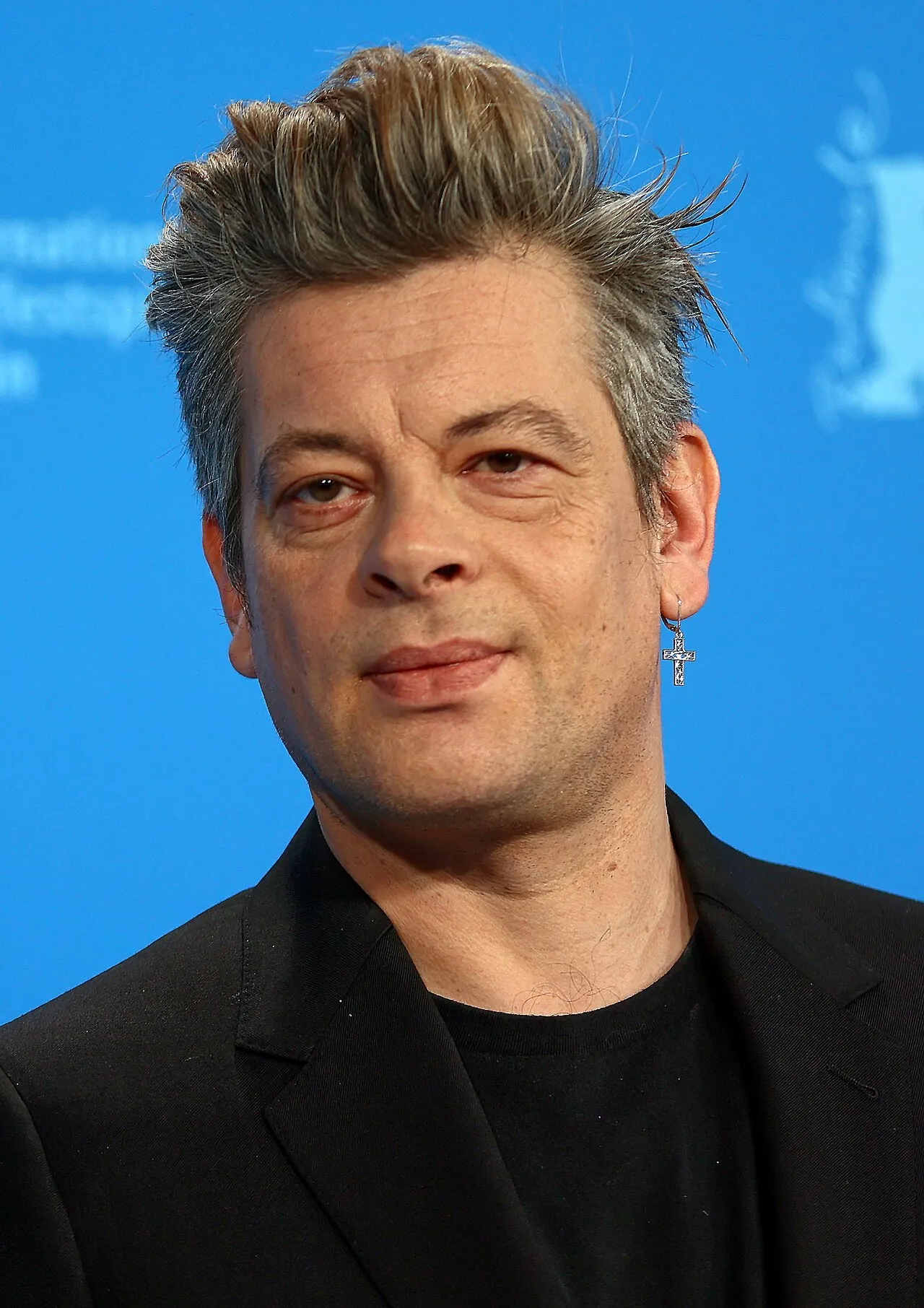
Benjamin Biolay
Lyon — Orchestrated chanson
Benjamin Biolay is first an arranger — conservatory trained, in orchestration and production. His records begin with strings, brass, loops, before the lyrics come to settle into them. Five pivot albums in twenty years — from Rose Kennedy (2001) to Grand Prix (2020) — that turn French chanson into an expanded territory, with the United States, Argentina and Monaco serving as affective states as much as geographies.
Why an arranger makes chanson records
French chanson, in its classical model, starts with the text. Brassens writes a poem and sings it on the guitar. Gainsbourg writes the lyrics and dresses them up afterwards. Biolay does the reverse. He starts with the orchestration — strings, brass, a rhythmic loop, a piano motif — and the text comes to settle on top once the sonic atmosphere is already set. This is the logic of an arranger who writes his own records, not of a singer who arranges himself.
Biolay was trained in classical orchestration at the Lyon Conservatory. Before his first solo album, he was arranging for Henri Salvador, Keren Ann, Juliette Gréco, Françoise Hardy. The chanson record he released in 2001 is not the invention of a singer, it is the album of an orchestrator who decides to be the vocal soloist of the record he is writing. Two constants run through the twenty years that follow.
The five records that follow play these two constants across twenty years — from the method set down in one stroke (Rose Kennedy, 2001) to the double album of maturity (La Superbe, 2009), from the conceptual detour through duets (Vengeance, 2012) to the South American exile (Palermo Hollywood, 2016), then the Monégasque synthesis that closes the decade (Grand Prix, 2020). An extended arc, under control, with held discographic silences between each album.
Biolay occupies in contemporary French chanson a space Florent Marchet has never sought. Where Marchet writes the provincial, the housing estate, the periphery (Gargilesse in the Indre, Maisons-Alfort in the near suburbs), Biolay writes the cosmopolitan, the jet-set affected, the capitals traversed. Two French ways of making chanson — the peripheral geography and the deterritorialized one. And with Air, Biolay shares the orchestration-signature: where Air pushes the grammar toward electronics, Biolay anchors it in an acoustic tradition (strings, brass, piano) that owes as much to French chanson as to Argentine bossa and the orchestrated American pop of the 1970s. Three French obsessions with sonic texture preceding text, three different exits.


◆ Musicological studies
The work’s tracks examined closely — device, structure, procedure, lineage, reading under the permanences.

Rose Kennedy
The first object-album. An arranger of chanson becomes the author of his own record, with imagined America as central character.
First solo album. Biolay is twenty-eight, having spent the 1990s arranging for Henri Salvador (Chambre avec vue, 2000), Keren Ann, Juliette Gréco, Françoise Hardy. The record comes out on Virgin. It earns him the Victoire de la Musique for Revelation in 2002.
The never-seen America
Biolay had not been to the United States when he wrote Rose Kennedy. The album is an imagined America — the matriarch of the Kennedy clan (mother of John F. and Robert), the roads, the cities never crossed, a mythology that works precisely because it is imagined. It is the first application of the place-constant: an affective territory that does not need to be real to be true.
"A first record that does not feel like a first record — everything is here, set down in one stroke.”— Les Inrocks, 2001
Orchestration first
The arrangements are written before the lyrics — strings, vibraphone, classical guitar, discreet rhythms. Biolay’s voice, spoken-sung, comes to settle into this already composed texture. It is the signature method that will not move for twenty years: the orchestration carries the affective color, the text draws a narration from it.
Between Rose Kennedy and the next pivot album come eight years and several intermediate records (Négatif, À l’origine, Trash Yéyé). Biolay searches, tests formats, collaborates, disperses. The synthesis arrives in 2009.
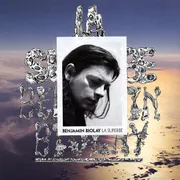
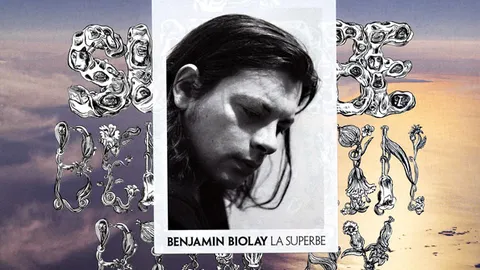
La Superbe
The double album of maturity. The method carried to its highest density — Victoire de la Musique for Album of the Year.
Fifth studio album, first pivot album after Rose Kennedy. Double album of twenty-three tracks. Released on Naïve after Biolay’s departure from EMI/Virgin. Wins the Victoire de la Musique for Album of the Year 2010, critical and public consecration.
The method at maturity
Biolay is thirty-six. Eight years of dispersion — albums, collaborations, attempts — condense here into a sum-record. The orchestration is at its densest: ample strings, muffled brass, cinematographic piano. The text is at its most self-assured — Biolay writes as a singer who has found his voice, no longer as an arranger trying to appropriate one. The signature method holds perfectly.
"The record where Biolay stops searching and finds — everything is in its place.”— Télérama, 2009
The broadened place
No single territory as on Rose Kennedy: the record traverses several places (Paris, the countryside, hotel rooms), all captured as affective states. The title track La Superbe is not the song of one location but of a feeling — wounded pride, elegant decadence. The place has shifted toward the intimate, without ceasing to be structuring.
After La Superbe, Biolay takes three years. The next record will be the most singular in his discography — a concept album built on a single theme.
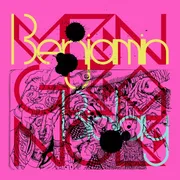
Vengeance
The concept album. Duets on separation, staged couplehood — the only record where the text steps in front of the orchestration.
Sixth studio album, second pivot album. Concept held end to end: thirteen tracks, each built as a duet, all oriented around separation, reproach, the irony of couplehood. The guests make a map of the French music scene — Vanessa Paradis, Jeanne Cherhal, Brigitte Fontaine, Céline Sallette, Melvil Poupaud, Adam Green.
The text in the foreground
The only album in the body of work where the orchestration-constant steps slightly back. The concept — writing couple dialogues at end-cycle — imposes a more frontal textual writing, more chiselled lyrics, dialogue effects that no orchestration alone could carry. Profite with Vanessa Paradis becomes the massive single — a festival hit paradoxically built on an acid separation.
"For the first time, Biolay plays the one he isn’t — a lyricist before the arranger.”— Libération, 2012
The necessary detour
The record works as a stress test. By pushing the text to the foreground, Biolay tests how far his method can bend without breaking. Answer: the orchestration-constant has not disappeared, it has tightened (fewer strings, more rhythms, funk and cumbia grooves) to make room for voices in dialogue. It’s a recession of the method, not a renunciation.
After Vengeance, Biolay moves away from Paris. The next record will be recorded in Buenos Aires, in a neighborhood called Palermo Hollywood — and the return to the orchestration-method will be complete.

Palermo Hollywood
The Argentine exile. Recorded in Buenos Aires in the neighborhood of the same name — strings, bossa, cumbia, with place as the record's central character.
Seventh studio album, third pivot album. Recorded in Buenos Aires, in the neighborhood called Palermo Hollywood — a bohemian zone where music and image studios are concentrated. Biolay moved there for several months for the project. Argentine musicians, local strings, arrangements that borrow from Brazilian bossa, cumbia, Porteño rock.
The return to the method
After the text-detour of Vengeance, the orchestration resumes its place at the front. But its color has changed — it is no longer the elegant string orchestra of the French albums, it is an ensemble that integrates a South American tradition (Argentine classical guitar, chamamé accordion, cumbia percussion). The method is the same, the sonic palette is new.
"Biolay does not make a record about Buenos Aires — he makes a record from Buenos Aires.”— Télérama, 2016
Place as method
The record pushes the second constant to its clearest example. Palermo Hollywood is a precise neighborhood, an identifiable block of streets in Buenos Aires. The album bears its name, was recorded in its studios, was built with its musicians. Place stops being a backdrop altogether: it becomes the engine of the record’s production. The lyrics speak of exile, of a chosen distance, of France seen from the other continent.
After Palermo Hollywood, Biolay releases Volver (2017, a Spanish-language album co-signed with Chiara Mastroianni) and then moves away again. Four years of silence before the grand French return with a record that condenses the decade.

Grand Prix
The Monégasque synthesis. Monaco, Formula 1, the Côte d'Azur — autofiction of a retired man, Victoire de la Musique for Album of the Year 2021.
Ninth studio album, fifth pivot album. Published in the summer of 2020, in the middle of the first long Covid lockdown. Monaco as subject — Formula 1, the urban circuit, the Côte d’Azur of a man who has retreated there. Wins the Victoire de la Musique for Album of the Year 2021, a second distinction in that category (after La Superbe, 2010).
Autofiction as speed
Biolay is forty-seven. The record looks at itself — Monaco, motor racing, the paddock, the circuits are metaphors held end to end to speak of his own trajectory. No irony: something graver, slower, more dispossessed. Comment est ta peine? becomes immediately one of the biggest successes of his career — months of radio, a heavily broadcast video, a nascent standard.
"A mature record that cheats on nothing — Biolay finally writes from exactly where he is.”— Les Inrocks, 2020
The junction point
The two constants reach their most tensioned balance. The orchestration is at its densest (ample strings, brass, saturated electric guitars in the background, piano omnipresent). The place is at its most precise — Monaco is not a fantasy like Rose Kennedy, not an exile like Palermo, it is a lived territory faced head-on. The two constants hold each other up without overlapping, the album is heard as a sum that no longer seeks to prove.
After Grand Prix, Biolay releases Saint-Clair (2022) then À l’auditorium - Live (2023). But Grand Prix stands as a marker — an album that holds the entire previous decade and the two constants in a single arc. The twenty years that separate Rose Kennedy from Grand Prix are legible as a single gesture, extended and controlled.

Le Disque Bleu
Double album Résidents / Visiteurs. The Atlantic as axis, melody as thread.
Eleventh studio album. Double record, 24 tracks, composed, written and recorded between Paris, Sète, Brussels, Buenos Aires and Rio de Janeiro. Two complementary volumes: Résidents (disc 1) for tempered sedentariness, Visiteurs (disc 2) for the Atlantic crossing. South American influences (Argentina, Brazil) irrigate the whole — bossa, milonga, tango in filigree, but filtered through the usual Biolay grammar: broad orchestration, dense text, luminous melancholy.
The device
Return to the long format after Grand Prix (2020, conceptual automotive) and Saint-Clair (2022). Le Disque Bleu reconnects with river-albums ambition like La Superbe (2009). But unlike the post-breakup sadness of 2009, the album unfolds in a settled blue — travel, chosen distance, residency and visit as two regimes of living.
Two advance singles: Juste avant de tomber (first excerpt, May 2025) and Le penseur (second excerpt). Videos directed by Louis Villers. The cover, blue like the title, pares down to the minimum — sober typography, flat field.
”Composed, written and recorded between Paris, Sète, Brussels, Buenos Aires and Rio de Janeiro — an invitation to travel between the two Atlantic shores.”— Virgin Records, 2025
A body of work in four movements
Twenty-five years, six pivot albums, several Victoires de la Musique awards. The trajectory falls into four clear movements — each testing a different way of crossing the two constants: orchestration preceding the text, and place as affective subject.
What never changes
The two constants hold across the four movements. Orchestration precedes the text — even on Vengeance, where the text asserts itself more, the musical writing remains first. Place as affective subject — from the 2001 imagined America to the 2025 crossed Atlantic, territories become more precise then diffract, but keep their function: they are states, not backdrops.
Two sides of French chanson
Taken together, Biolay and Florent Marchet draw two opposite geographies of contemporary French chanson. Marchet writes the periphery — the Berry housing estate, Maisons-Alfort, the inhabited margins. Biolay writes the capitals — fantasized New York, lived Buenos Aires, monumental Monaco. The two bodies of work have almost no point of musical convergence, and that is precisely what makes them legible together: together they hold all the coordinates of what a French song can today say about a place.
The map
Six records orbiting the two constants. Click an album to see how it plays them out.
Place: mythic Boston, the Kennedy family as mythology.
Position: the revelation. Debut manifesto, Victoire Album of the year.
Place: breakup with Chiara Mastroianni, travel, inner exile.
Position: masterpiece. The river-album. Victoire Male Artist.
- La Superbe Title track of the 2009 masterpiece. A faux pas-de-deux between resignation and grace, signed the same year as the divorce from Chiara Mastroianni. Read the analysis →
- Profite Duet with Vanessa Paradis on La Superbe. A whispered carpe diem in two voices, written by a man who just divorced for a woman who is just divorcing. Read the analysis →
Place: anger as theme, inner territory over outer.
Position: the angry rupture. Drier, less ornate.
Place: Palermo district in Buenos Aires as pivot.
Position: Argentine renaissance. Victoire Album of the year 2018.
Place: F1 circuits as temporal metaphor.
Position: conceptual pivot. Pandemic, concept held.
Place: Paris, Sète, Brussels, Buenos Aires, Rio — the Atlantic as axis.
Position: travelling maturity. The settled blue of a musician done breaking up.