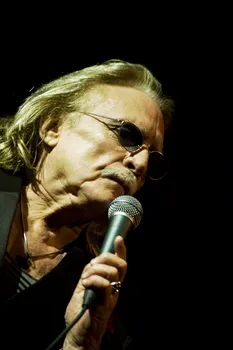
Christophe
France — Experimental chanson-pop
From Aline (1965) to Les Vestiges du chaos (2016), Christophe held a double aesthetic life without compromise. The yéyé star of the first act deliberately resigned at 27 to become something else — a chamber experimentalist who invited Jean-Michel Jarre, Alan Vega, Beth Gibbons, and whose falsetto voice never descended into the expected male baritone. Disembodiment as discipline.
Why a voice that never descends
French song has a vocal convention: the man who ages descends into the lower register. His voice thickens, grows heavier, acquires what is called “depth”. This convention is so entrenched that it passes for an acoustic law. Christophe ignored it for fifty-five years. From Aline (1965) to Les Vestiges du chaos (2016), the same falsetto voice — airy, floating, slightly unreal. Not because he didn’t age. But because he had decided that his voice had no obligation to do so.
Daniel Bevilacqua is born in 1945 in Juvisy-sur-Orge, to an Italian father and a French mother. He leaves school at 16. At 19, he signs as Christophe and records Aline — over a million copies sold in France, the whole country humming along. He could have stayed there. He chooses to leave. In 1973, Les Paradis perdus, with lyrics by Jean-Michel Jarre, marks the break. Christophe is 27 and voluntarily surrenders fame. This will last thirty years — and even after, never quite ordinary celebrity.
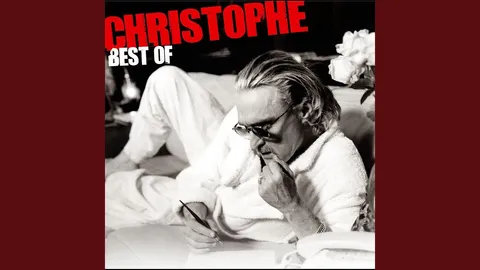
The five pivot albums structuring this cartography tell the same story in five different states: the rupture (Les Paradis perdus, 1973), the electronic anticipation (Le Beau bizarre, 1978), the cult recognition (Comm’si la terre penchait, 2001), the collaborative summit (Aimer ce que nous sommes, 2008), the lucid twilight (Les Vestiges du chaos, 2016). And before all that, in prologue, the yéyé life that had to be shed.
The bridge to Vincent Delerm is factual and literary: Delerm cites Christophe in Quinze Chansons (2008), and Les Mots bleus belongs to the pantheon of the citation-song in French that Delerm makes explicit in his work. Same gesture, two generations: with Christophe, collaboration is biography; with Delerm, citation is emotion. Sébastien Tellier paid tribute to Christophe after his death (2020) — the tutetary figure of the cosmopolitan falsetto, of French experimental song without genre assignment.


◆ Musicological studies
The work’s tracks examined closely — device, structure, procedure, lineage, reading under the permanences.
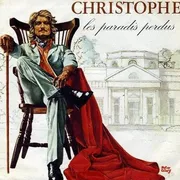
Les Paradis perdus
The founding rupture. Christophe leaves yéyé behind, Jean-Michel Jarre writes the lyrics, a falsetto voice becomes a principle.
Christophe is 27. He could have remained the star of Aline — the tours, the radio play, the well-oiled yéyé machine. He chooses the opposite. Les Paradis perdus (1973) is a decision made into a record: Jean-Michel Jarre writes the lyrics, the arrangements shift toward chamber music, and the falsetto stops being a young singer’s timbre and becomes a poetic principle — the voice that refuses to drop where it is expected.
The device
Motors / Disc’AZ, 30 May 1973. Christophe composes, Jean-Michel Jarre writes the texts — a collaboration that will continue with Les Mots bleus (single 1974, drawn from this album era). Chamber arrangements, no rock guitar, no yéyé pump. Christophe sings in an amber falsetto, harmonies recalling the Beach Boys of the Pet Sounds period. The press does not follow immediately — nor does the general public. This will remain the case for thirty years.
"Christophe could have stayed Aline. He chose to be something else — and that decision, made in 1973, took thirty years to be understood.”— paraphrase, specialist press
Aline — the first life, 1965
Before Les Paradis perdus, there is Aline. Daniel Bevilacqua is 19, now called Christophe, and in 1965 he records a single that sells over a million copies in France. Yéyé songcraft at its peak: simple melody, sentimental text, light production, a voice already reaching toward falsetto — but a falsetto still within the genre’s conventions.
Aline is not an accident. It is a competence. Christophe knows how to write popular song — he does it well, he does it naturally. Which makes his 1973 rupture all the more deliberate: he does not leave yéyé because he cannot manage it. He leaves because he has decided it no longer interests him.
The years 1965–1971 are those of Christophe-the-star: tours, variety television, foreign covers. The commercial machine runs. But something is forming. Christophe reads — Burroughs, the poètes maudits, American rock literature. He listens to the Beach Boys, British experimentalists. He meets Jean-Michel Jarre. The itinerary of the rupture takes shape.
In 1973, he is 27. He turns the page. Les Paradis perdus is released in spring, few people truly understand it, and Christophe does nothing to explain. He has already turned his head toward where he wants to go. Aline belongs to the former life — and precisely because he knows it well, he can leave it without regret.
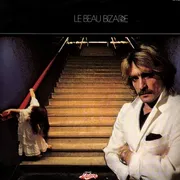
Le Beau bizarre
The first machines. Christophe introduces electronics into French song five years before it becomes obvious.
1978. Christophe has been out of the hit parade for several years. He doesn’t stop — he records Le Beau bizarre, an album that introduces synthesisers into his grammar. This is not yet French Touch, not yet the British synth-pop that will explode in 1980. It is Christophe anticipating, as he always has, indifferent to commercial calendars.
The device
Motors, 1978. The album integrates synthesisers and drum machines into a chanson française context — rare for the era. Boule de flipper, the lead track, marries the arcade hall metaphor (the character who bounces, uncontrollable, between life’s bumpers) with light electronic production. The falsetto holds — but now it floats over synthetic pads rather than chamber strings.
"Le Beau bizarre announces by twenty years a certain idea of French electronic song — discreet by choice, strange by principle.”— paraphrase, press
Comm'si la terre penchait
Cult recognition arrives. Daisy, Petite fille du soleil — Christophe finds an audience that had been looking for him without knowing it.
2001. French song is experiencing an independent renaissance — Benjamin Biolay, Étienne Daho, and a generation rediscovering their elders. Christophe didn’t need to reposition himself: he was already elsewhere, since 1973. Comm’si la terre penchait arrives at the right moment for the public; for Christophe, it is simply the next record in a trajectory that has never deviated.
The device
Sony Music, 2001. The album consolidates the cult figure. Daisy and Petite fille du soleil — tracks that will circulate in compilations and tribute records — present a Christophe poised between gentle song and discreet experimentation. The production is cleaner than Le Beau bizarre, but the singularity remains intact: this is neither mainstream variété nor flagrant avant-garde. It is Christophe, belonging to neither category.
"Comm’si la terre penchait is the record that French song fans were waiting for without knowing it. Christophe, for his part, was not waiting for them.”— paraphrase, press, 2001
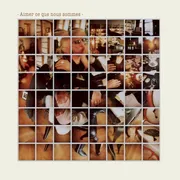
Aimer ce que nous sommes
The summit of the second life. Alan Vega, Beth Gibbons, Daniel Darc, Étienne Daho — Christophe gathers his international peers.
2008. Christophe is 62 and records the album of his life — not in a sentimental sense but a structural one: this is the record where all his permanences reach their most concentrated expression. Alan Vega (Suicide), Beth Gibbons (Portishead), Daniel Darc, Étienne Daho — each brings a piece of a world Christophe has always inhabited but has never assembled this explicitly. Chanson française meets New York post-punk and Bristol trip-hop.
The device
Cinq 7 / Wagram, 19 May 2008. To produce a collaboration album without it sounding like a guest compilation — that is Christophe’s feat. Each duet works because Christophe does not cede his space: his falsetto stays at the centre, unchanged, and it is the guest who enters his world, not the other way round. Vega brings his punk urgency; Gibbons brings her gravity; Darc brings extreme melancholy; Daho brings elegance. Christophe transforms all of it into a coherent record.
"Aimer ce que nous sommes is the record where Christophe shows that his readings and his friendships are the same thing as his music.”— paraphrase, Les Inrockuptibles, 2008
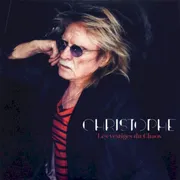
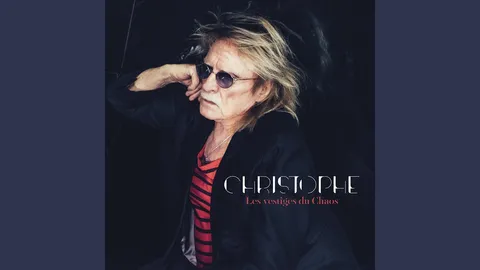
Les Vestiges du chaos
The closing record. Twilight pop, synthetic drone, falsetto intact at 70 — Christophe exits pop while remaining pop.
2016. Christophe is 70. He makes an album with Christophe Van Huffel, a producer from a younger generation, and Alan Vega again, in one of Vega’s last recording sessions before his death in July 2016. Les Vestiges du chaos is a closing record — not in the sense of a planned farewell, but in that it holds everything Christophe has sought since 1973, gathered into a twilight form. Synthetic drone, open structures, falsetto voice intact.
The device
Capitol Music / Universal, 17 March 2016. Van Huffel produces; Christophe composes, sings, directs. Tangerine — with Vega — is a five-minute drone piece without a classic pop chorus, open, suspended. Définitivement closes the album on a phrase that reads like a lucid, not despairing, testament. The vocal presence Christophe brings at 70 is the most unsettling thing about this record: the voice has not changed since Aline (1965). Fifty-one years of the same falsetto.
"Les Vestiges du chaos is the testament of someone who has no need to write one, because he has always been saying the same thing.”— paraphrase, press, 2016
A body of work in four movements
Fifty-five years, nine albums, two aesthetically irreconcilable lives reconciled by two constant gestures. Christophe’s work reads in four movements — each testing a different dimension of the principle established in 1965 then decided in 1973.
What never changes
Two permanences cross all four movements. Falsetto voice as sustained disembodiment — from 1965 to 2016, same register, same refusal of the expected lower range. This is the proof that the body of work is one, regardless of the forms it passes through. Literary-rock citation as biographical material — each album is made of chosen collaborations and digested readings. Jarre, Vega, Gibbons, Darc, Van Huffel: a list that is also a portrait.
The bridges that hold
Vincent Delerm cites Les Mots bleus in Quinze Chansons (2008) — factual, acknowledged. With Delerm, the proper name is emotion; with Christophe, literary collaboration is emotion. Same gesture, two generations: making culture a raw material rather than a posture. This is the firmest bridge in the collection.
Sébastien Tellier embodies the most visible filiation: bearded-mystic persona, cosmopolitan falsetto, French experimental song without assigned genre. After Christophe’s death in 2020, Tellier paid tribute — confirming that the tutetary figure had been heard by the next generation, without shared record labels or press campaigns.
The death in Brest, hospitalised during the first lockdown, 16 April 2020. Christophe does not die on stage, not in a studio, not surrounded by journalists. He dies as he had lived since 1973: away from the noise, in the intimacy of a Breton hospital room. The work continues to radiate — every new generation that discovers Les Mots bleus is the proof.
The map
Five albums orbiting the two permanents. Click an album to see how it declines them.
Literary citation: Jean-Michel Jarre on lyrics — not a professional lyricist, a creator. Collaboration as biography from the very first gesture.
Position: break with yéyé at 27. The founding decision that would take thirty years to be understood. Beach Boys harmonics, chamber arrangements.
Literary citation: European experimental rock and electronic art cited not in lyrics but in production. Culture as a compass for making.
Position: first machines in French song, five years before it became obvious. Boule de flipper — the mechanical metaphor.
Literary citation: Joni Mitchell, Nick Drake filtered through thirty years of French discretion. The gentle song of the 1970s as an assumed inheritance.
Position: cult recognition arrives without Christophe having changed trajectory. Daisy enters every list of cult artists to rediscover.
Literary citation: the album is Christophe's biography. Alan Vega (Suicide), Beth Gibbons (Portishead), Daniel Darc, Étienne Daho — a list that is also a portrait.
Position: peak of the second life. Each collaborator enters Christophe's space, not the reverse. The assembly-record of both permanents.
Literary citation: Alan Vega one last time. Fidelity to a peer as fidelity to oneself. One of Vega's last recording sessions before his death in July 2016.
Position: crepuscular record. Synthetic drone, open structures. Christophe steps outside pop while remaining pop.