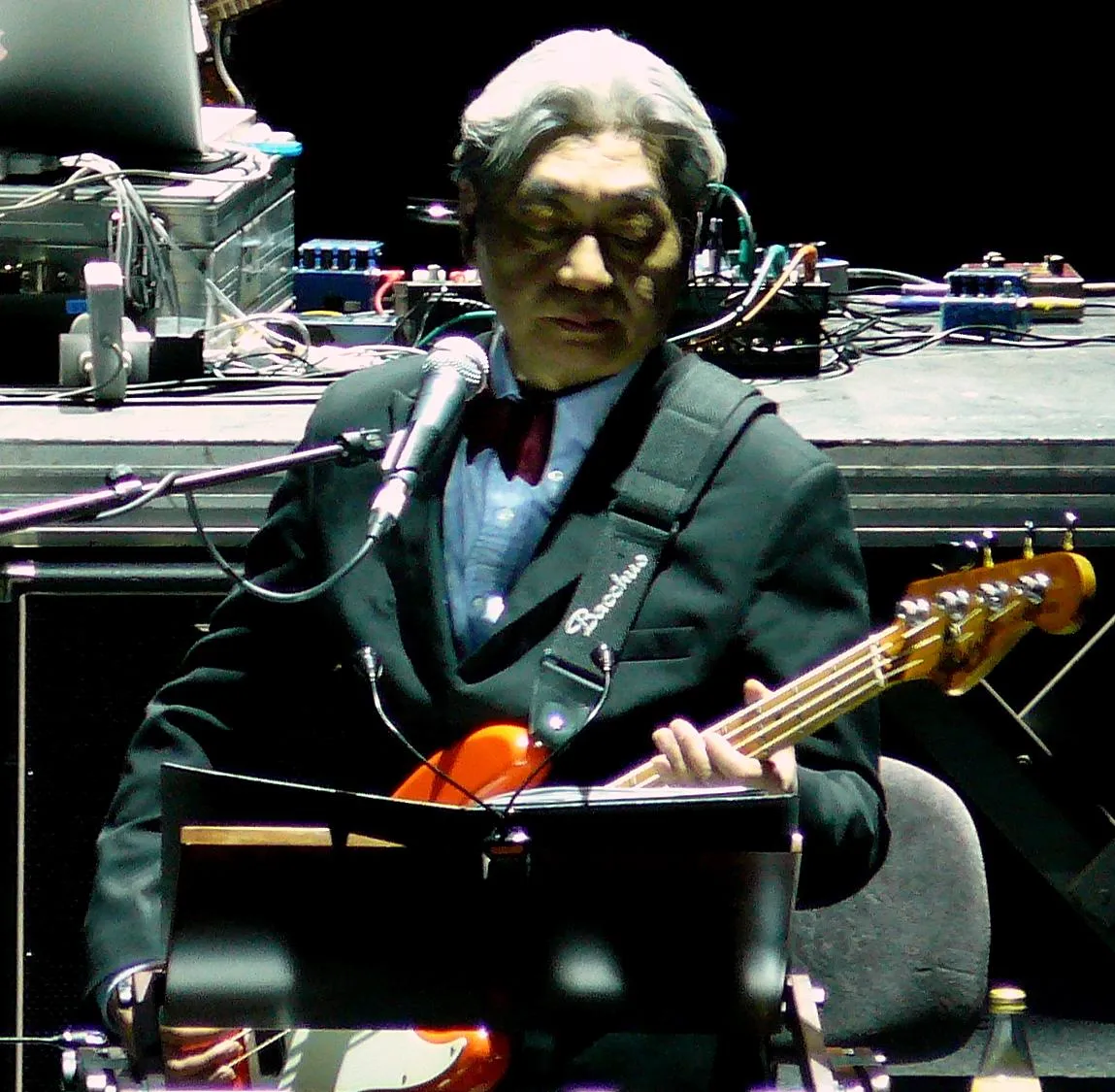
Haruomi Hosono
Tokyo — Passage-maker of Japanese modern music
From his Sayama home in 1973 to the solitary loop of 2019, via the synthetic exotica of Cochin Moon, the world techno-pop of Yellow Magic Orchestra and the ambient minimalism of S·F·X — Haruomi Hosono is the quiet architect of Japanese musical modernity. Co-founder of Happy End (1969), co-founder of YMO (1978), tutelary producer of an entire generation (Akiko Yano, Hiroshi Yoshimura, Miharu Koshi): his work cannot be reduced to any single one of these roles. What runs through everything is the quality of listening — an attention that traverses genres without ever being fixed by them.
Why attention traverses everything
Haruomi Hosono is perhaps the most influential Japanese musician whose name the Western mainstream doesn’t know. Co-founder of Happy End (the group that invented folk-rock in Japanese, 1969), co-founder of Yellow Magic Orchestra (the group that co-invented world techno-pop from Tokyo, 1978), producer of Hiroshi Yoshimura (Music for Nine Post Cards, 1982 — founding album of Japanese ambient), Akiko Yano, Miharu Koshi, Sandii & The Sunsetz. Fifty years of traversals, bifurcations, passages into new territories — without ever transforming this journey into a heroic narrative, or even a narrative. Hosono doesn’t tell his work. He makes it, and moves on.
This discretion is what makes his cartography necessary. Sakamoto — YMO co-founder, natural counterpart in this collection — earned the Oscar, composed for the world’s greatest filmmakers, died in 2023 in international light. Hosono remained in productive shadow: composing, producing, traversing genres with the same quality of attention. Not a signature-style (one cannot recognise a Hosono album from its first track, as one recognises an Air or Daft Punk album). A signature-attention: the quality of listening remains constant, the medium changes.
The six pivot-albums that follow trace the arc: Hosono House (1973) — the house, the friends, the personal voice above all; Cochin Moon (1978) — electronic exotica, the private laboratory before YMO; Solid State Survivor (1979) — the collective apex, world techno-pop from Tokyo; Philharmony (1982) — the post-YMO bifurcation, experimental concept-art-pop; S·F·X (1984) — the cold terminal, minimal ambient, the end of the electronic period; HOCHONO HOUSE (2019) — the loop, the return to the starting point with the entire arc between.
Ryuichi Sakamoto is the natural bridge in this collection: YMO co-founder with Hosono, the two most important Japanese modern trajectories — two complementary destinies. Hosono = the discreet architect, the producer-passage-maker who remains in shadow. Sakamoto = the composer-author who earns the Oscar and composes until his death in 2023. The same origin, two ways of being in the world. The Ryuichi Sakamoto cartography in this collection illuminates Hosono by contrast — and vice versa.


◆ Musicological studies
The work’s tracks examined closely — device, structure, procedure, lineage, reading under the permanences.
Hosono House
The Sayama home. Japanese pastoral folk recorded among friends, above all. The personal voice before the collective experiments.
1973. Happy End has just dissolved. The group that invented folk-rock in Japanese — with Eiichi Ohtaki, Takashi Matsumoto and Shigeru Suzuki — no longer exists. Hosono, 25, rents a house in Sayama, in the western suburbs of Tokyo. He gathers his musician friends. He records alone or nearly so, on an 8-track tape machine, songs he plays for them in the evening. He calls it Hosono House.
This first solo album is a gentle anomaly in the history of Japanese pop. No concept, no aesthetic programme, no manifesto. Only a house, a guitar, a bass, a few light percussion instruments, and Hosono’s slightly veiled voice singing in Japanese a music that sounds like Van Dyke Parks might have sounded had Van Dyke Parks been raised in Minato. Boku wa Chotto opens the album with complete nonchalance — “I’m just a little bit…” — a suspended phrase, as though Hosono hadn’t yet decided what he was going to say.
The device
The recording of Hosono House is rustic by choice, not constraint. Hosono could have used a professional studio — he had the connections after Happy End. He prefers the bedroom, the veranda, the garden. The sound is slightly imperfect, slightly porous, as though the house were breathing inside the music. Shigeru Suzuki plays guitar, Hosono plays bass and piano, Lin sings in the background. Declared influences: Harry Nilsson (Nilsson Schmilsson, 1971), Randy Newman (Sail Away, 1972), Van Dyke Parks (Song Cycle, 1968).
What distinguishes Hosono House from his American influences is lightness without irony. Nilsson and Newman are songwriters with a critical view of American culture. Hosono doesn’t critique — he observes. He makes Japanese pastoral folk as one takes a walk: with pleasure, without a fixed destination. Choo Choo Gatta Gotto is a song about a train journey that slightly runs away. Rock-A-Bye My Baby is a gentle lullaby. Funanori ni Naritai (I Want to Be a Sailor) is a bittersweet reverie. Nothing grave, everything sincere.
“I just wanted to make songs with my friends. I didn’t think it would be my first solo album — I was just thinking about the next rehearsal.”— Haruomi Hosono, NHK interview (paraphrase, c. 1990)
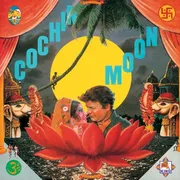
Cochin Moon
Synthetic exotica. Hosono invents his electronic language before YMO, in collaboration with graphic artist Tadanori Yokoo. The private laboratory of the passage-maker.
1978. Five years after Hosono House, Hosono has co-founded Tin Pan Alley with Shigeru Suzuki and Tatsuro Yamashita — the studio group that will produce most of Japan’s major pop songs of the 1970s. But in parallel, something changes. Hosono begins using synthesisers — the Moog, the Minimoog, the ARP Odyssey. He discovers American exotica of the 1950s (Martin Denny, Les Baxter), Indian trance music, the rhythms of Kerala. He imagines an imaginary trade route between Tokyo and the port of Cochin, on India’s south-western coast.
Cochin Moon is the result of this imagination. Recorded in close collaboration with graphic artist Tadanori Yokoo — whose visuals for the album (orientalist-psychedelic illustration, modern Japanese typography) are inseparable from the music — the album invents a synthetic exotica that did not yet exist. No real Indian instruments: synthesisers that imitate, distort and reinvent Oriental musical modes from a Tokyo studio. Authenticity doesn’t matter — imagination matters.
The device
Cochin Moon is the laboratory album that precedes YMO by a few months. The same year (1978), Hosono convinces Ryuichi Sakamoto and Yukihiro Takahashi to form Yellow Magic Orchestra — and Cochin Moon proves he already knows what he wants to do. Electronic synthesis as primary medium, exotic references as material, production as compositional tool: everything that will make YMO is already here, in a more intimate and stranger format.
Watering a Flower (which will later become Mercuric Dance for the 1984 Muji compilation) is particularly representative: a synthetic melody that loops, synthesiser textures evoking humidity and heat, a tropicalised rhythm. This is the private, experimental version of what will become the public techno-pop of YMO. Cochin Moon as the secret maquette of a coming revolution.
“I was fascinated by the sounds of India, but I had no desire to actually go to India. I wanted to imagine India from Tokyo using machines. That’s much more honest.”— Haruomi Hosono (paraphrase, interview 1980s)
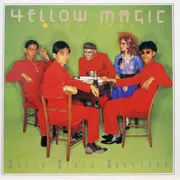
Solid State Survivor
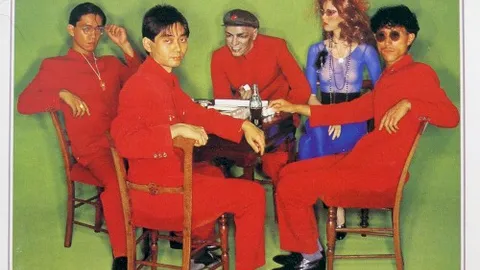
The collective apex. Yellow Magic Orchestra invents world techno-pop from Tokyo. Hosono is the architect — composer of Behind the Mask, central producer of the YMO sound.
1979. Yellow Magic Orchestra — Haruomi Hosono, Ryuichi Sakamoto, Yukihiro Takahashi — releases its second album. The first, self-titled (1978), had established the framework. Solid State Survivor confirms and amplifies it: this is the moment when Japanese techno-pop enters global musical consciousness. The album sells 500,000 copies in Japan — a remarkable figure for an entirely electronic album at the time — and begins to break through in Europe and the United States.
Hosono is the composer of Behind the Mask, the album’s most singular track: an arid synthetic construction, pulsed bass, cold atmosphere, without the pop flamboyance of Technopolis (Sakamoto) or the velocity of Rydeen (Takahashi). Behind the Mask will be covered by Greg Phillinganes for Michael Jackson, reworked by Sakamoto himself for compilations. But in its original YMO version, it is the purest Hosono signature: sober, efficient, slightly strange.
The device
YMO functions as a collective laboratory with three heads. Sakamoto brings classical training and a post-new wave aesthetic. Takahashi brings the drummer’s groove and melodic pop sensibility. Hosono brings the concept, the production, the framework — and the bass. It was Hosono who convinced the other two to form the group; it is Hosono who sets the production conditions. The YMO sound is, to a large extent, the Hosono sound scaled up to the group.
Solid State Survivor uses technologies that will become standard in the 1980s: Roland MC-8 Microcomposer (first sequencer used in commercial production in Japan), Roland CSQ-600, Moog synthesisers, Prophet-5. But what distinguishes YMO from its American or European electro contemporaries is a light irony — the stage costume, the militaristic opening imagery, the group name itself (Yellow Magic Orchestra is an ironic response to Electric Light Orchestra). Techno-pop as critical position from Asia, not as industrial dance production.
“We were playing the game of modern Japan as seen by the West — but from the inside. As if saying: here is what you think we are, and here is what that means from where we stand.”— Haruomi Hosono (paraphrase, interview 1980s)
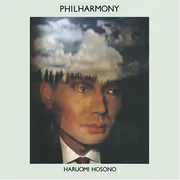
Philharmony
The experimental retreat. Post-YMO, Hosono directs electronics towards concept-art-pop. Sports Men as the maximum bifurcation point.
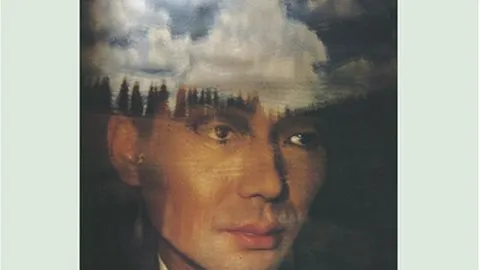
1982. YMO is still formally active, but Hosono has begun to detach from it — he will continue recording with the group until 1983, but his centre of gravity has shifted. He co-founds Yen Records with Yukihiro Takahashi, a laboratory label dedicated to a more experimental electronic music than YMO was producing for the mainstream. And he releases Philharmony, his first solo album since 1976.
Philharmony is the strangest album in his discography. Orchestral electronics, false falsetto voice, structures that sag and distort. There is something anime — in the Japanese sense — about these textures: an animated lightness that conceals a serious formal approach. Hosono uses Roland synthesisers as tools of conceptual production rather than accessible pop instruments. Sports Men is the most disconcerting track: a title evoking sport, music evoking electronic reverie.
The device
Brian Eno’s influence is perceptible in Philharmony — not the Eno of Music for Airports (too calm, too smooth), but the Eno of Before and After Science (1977): electronic texture as vehicle for strangeness rather than relaxation. Hosono is not ambient — he is experimental-pop, and the difference matters. Philharmony has songs, structures, lyrics. But these structures are distorted, these lyrics are fragmented, these songs refuse to resolve as songs are supposed to resolve.
In parallel with Philharmony, Hosono produces Hiroshi Yoshimura’s Music for Nine Post Cards (1982) — the founding album of Japanese ambient music. The second permanent (production as second voice) is at its creative maximum: Hosono as Yoshimura’s producer is as important as Hosono as Philharmony’s author. The two albums together define the Japanese experimental electronic landscape of the early 1980s.
“Sports Men — I don’t know where it came from. I wanted to make a song about men playing sports, but it ended up sounding like something completely different. That’s often how my best songs arrive.”— Haruomi Hosono (paraphrase, Yen Records liner notes)
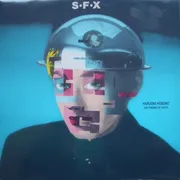
S·F·X
The cold terminal. Electronic ambient, spatial textures, structures without narration. Electronics at their most minimal before the acoustic return.
1984. Hosono has left YMO the previous year. He releases two projects in a single year: S·F·X, his most ambient and experimental album, and Watering a Flower / Mercuric Dance, a composition commissioned for Muji shops — the Japanese design chain that wanted background music that wouldn’t be background music. Two declensions of the same minimal electronic programme, in two radically different formats.
S·F·X (pronounced “Sound Effects”) is the coldest album in his discography. Long loops, analogue synthesisers in drone mode, no narrative structure in the usual sense. Hosono has absorbed the lessons of Eno (Ambient 4: On Land, 1982), of musique concrète, and of American minimalist electronics — but applies them from a Japanese sensibility that is not that of Western ambient. The textures are more precise, more architectural, less atmospheric. S·F·X is not music for relaxing — it is music for watching space.
The device
In parallel with S·F·X, Hosono composes Watering a Flower for Muji. The commission is explicit: music that improves the shop atmosphere without being noticed. This is precisely Satie’s definition of furniture music — and Hosono executes it with a light irony. Watering a Flower is background music too well made to be background music: the textures are too precise, the structure too considered. Hosono cannot help making art, even when asked for sonic wallpaper.
S·F·X and Watering a Flower are also the last albums of the Yen Records period. After 1985, Hosono changes direction — turning towards more acoustic forms, country-folk (the album Hossanova, 1985), then towards lighter collaborations. The territory of minimal electronics has been traversed, understood, documented. He moves on.
“Muji wanted music that wouldn’t distract. I tried — but I can’t manage to make something that isn’t interesting. That’s a flaw of mine, perhaps.”— Haruomi Hosono (paraphrase, c. 1984)
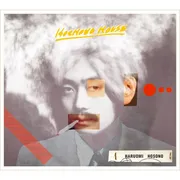
HOCHONO HOUSE
The loop. Hosono re-records Hosono House (1973) alone, 46 years later. Same tracklist, same arrangement — but alone, at 71, with an entire arc between the two.
2019. Hosono is 71. He releases HOCHONO HOUSE — an integral re-recording of Hosono House (1973), his first solo album, recorded 46 years earlier in his house in Sayama with his musician friends. Same tracklist. The same arrangements, or nearly. But this time, Hosono plays all instruments alone. In overdubs. Without his original friends. Shigeru Suzuki, Lin, the others — absent. Hosono alone with his instruments and his memories.
HOCHONO HOUSE is not a reissue, not a compilation, not a tribute. It is an autonomous artistic act: Hosono reinterprets his own foundation with everything he has traversed between the two. The same album — but after Happy End, after Cochin Moon, after YMO, after Philharmony, after S·F·X, after 35 years of traversals. The formal loop: returning to the starting point to measure the distance covered. And finding that the starting point is still there.
The device
What is remarkable about HOCHONO HOUSE is the precision of the reinterpretation. Hosono did not modernise the arrangements, did not add electronics (he could have — he had the tools). He played the same scores, in roughly the same spirit, but with his voice and hands of 2019. The difference lies in what cannot be imitated: experience. Boku wa Chotto of 1973 is a suspended phrase from a 25-year-old. Boku wa Chotto of 2019 is the same suspended phrase, but in the voice of a 71-year-old who has lived everything in between. The text has not changed. The meaning is radically different.
The loop as the ultimate form of the first permanent (traversal of genres as method): Hosono returns to his starting point not out of nostalgia, but to verify that the method holds. The first permanent, at its purest state, is a question: does the original attention — the same attention that produced Hosono House — withstand 46 years of traversals? HOCHONO HOUSE answers: yes. The house is still there.
“I didn’t want to make something nostalgic. I wanted to check if I was still capable of making these songs — and if they still meant something. They did.”— Haruomi Hosono, Speedstar / Victor interview (2019, paraphrase)
The traversal as permanent
Happy End invents folk-rock in Japanese. Hosono House (1973) is the first solo — the Sayama house, the musician friends, the personal voice before the collective experiments. Hosono is 25 and doesn’t yet know what he’s doing. This is precisely what makes the album foundational: the absence of programme, the presence of attention. The songs arrive as they arrive, with the lightness of a musician playing for his friends in the kitchen. The foundation lies in this lightness.
Tin Pan Alley, Cochin Moon (1978), Yellow Magic Orchestra. The traversal from exotica to techno-pop. Hosono discovers synthesisers and immediately understands what they allow — not replacing acoustic instruments, but creating a new territory where music’s rules must be reinvented. Cochin Moon is the private laboratory; Solid State Survivor (1979) is the industrial and worldwide version. The first permanent (traversal of genres) asserts itself here in all its radicality: Hosono moves from folk to techno-pop in five years, without rhetorical rupture, without manifesto, with the same quality of attention.
Post-YMO, Yen Records, Philharmony (1982), S·F·X (1984). Hosono leaves the mainstream stage and plunges into electronic experimentation. In parallel, the second permanent (production as second voice) is at its maximum: he produces Hiroshi Yoshimura’s Music for Nine Post Cards (founding album of Japanese ambient), albums by Akiko Yano, Miharu Koshi. Solo Hosono and producer Hosono operate simultaneously, at equal intensity. S·F·X and Watering a Flower (Muji, 1984) mark the end of the electronic cycle — and Hosono moves on to something else, again.
HOCHONO HOUSE (2019) is not a nostalgic compilation. It is an artistic act: Hosono re-records alone Hosono House (1973), his first album, 46 years later. Same tracklist, same arrangement, but without his friends — alone, with his 71-year-old voice and hands that remember. The formal loop proves that the first permanent is a permanent: the method-attention was there in 1973, it is still there in 2019. The house is still there.
What never changes
Traversal of genres as method rather than pose: from Hosono House to HOCHONO HOUSE, via YMO, exotica, ambient — Hosono never claimed to be a single-genre artist. He traversed. Each traversal is real, each territory inhabited with rigour, and each passage to the next territory made without regret. The method-attention: what remains constant is not the sound, nor the style, nor even the form — it is the quality of listening Hosono brings to each new territory.
Production as second voice: the Hosono body of work is not read only in his solo albums. It is also read in the albums of Hiroshi Yoshimura, Akiko Yano, Miharu Koshi, Sandii & The Sunsetz — all produced by Hosono, all bearing his signature without bearing it. Production is not a service: it is a form of writing. Hosono as producer is as important as Hosono as composer.
Cross-artist bridge
Ryuichi Sakamoto is Hosono’s natural mirror in this collection. YMO co-founders, the two most important Japanese modern trajectories — but two complementary destinies. Hosono remains in productive shadow: he traverses, produces, passes. Sakamoto ascends to international light: the Oscar (1988), collaborations with David Bowie, death in 2023 in the full consciousness of the world. The same origin (YMO, 1978), two ways of being in the world. Hosono = the discreet depth. Sakamoto = the visible height. Together, they map the two poles of Japanese musical modernity.
The map
Six albums orbiting the two permanents. Click an album to see how it declines them.
Production as second voice: Hosono learns on the job what it means to record a personal vision — 8-track, in-room, without a professional studio. The founding apprenticeship.
Position: Japanese pastoral folk after Happy End. Van Dyke Parks, Harry Nilsson, Randy Newman — filtered through Minato.
Production as second voice: sole master for the first time — synthetic textures are not ornaments, they are the song. Collaboration with graphic artist Tadanori Yokoo: sound and image inseparable.
Position: secret sketch of YMO, months before its formation. What Solid State Survivor would become at scale is here in an intimate format.
Production as second voice: Hosono as YMO producer inseparable from Hosono as composer. The YMO sound is largely the Hosono sound scaled to the group. Roland MC-8, Prophet-5, systematic sequencing.
Position: Behind the Mask — Hosono's signature in YMO: spare, effective, slightly strange. Later covered by Michael Jackson via Greg Phillinganes.
Production as second voice: 1982 = Philharmony (solo) AND Hiroshi Yoshimura's Music for Nine Post Cards (produced by Hosono). The double-voice at its creative peak. Yoshimura: the founding album of Japanese ambient.
Position: the strangest album of his discography. Sports Men — maximum bifurcation, ahead of its time.
Production as second voice: the Muji commission (Watering a Flower, 1984) — music for a retail space, executed with the same rigour as personal art. The permanent in its most direct form.
Position: ambient-spatial electronics at their most minimal. After 1985, acoustic return (Hossanova). The attention-method applied, then set aside without regret.
Production as second voice: producer voice and composer voice merge — Hosono alone, all instruments in overdubs. The production is the work.
Position: an autonomous artistic act, not nostalgia. The Sayama house is still there. The same suspended phrase of Boku wa Chotto — but in the voice of a 71-year-old man.