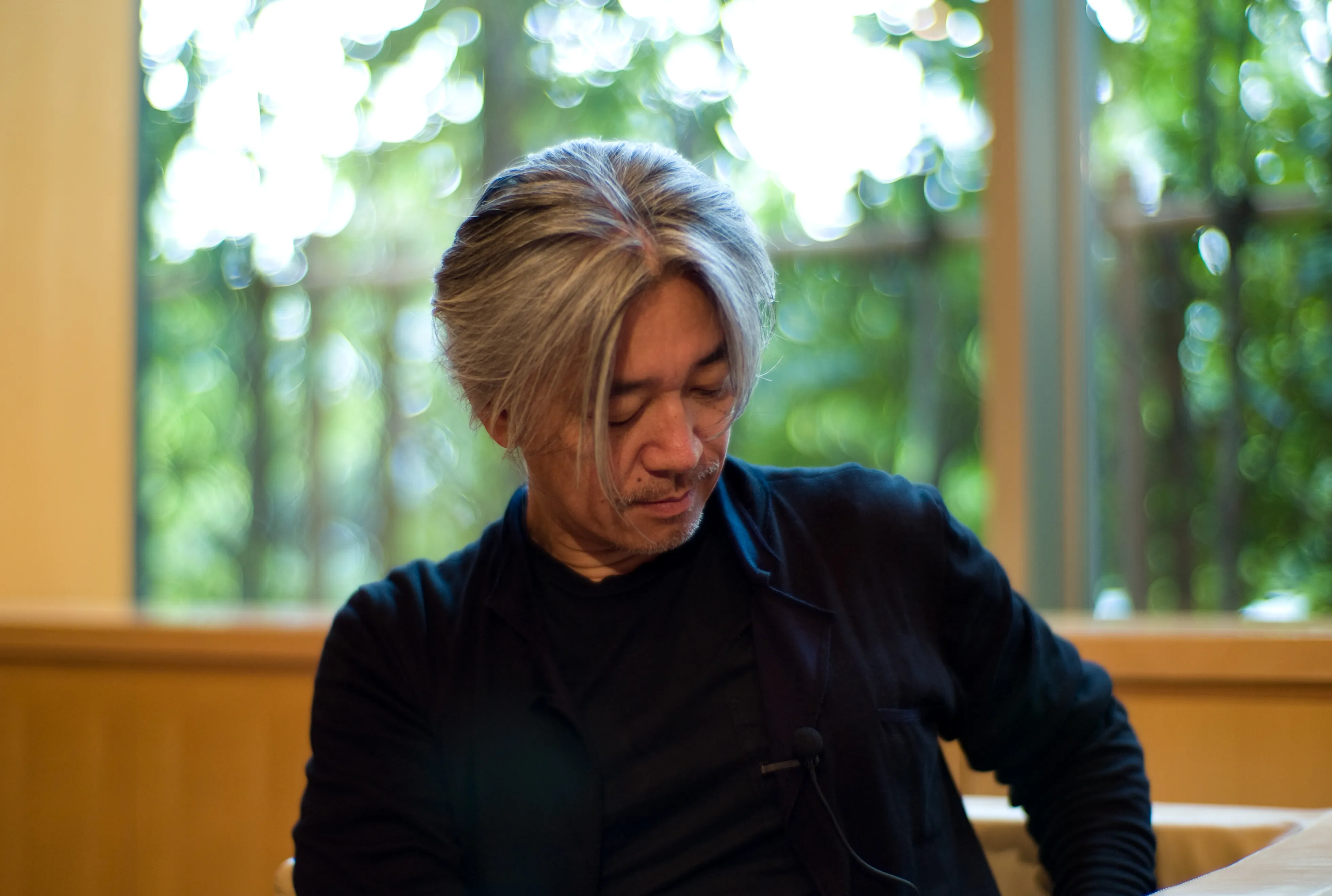
Ryuichi Sakamoto
Tokyo — Orchestral-electronic composition
From the electro-rap of B-2 Unit (1980) to the Oscar for The Last Emperor (1988), from the universal melody of Merry Christmas, Mr. Lawrence to the piano improvisations of 12 (2023), recorded under chemotherapy two months before his death — Ryuichi Sakamoto may be the only composer to have crossed so many territories with such unwavering rigour. Not a reinvention album by album: a displacement of listening. The same attention, a different medium. And at the end, death itself treated as compositional material, with the same formal dignity as everything else.
Why attention is enough
Ryuichi Sakamoto is the only artist in this collection to have composed from a hospital room, under chemotherapy, two months before his death — and whose album recorded in those conditions is among the most moving of 2023. 12 is not a tragic work. It is not a rhetorical testament nor a romantic farewell. It is someone paying attention to the world, noting what they hear, playing what they feel — with the same rigour as in 1980, when he was recording B-2 Unit in an Osaka studio with a TR-808 and the conviction that machines could be musical subjects.
It is this continuity that makes Sakamoto necessary. Not the diversity of his styles — the electronic pop of Yellow Magic Orchestra, the radical electro of B-2 Unit, the orchestral scores of Merry Christmas, Mr. Lawrence and The Last Emperor, the piano minimalism of BTTB, the post-music ambient of async — but the identical rigour applied to each territory. Sakamoto does not reinvent himself with each album. He displaces his listening. He traverses a new territory with the same tools: attention, formal honesty, refusal of gratuitous gesture.
The five pivot albums that follow trace the arc: B-2 Unit (1980) — electro before electro, the drum machine as subject; Merry Christmas, Mr. Lawrence (1983) — the bridge melody, Japanese scale harmonised in the Western manner, a global classic in six minutes; The Last Emperor (1987) — the Oscar, the most institutional orchestral score of the work, three composers without email; async (2017) — the testament album, the imaginary Tarkovsky, musique concrète as the language of finitude; 12 (2023) — twelve months, twelve tracks, one piano, one chemo, absolute presence.
Ryuichi Sakamoto stands alone in this collection in his register. One editorial bridge is worth noting with Hans Zimmer: two film score composers at the peak of their generation, but with inverse trajectories. Zimmer = the architect of a collective ecosystem (Remote Control Productions), the orchestra treated as studio material for the global mass market. Sakamoto = the solitary integral author, the Oscar as anomaly in a solo artist’s career, then retreat toward solo piano. The score as industry versus the score as personal work. West and East of the film composer.


◆ Musicological studies
The work’s tracks examined closely — device, structure, procedure, lineage, reading under the permanences.
B-2 Unit
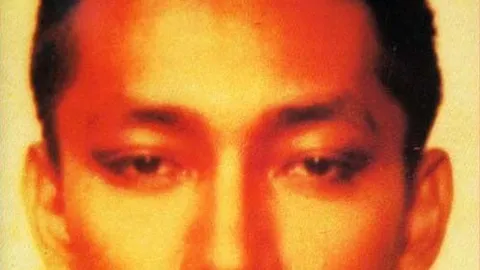
Riot in Lagos. The album that announces American electro before it exists. Classical rigour applied to drum machines.
1980. Yellow Magic Orchestra is at the peak of its global popularity. Solid State Survivor (1979) confirmed YMO as Japan’s most influential electronic ensemble. Sakamoto could have capitalised on this visibility in his solo work — offering something familiar, accessible, sellable. He does the opposite.
B-2 Unit is a rupture with everything that precedes it. No carried melody, no reference to synthé pop. The Roland CR-78 and TR-808 drum machines are used not as accompaniment but as primary architecture. The basslines are electronic-funk, the textures arid. Riot in Lagos, the opening track, is a percussion and bass machine over which a minimal voice floats — a musical object with no equivalent in 1980.
The device
Afrika Bambaataa listens to Riot in Lagos and understands what Sakamoto understood first: that the drum machine can be a solo instrument, not an accompanist. Planet Rock (1982), the founding track of American electro, borrows directly from this grammar — mechanical rhythms, synth bass, no guitar. Mantronix samples it directly in the 1980s. B-2 Unit is thus a founding album of American electro whose American authors were never invited to Osaka.
What is remarkable is the rigour with which Sakamoto applies his academic training (Tokyo University of the Arts, classical composition and ethnomusicology) to material that the academic world of 1980 had not yet deigned to consider. The drum machine as serious compositional subject — this is the first permanent gesture in its most radical form.
“I wasn’t trying to make ‘dance music’. I was trying to understand what machines could do that musicians couldn’t — and why that interested me.”— Ryuichi Sakamoto, Red Bull Music Academy (2012, paraphrase)
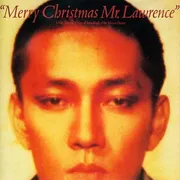
Merry Christmas, Mr. Lawrence
Forbidden Colours. The bridge melody. Japanese pentatonic scale, Western harmonisation, synth production — a global classic in 6 minutes.
1983. Nagisa Ōshima shoots Furyo (Merry Christmas, Mr. Lawrence) in Rarotonga, Cook Islands. The film recounts the relationship between a Japanese officer (Captain Yonoi, played by Sakamoto himself) and an English prisoner (Jack Celliers, played by David Bowie) in a Japanese prisoner-of-war camp in 1942. Ōshima casts Sakamoto in a double role: actor and composer. The decision is bold — Sakamoto has never composed a film score.
The result is the most played and most covered melody in all of Sakamoto’s work. The title melody rests on a Japanese minor pentatonic scale (yo-naoshi scale) harmonised with Western chords and carried by piano and a string synthesiser. The scale produces a character immediately recognisable as Japanese — but the harmonisation and production make it accessible to any Western listener. This cultural bridge, achieved without picture-postcard exoticism, is the founding gesture of the piece.
The device
The melody is simple: six bars, a rise, a fall, a repetition. It can be played by a beginner pianist. And yet it has been covered by Keith Jarrett, by jazz orchestras worldwide, by electronic artists, by street pianists in Tokyo and Paris. It is not sophistication that creates resonance — it is the precision of the cultural bridge. The Japanese scale makes the melody unique; the Western harmonisation makes it universal.
The Forbidden Colours version with David Sylvian (English lyrics) adds a vocal dimension to the piece, transforming the instrumental score into a melancholic pop song. This is the version that will circulate most widely outside Japan in the 1980s.
“I had to compose the music before the film was finished. I had the script, some images. I was looking for a melody that could have been the inner music of Yonoi’s character — something he would never have said aloud.”— Ryuichi Sakamoto, NHK Documentary (2017, paraphrase)
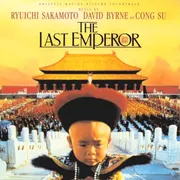
The Last Emperor
Main Title Theme. The Oscar of coexistence. Three composers, three aesthetics, one unexpected coherence. Sakamoto's institutional peak.
1987. Bernardo Bertolucci shoots The Last Emperor in China — the first Western film to receive permission to film inside the Forbidden City. He entrusts the music to three composers who have never met: Ryuichi Sakamoto (Japan), David Byrne (United States, Talking Heads), and Cong Su (China). The constraint is editorial: each composer works on his own sections, then Bertolucci assembles. The result is an improbable coherence — and the Academy Award for Best Original Score in 1988.
Sakamoto’s contribution is the most orchestral of his career to this point. The main theme — classical strings, piano, discreet synth touches — is built on a more classically emotional architecture than in his previous solo albums. Sakamoto adapts his writing to the epic film context: he partially steps back behind the narration, rather than superimposing himself on it.
The device
What is striking in Sakamoto’s score for The Last Emperor is precisely this capacity to adapt without losing oneself. Traditional Chinese instruments (erhu, pipa) coexist with the Western orchestra. Sakamoto’s themes are immediately identifiable — the Japanese scale transposed onto a Chinese subject — but they do not sound like cultural fancy dress. They sound like Sakamoto applying the same cultural bridge method as with Merry Christmas, Mr. Lawrence.
The film wins nine Oscars. The score is his most popular contribution. It also marks, in a sense, the high point and closure of his period as an international film composer: after The Last Emperor, Sakamoto will compose more scores (Little Buddha, 1993), but never with this institutional dimension.
“Working with David Byrne was a strange experience. We sent recordings by post — no email back then. We never really talked. And yet something worked.”— Ryuichi Sakamoto, Red Bull Music Academy (2012, paraphrase)
async
fullmoon, Life Life, async. The album composed for an imaginary Tarkovsky. The first testament. Death treated as compositional material.
2017. Three years after the rectal cancer diagnosis. Sakamoto has been through surgery, chemotherapy, uncertainty. He did not die — but he composed async with the knowledge that he could have. The title comes from computing: asynchronous designates a process that does not synchronise with the main flow — that operates according to its own time, outside common time.
Sakamoto states he composed async for an imaginary Tarkovsky: if the Russian director were still alive and asked him for a score for Stalker or Solaris, what would it sound like? The answer is a complete abandonment of carried melody. Concrete sounds, field recordings (rain, trees, water), atomised piano, slow loops, textures. No identifiable melodic theme. An album of presences rather than forms.
The device
The album is inseparable from the documentary Coda (Stephen Nomura Schible, 2017), which films Sakamoto composing, walking through forests, noting observations in notebooks. Coda shows the process as the work itself — Sakamoto is not making ambient music, he is recording his presence in the world at a moment when that presence is precarious.
fullmoon is an electronic piano repeated on loop with minimal variations — the structure of Zimmer’s Time, but at the opposite emotional register: where Time builds towards a climax, fullmoon is static, suspended. Life, Life integrates an excerpt from the poem I Live My Life by Arseny Tarkovsky (the filmmaker’s father), read in voiceover. async (the title track) is a six-minute loop that says exactly what the title announces: time decomposed, non-synchronised, treated as material.
“After cancer, I realised I could no longer compose the same things. Not because I had changed my mind about music — but because my relationship to time had changed. Time became something I can no longer take for granted.”— Ryuichi Sakamoto, Numero Tokyo (2023, paraphrase)
12
20220207, 20220803. Twelve tracks, twelve months, one piano. Recorded under chemotherapy. The final album, released two months before his death.
17 January 2023. Ryuichi Sakamoto turns 71 today. He releases 12 for his birthday. Twelve tracks, one per month of the year 2022, recorded during his chemotherapy for oesophageal cancer diagnosed in 2020 (recurrence). Each track carries a title that is a date — 20220207, 20220302, 20220803 — the diary as musical form.
On 28 March 2023, seventy days after the release of 12, Ryuichi Sakamoto dies in Tokyo. 12 is his last album. This fact weighs on listening — but Sakamoto had composed 12 knowing this was possible, and this awareness produced neither dramatism nor resignation. Only presences: a held note, a suspended chord, the silence between two sounds.
The device
12 is the most stripped-back album in all of Sakamoto’s work. Solo piano or almost, a few minimal electronic textures, no imposed narrative structure. Each track lasts between two and six minutes. There is no development in the classical sense — just a presence in time, an exploration of a particular state. The album is closer to a musical diary than to an album in the traditional sense.
What strikes on listening is the absence of any sense of defeat. These tracks do not sound like farewells — they sound like someone paying attention to the world. The light of a February day, the texture of an August month, the density of a March day. The date-titles force this reading: one listens not to an abstract work but to a specific moment in the life of a man who knows his moments are numbered.
“I don’t know if I will finish this album. I will try.”— Ryuichi Sakamoto, message to his team (reported in the press, 2022)
A body of work in four movements
From B-2 Unit (1980) to 12 (2023), Ryuichi Sakamoto produced around forty albums over forty-five years. Composer, pianist, producer, actor, ecological activist. Oscar for The Last Emperor (1988). Co-founder of Yellow Magic Orchestra. A figure of the Japanese counter-culture as much as of international classicism. But the trajectory is not one of accumulated roles — it is one of progressive deepening of two founding gestures, tested territory by territory, until their most stripped-back formulation in 12 (2023).
What never changes
Two permanents traverse all four movements. Traversal of techniques as method — from 1978 to 2023, each of Sakamoto’s stylistic turns is applied with the same formal rigour: not a shifting aesthetic posture, but a constant displacement of listening. The drum machine in 1980, orchestra in 1987, solo piano in 1999, musique concrète in 2017, chemo improvisations in 2023 — territories traversed with the same attention, without irony or nostalgia. Death as final editorial permanent — the 2014 cancer, the 2020 cancer, the death on 28 March 2023 are biographical facts that would have remained external to the work had Sakamoto not made them musical subjects. async is the first album where death is the subject without being the message — the music does not speak about death, it is composed from the consciousness of death. 12 goes further: death is no longer the subject, it is the condition. Without chemotherapy, without the countdown, these twelve tracks would have a different quality. Death as form.
Position in the collection
Ryuichi Sakamoto has no strong factual bridge with most artists in this collection. His register — Japanese orchestral-electronic composition — is singular here. One solid editorial bridge exists: with Hans Zimmer. Both composers dominated film music of their generation with opposing grammars. Zimmer builds an industrial ecosystem (Remote Control Productions, dozens of collaborators), treats the orchestra as studio material, composes for the global mass market. Sakamoto composes alone, refuses spectacle, wins the Oscar as anomaly in an integral artist’s career — and ends by abandoning orchestra for solo piano. The West/East diptych of the film composer: the American collaborative machine versus the Japanese integral artist. Two distinct ostinato permanents: Zimmer accumulates toward climax, Sakamoto remains in suspension. Two opposing conceptions of what film music can do.
The map
Five albums in orbit around the two permanents. Click an album to see how it unfolds them.
Death as permanent (in germ): formal radicality — making something with no guaranteed audience — prefigures the ethical disposition that will later allow composing in the face of death without dramatism.
Position: founding album of American electro from Tokyo. Before *Planet Rock* (1982). Academic rigour applied to machines.
Death (in the subject): film about captivity and sacrifice. The melody carries this gravity without illustrating it. Suspension quality of the scale — same emotional frequency as *async* 34 years later.
Position: the most-played Sakamoto piece in the world. Covered by Keith Jarrett, hundreds of piano versions.
Death (in the subject): film about the end of a life and a world. The score carries this gravity without pathos — same ethical disposition as *12* (2023).
Position: institutional peak. The Oscar as anomaly in a solitary artist's career. After this, Sakamoto progressively retreats toward solo piano.
Death as permanent: first explicit formulation. The asynchronous loop = sick time that no longer synchronises with social time. Composed for an imaginary Tarkovsky. Inseparable from the documentary *Coda* (2017).
Position: first testament album. Steve Reich + Eno + musique concrète, but from the hospital room. Permanent 2 formulates itself.
Death as permanent: permanent 2 in its purest state. The date-titles (*20220207*, *20220803*) make the diary a musical form. Death is not the subject — it is the condition. Released for his 71st birthday, two months before his death on 28 March 2023.
Position: final album. Twelve tracks under chemotherapy. Absolute presence as last gesture.