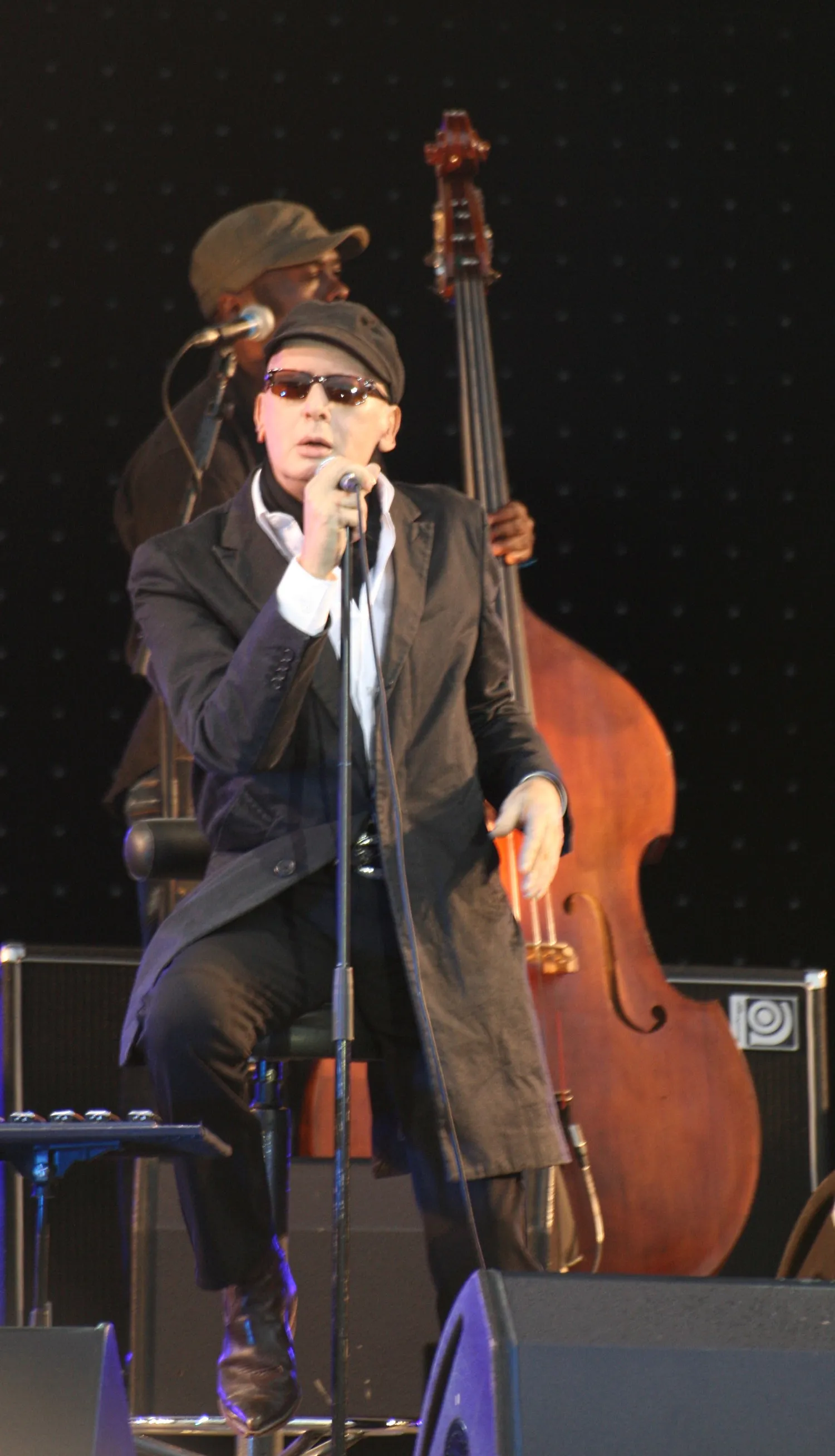
Alain Bashung
France — Modernist rock-chanson
Thirty years of French song held without concession. Alain Bashung does not sing — he inhabits the text. The deep, stretched, near-spoken voice transforms each syllable into a gesture. From Gaby oh Gaby (7 million singles) to the testament of Bleu pétrole, the same grammar: a lyricist-architect, a voice that closes nothing, songs that stay open long after the end.
Why the voice is the instrument
Alain Bashung does not sing. He inhabits. The deep, stretched, near-spoken voice transforms each syllable into a physical gesture rather than a musical note. For thirty years and seven pivot albums, this voice never seeks virtuosity — it seeks density. With it, lyricist-architects who deliver fragmented, open, sometimes enigmatic texts. The result is a singular form within chanson française: not Brel’s lyricism, not Gainsbourg’s surrealism, not the pure rock of Téléphone. Something else.
He is born in 1947 in Paris, to a Kabyle father and a Breton mother, childhood in Alsace then Paris. The 1960s and 1970s pass in French variété without him finding his place. In 1979, at 31, Gaby oh Gaby (Boris Bergman) extracts him from anonymity with seven million singles sold worldwide. The arc begins. It ends in March 2009, two months after the Victoires that honour Bleu pétrole with three prizes. The trajectory lasts thirty years. It accepts no compromise.
The seven records that follow show how these two permanences play out — from the foundation (Roulette russe) to the great refusal (Play blessures), from the great return (Osez Joséphine) to the popular synthesis (Chatterton), from the masterwork (Fantaisie militaire) to the swan song (Bleu pétrole). These are the seven moments where the body of work bifurcates or confirms itself.
The Cartographies collection includes two artists with factual links to Bashung: Vincent Delerm, who cites Bashung in Quinze Chansons and numerous interviews as a founding reference of the phrasing-song in French music; and Brigitte Fontaine, with whom Bashung co-recorded Vagues à l’âme on Fontaine’s album Le Contexte (2001) — two French modernist songwriters who both work with lyricist-architects rather than writing themselves.


◆ Musicological studies
The work’s tracks examined closely — device, structure, procedure, lineage, reading under the permanences.

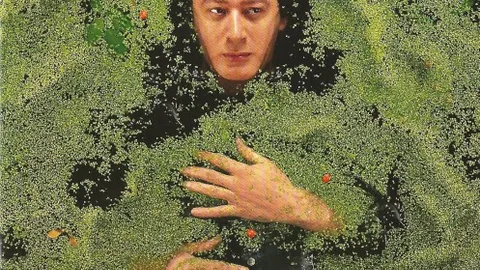
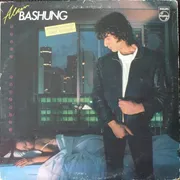
Roulette russe
The founding hit. The voice is born here, the phrasing established, French song shifts register.
Alain Bashung has been searching for fifteen years for the record that would pull him out of variété anonymity. He is 31 in 1979 when Roulette russe is released with Gaby oh Gaby as its single. Seven million copies worldwide, one million in France. Boris Bergman writes the lyrics — absurd, sensual, often non-narrative. Bashung sings with that nasal-deep voice that belongs to no one else, that slow phrasing that turns the song into a dramatic gesture rather than a story.
The title comes from the Rolling Stones — deliberately, with conviction. French song had not had this register yet: rock and dandy at once, violent and precise. Gaby oh Gaby is an anomaly that becomes a norm. After this record, French song knows it can bite.
The device
Production by Max Chailleux, lyrics by Boris Bergman, music Bashung + rock arrangements. Recorded in Paris, 1979. The album does not bet everything on the hit — the other tracks (S.O.S. Amor, Angora) explore the same territory: fragmented texts, dense rock, central voice. The Bergman/Bashung model is already complete.
"Gaby oh Gaby, come dance with me / Come into my arms, let yourself go”— Boris Bergman / Alain Bashung, Gaby oh Gaby, 1979
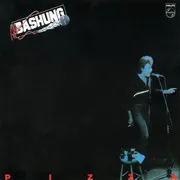
Pizza
The confirmation. Bergman and Bashung refine the grammar; French song has found its rocker.
Two years after Roulette russe, the Bergman/Bashung engine delivers its second act. Pizza confirms what the first album established: a rock chanson française, dense, textually non-narrative, carried by a voice that never explains itself. Vertige de l’amour becomes an immediate classic. Y’a pas que la guitare dans la vie pour faire crier les filles — the title alone is already a programme.
The model is stabilised but not frozen. Bergman explores new registers (pocket surrealism, ironic pop), Bashung refines his phrasing. The album is less radical than what follows (Play blessures, 1982) but more sophisticated than the first. It establishes continuity without repeating.
The device
Same production team, same trust in Bergman’s texts. The album marks a shift toward more elaborately arranged pop-rock — thicker arrangements, more immediately hooky melodies. Bashung is learning to balance difficult text and immediate appeal.
"Vertigo of love, it carries me far, far from you”— Boris Bergman / Alain Bashung, Vertige de l’amour, 1981
Play blessures
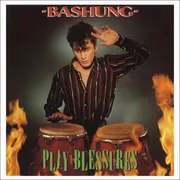
The cursed cult album. Gainsbourg produces, Bergman pushes the text to the extreme. Commercial flop, artistic foundation.
1982. Bashung chooses Serge Gainsbourg to produce his third album. The gesture is radical: Gainsbourg is not an ordinary producer — he is the master of French provocation, the creator of Je t’aime… moi non plus and Histoire de Melody Nelson. His agreement implies tacit recognition. And the album will not be easy.
Play blessures disorients the press, disappoints the audience that expected a Roulette russe II, and almost immediately disappears from the charts. But it lodges in memory as a founding record: Bergman’s lyrics pushed to the extreme of the fragmented, Gainsbourg’s production dry and taut, Bashung’s voice lower still, more contained. The album of the great refusal.
The device
Production: Serge Gainsbourg. Lyrics: Boris Bergman (with some co-writing by Bashung). Recorded in Paris, 1982. Gainsbourg’s production brings an almost punk dryness: fewer arrangements, more space, a frontal drum kit. Bergman’s text reaches its maximum fragmentation — some songs are sequences of images with no explicit narrative link. Play blessures becomes the negative-positive model: everything Bashung does after flows from it.
"Volubilis, I look for you under the stones / And you flower in the sand of wars”— Boris Bergman / Alain Bashung, Volubilis, 1982
Osez Joséphine
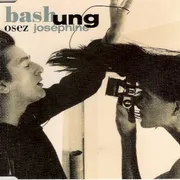
The great return. Jean Fauque replaces Bergman, Louisiana enters the song, Bashung becomes unavoidable.
Nine years after Play blessures. After Figure imposée (1987, a transitional album), Bashung travels to record in Louisiana with Cajun-blues guitarist Sonny Landreth and a new lyricist: Jean Fauque. The break with Bergman is complete — no conflict, but a change of register. Fauque writes even more fragmented, more image-driven texts, sometimes close to pure poetry. Osez Joséphine becomes his album of maturity.
Victoires de la Musique 1992. The press hails a return to the summit. Bashung is 43 and appears to have been waiting for this moment across an entire decade: the voice has deepened further, the phrasing has slowed still more, Fauque’s text gives him a new architecture. This is no longer the French rock of the 1980s — it is something harder to name.
The device
Recorded in Lafayette, Louisiana, with Sonny Landreth (guitar). Lyrics: Jean Fauque (first album of the Fauque/Bashung collaboration). The Southern American atmosphere is not surface exoticism — it enters the very texture of the album: slow slide guitar, dilated spaces, spare arrangements. Bashung sings over these textures as though he had always belonged there.
"Dare, Joséphine, do it for real / Look how beautiful the world is”— Jean Fauque / Alain Bashung, Osez Joséphine, 1991
Chatterton
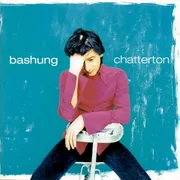
The synthesis. Édith Fambuena produces, Fauque writes, Bashung reaches a broad audience without yielding on rigour.
Three years after Osez Joséphine, Bashung changes producer: Édith Fambuena (formerly of Les Valentins) brings a new electronic pop-rock rigour. The Fambuena/Bashung partnership will last ten years and two albums (Chatterton and Fantaisie militaire). Fauque remains on lyrics. Bashung re-records two pieces he had already sketched — Ma petite entreprise (Bergman, definitive version) and Madame rêve (Fauque).
Chatterton is the most broadly accessible album of the mature period. Both hits (Ma petite entreprise, Madame rêve) appear on every radio station. Victoires 1995. But the album sacrifices nothing: the text remains demanding, the phrasing remains slow, the voice remains low. Bashung proves one can be popular without being easy.
The device
Production: Édith Fambuena. Lyrics: Jean Fauque (except Ma petite entreprise, Boris Bergman). Recorded in Paris, 1994. Fambuena brings a more present electronic feel — synthesisers, discreet samples, constructed rather than played rhythms. The album sounds more “modern” than its predecessors without losing Bashung’s gravity.
"My little business knows no crisis / No, no, no, no”— Boris Bergman / Alain Bashung, Ma petite entreprise, 1994
Fantaisie militaire
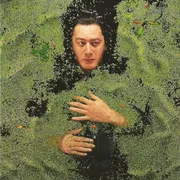
The masterwork. Manset enters the texts, Fambuena at her peak, Bashung's voice at the summit of its gravity.
March 1998. Bashung is 50 and releases his best album. Fantaisie militaire assembles everything he has built since 1979: the voice at its most dramatic, the texts at their most fragmented (Fauque plus Gérard Manset, a new co-lyricist), Fambuena’s production at its peak. La Nuit je mens, Fantaisie militaire, En route pour la Chine — the album does not disappoint once.
Victoires de la Musique 1999: a complete sweep — Best Male Artist, Album of the Year, Song of the Year (La Nuit je mens). Three prizes in one evening. Bashung is recognised as the greatest living French singer. It has taken twenty years since Gaby oh Gaby.
The device
Production: Édith Fambuena. Lyrics: Jean Fauque + Gérard Manset + some co-writing. Recorded in Paris, 1997-1998. Manset brings an epic-poetic dimension that Fauque alone had not — his texts are denser, laden with military and geographical images that give the album its title. Fambuena constructs broadly breathing arrangements: much space, little saturation, each instrument in its place.
"At night I lie, at night I reach, at night I hear / Voices saying that tomorrow…”— Jean Fauque / Alain Bashung, La Nuit je mens, 1998
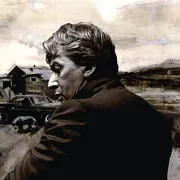
Bleu pétrole
The swan song. Recorded under illness, celebrated by three posthumous Victoires, a just closure of an exceptional body of work.
24 March 2008. Bleu pétrole appears six years after L’Imprudence (2002). Bashung is 60 with a lung cancer diagnosed during the recording. The public does not yet know — his body does. The album co-written with Gaëtan Roussel, Pierre Grillet and Jean Fauque, produced by Rodolphe Burger, sounds like what it is: a work built in the time that remains.
Victoires de la Musique 2009: three prizes — Album of the Year, Best Male Artist, Song of the Year (La Ficelle). Bashung is hospitalised on the evening of the ceremony, early February 2009. He receives his prizes by proxy. On 14 March 2009 — exactly eleven months after the album’s release — he dies in Paris. The symmetry is involuntary, but just.
The device
Production: Rodolphe Burger. Lyrics: Gaëtan Roussel, Pierre Grillet, Jean Fauque (+ co-writing). Recorded in Paris, 2007-2008. Burger brings a different texture from Fambuena: more organic, less electronic, closer to chamber rock. Bashung’s voice is at the bottom of its register — illness deepens what age had already enriched. This is not weakness: it is density.
"So many nights hoping for / The sound of a key in the lock”— Gaëtan Roussel / Alain Bashung, Tant de nuits, 2008
A body of work in four movements
Thirty years, seven pivot records, a trajectory without concession. From the hard-won foundation (Roulette russe, 1979) to the swan song recorded under illness (Bleu pétrole, 2008) — four movements, each documenting a major bifurcation, a response to an impasse, or a climb toward the summit.
What never changes
Two permanences run through all four movements. The deep voice as dramatic gesture — from the rock hoarseness of 1979 to the near-theatrical depth of 2008, Bashung’s voice systematically refuses conventional virtuosity in favour of density. Each album deepens it: not ageing, but radicalisation. The poetic-fragmented text as architecture — Bergman, Fauque, Manset, Grillet, Roussel: five lyricist-architects, five different registers, one absolute constant. Bashung never closes the texts he receives — he materialises them.
The bridges that hold
Bashung belongs to the modernist chanson française of which Vincent Delerm is the declared heir. Delerm cites Bashung in Quinze Chansons and several interviews as a founding reference — the quoting-songwriter posture of Delerm derives in part from Bashung’s phrasing-song. Not a collaboration but a claimed filiation: the most explicit legacy in contemporary French song.
Brigitte Fontaine and Bashung co-recorded Vagues à l’âme on Fontaine’s album Le Contexte (2001). The link is factual — an actual duo. But it rests also on a structural affinity: both work with lyricist-architects (Fontaine with Areski Belkacem, Bashung with Fauque) and both systematically refuse the explicit narrative song. Two French modernists, two parallel grammars.
Bashung’s death on 14 March 2009 — two months after the Victoires honouring Bleu pétrole, eleven months after its release — gives the arc a symmetry no one programmed. But that symmetry is just: the body of work closes on its most open, most bare, most exposed point. Tant de nuits was already a lullaby for someone who knows. Death does not comment on the record — the record was already commenting on death.
The map
Seven records orbiting the two permanences. Click an album to see how it deploys them.
Fragment-text: Bergman — apostrophe without stable referent. Who is Gaby?
Position: the foundation. Both permanences appear simultaneously for the first time.
Fragment-text: Bergman in pocket surrealism. Vertige de l'amour, phenomenology of feeling.
Position: the confirmation. The grammar refines without freezing.
Fragment-text: Bergman touches pure abstraction. Volubilis cannot be explained.
Position: the great refusal. Commercial flop, artistic foundation.
Fragment-text: Fauque replaces Bergman. Haiku ellipses. Nim Nim — two words that explain nothing.
Position: the great return. Victoires 1992.
Fragment-text: Fauque + Bergman — opacity maintained despite the radio hook.
Position: the synthesis. Broad audience without compromise. Victoires 1995.
Fragment-text: Fauque + Manset. 'Voices saying that tomorrow...' — suspended ending.
Position: the apex. Clean sweep at the 1999 Victoires.
Fragment-text: Roussel, Grillet, Fauque — lullabies, isolated images, snapshots. Tant de nuits.
Position: the involuntary testament. Three 2009 Victoires. Death 14 March 2009.