Pizzicato Five
Tokyo — Shibuya-kei · Citational Pop
Fifteen years, twelve albums, and a unique method — the sample as courtesy: citing Bacharach, Gainsbourg, Lalo Schifrin without ever concealing the source. Yasuharu Konishi (brain and composer) and Maki Nomiya (voice and *Shibuya-kei* icon from 1990) built from Tokyo a total sonic and visual object, exported by Matador Records to the West from 1994. A body of work that looks at France from Japan — and that France has not yet finished discovering.
Why citing is loving
Pizzicato Five did not invent Shibuya-kei — the Japanese pop movement of the 1990s, born in the record-shop bins of Tokyo’s Shibuya district, characterised by an affectionate plundering of global 1960s pop. Pizzicato Five wrote something more precise. For fifteen years, Yasuharu Konishi (小西康陽) assembled fragments of Bacharach, Gainsbourg, Lalo Schifrin, the Ventures, French and British library music — not to conceal them, but to salute them. Every borrowing is an open letter. Every citation is a bow.
The duo formed by Konishi (composer, arranger, the brain) and Maki Nomiya (野宮真貴, singer and icon from 1990 onwards) set down, across twelve albums, a signature recognisable in two bars. Before Nomiya, the group had other voices — Mamiko Sasaki (1984–1987), Takao Tajima (1987–1990). But it is with Nomiya that Pizzicato Five becomes a visual object as much as a sonic one: her mod-1960s silhouette, her round glasses, her way of inhabiting an image constitute the second half of the music.
Six pivots traverse these fifteen years. Couples (1987) sets the citational matrix. Soft Landing on the Moon (1990) installs Nomiya’s voice and fixes the duo format. This Year’s Girl (1991) consolidates the canon — Twiggy Twiggy, Baby Love Child. Bossa Nova 2001 (1993) achieves pop maturity and triggers export via Matador Records. Happy End of the World (1997) absorbs 1990s electronics without abandoning anything. Çà et là du Japon (2001) closes the book in trilingual form — French, Japanese, English — with a lucidity rare in pop.
This movement has a symmetric and inverse equivalent in the geography of world pop. Air — the French duo formed in Versailles by Nicolas Godin and Jean-Benoît Dunckel — works the same material (1960s library music, pop-cinema, vintage timbres) from the opposite direction: they are French musicians looking toward the international pop imaginary. Pizzicato Five are Japanese musicians looking toward the French imaginary — Gainsbourg, France Gall, Truffaut, Legrand. Air and Pizzicato Five meet at the same point, from two opposite orbits, without ever physically crossing paths.


◆ Musicological studies
The work’s tracks examined closely — device, structure, procedure, lineage, reading under the permanences.
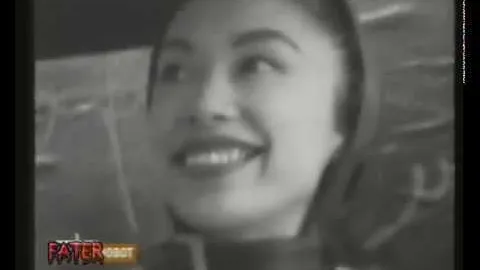


Couples
The citational matrix, set down in one go, before the group had even found its face.
First studio album by Pizzicato Five (ピチカート・ファイヴ). Tokyo, 1987. The original quintet — Yasuharu Konishi producing, Keitarō Takanami on instruments, Mamiko Sasaki and Takao Tajima on vocals, two session members — delivers a chamber bossa-jazz-pop that resembles nothing else in contemporary J-pop. The title itself, Couples (カップルズ / Kappuruzu), is a signal: the music will speak of love, of duos, of encounter — in a language borrowed from 1960s French pop and Brazilian jazz.
The Device
The method is already in place on this first record. Konishi does not write in a vacuum: he cites. Audrey Hepburn Complex invokes 1960s European cinema in its very title. Magic Carpet Ride — this first version, distinct from the hit he will re-record later — stages an orientalist pop reverie. Chamber arrangements, bossa-jazz guitar, soft vocals, median tempo: nothing urgent, everything precise. This is the foundation, not yet the summit.
What Couples lays down for what follows: explicit quotation as the primary musical gesture, light orchestral arrangement as framework, and female voice (Mamiko Sasaki) as timbre — not yet as persona. The persona will come with Maki Nomiya, three years later. But without Couples, there is no Pizzicato Five.
Movement I — The Foundations
Couples inaugurates Movement I (1984–1989), a period confidential in Japan, unknown abroad. The group is still an unstable quintet — Sasaki will leave in 1987, Tajima will join then depart to found Original Love in 1990. But the bossa-pop-jazz matrix is already there, in those 1987 grooves: the taste for chamber music, the refusal of overdramatisation, the citation as courtesy.
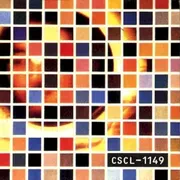
Soft Landing on the Moon
Maki Nomiya's arrival fixes the definitive format — duo, persona, lounge science fiction.
Fourth studio album, May 1990. Its original Japanese title, 月面軟着陸 (Getsumen Nanchakuriku — “soft landing on the moon”), says everything about the aesthetic programme: lounge, 1960s science fiction, a gentle touchdown on unfamiliar terrain. This is Pizzicato Five’s biographical pivot album. Takao Tajima has just left to found Original Love. Stepping up to the microphone for the first time: Maki Nomiya (野宮真貴).
The Nomiya Pivot
Maki Nomiya is no unknown — she has already released a solo album. But in joining Pizzicato Five, she brings something neither Sasaki nor Tajima had: a poised, mid-register, almost spoken voice, and above all a visual presence. Her silhouette, her style (1960s–70s mod, round glasses), her way of inhabiting an image: all of this becomes inseparable from the sound. Konishi composes for this voice and this image — not the other way around.
Commercially, the album fails: #56 on the Oricon chart, and CBS/Sony does not renew the contract. But this commercial stumble masks a major aesthetic achievement: the Pizzicato Five format is now fixed. The Konishi-Nomiya duo, surrounded by session musicians, image-saturated artwork, chamber bossa-jazz-pop. This format will not shift until 2001.
The Lounge-Cosmic Aesthetic
The cover plays 1960s lounge science fiction: coloured space suits, starfield background, modernist typography. It is the visual vocabulary of Graphis or Twen magazines, of Barbarella films — a future already past, looked back on from 1990 with affection. Konishi cites his musical sources with the same gesture of affection: Twiggy vs. James Bond assembles Twiggy and Ian Fleming in a single title — a double portrait of an era.
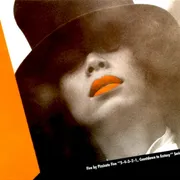
This Year's Girl
The canon fixed: Twiggy Twiggy, Baby Love Child, female supremacy as programme.
First album on the Nippon Columbia contract. The Japanese title, 女性上位時代 (Joseijōi Jidai — “the era of female supremacy”), is a programme statement: Maki Nomiya at full power, singer and editorial figurehead. What Soft Landing on the Moon had installed, This Year’s Girl consolidates and exports — first to France, then to the UK and United States (via Matador Records from 1994).
The Device
Twiggy Twiggy — re-recorded from its first version on Bellissima! (1988) — becomes the group’s signature track. WhoSampled.com unambiguously documents its three sources: Dionne Warwick (Another Night, prod. Burt Bacharach), Lalo Schifrin (The Man From Thrush), and The Ventures (Hawaii Five-O). Konishi makes no secret of it — that is the principle. The track is a tribute, not an appropriation. Three decades of pop seasoned into two minutes fifty.
Baby Love Child occupies a different position in the album: a ballad written by Konishi and Takanami, Nomiya’s bare voice, minimal arrangement. The track was covered eleven years later in the Futurama episode Leela’s Homeworld (2002) — allowing an American audience to discover Pizzicato Five through animated fiction. Oblique diffusion, perfect.
The Definitive Visual Identity
The This Year’s Girl cover marks the duo’s iconographic maturity: Maki Nomiya in 1960s–70s mod dress, saturated colours, carefully composed photography. The group is no longer merely making music — it is producing a visual grammar of which the music is one component. Konishi understands that what he does is not solely sonic: it is total, in the Wagnerian sense.
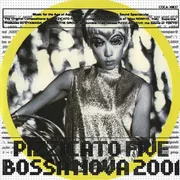
Bossa Nova 2001
Pop maturity: Sweet Soul Revue, nocturnal Tokyo, and the future of Brazilian jazz from Shibuya.
The quintessential title-album. Pizzicato Five announces in its own title what it does and its mythological target year: Bossa Nova 2001 — the future of 1960s Brazilian jazz, as imagined from Tokyo in 1993. Commercial and artistic maturity are achieved simultaneously. Two tracks will define the album for eternity: Sweet Soul Revue and Tokyo wa Yoru no Shichi-ji (東京は夜の七時 — “Tokyo, it’s seven in the evening”).
The Device
Sweet Soul Revue is the group’s export single. Konishi constructs the track on a break-beat soul foundation, Burt Bacharach-style lounge strings, and Maki Nomiya’s spoken-sung voice. The track was selected for a major Kao/Kanebo Cosmetics advertising campaign in Japan in 1993 — the first time Pizzicato Five reached a broad Japanese audience. Two years later, it appears in the American film Jury Duty (1995, Pauly Shore) — oblique westward diffusion. In 1994, Matador Records signed the group for the United States.
Tokyo wa Yoru no Shichi-ji was released as a single in December 1993 and became the group’s sonic self-portrait: nocturnal Tokyo, melancholic elegance, gentle irony. The Japanese title — often cited under its English alias The Night Is Still Young — embodies Pizzicato Five’s dual identity: deeply Japanese in its subject matter, universally legible in its aesthetic.
The Turn Toward the West
Bossa Nova 2001 is the album that triggers the international pivot. When Matador Records (New York, home label of Yo La Tengo, Cat Power, Belle and Sebastian) published the compilation Made in USA in 1994 — built largely from this album — Pizzicato Five became an American cult band almost overnight. The Spin, NME, and Pitchfork press followed. The group now lived two simultaneous lives: J-pop in Tokyo, cult indie in New York.
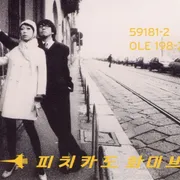
Happy End of the World
The final creative summit: Readymade label, 1990s electronics absorbed, happy ending as programme.
First album on Readymade, the imprint label that Yasuharu Konishi has just founded within Nippon Columbia. The name is a direct reference to Marcel Duchamp — the ready-made as artistic philosophy: any ordinary object can become a work of art through the gesture that isolates and names it. This is precisely what Konishi has been doing with music since 1987: he isolates fragments of the sonic past and names them the present. The album is his method statement.
The Electronic Expansion
Happy End of the World is more danceable, more electronic than its predecessors. House, big beat, and drum’n’bass elements enter the Pizzicato Five vocabulary without distorting it. Konishi does not capitulate to fashion — he absorbs it through his habitual method: citation, tribute, assimilation. The sonic references of the 1990s are layered onto those of the 1960s–70s without replacing them. The seam is always visible and always intentional.
The album coincides with the 1997 American Lollapalooza tour — the most exposed moment of the group’s international career. Pizzicato Five appears on American television, tours independent rock venues, is photographed for fashion magazines. Magic Carpet Ride — a durable version of the track originally recorded on Couples — was covered the following year in Vincent Gallo’s Buffalo ‘66 (1998), becoming the sound of a generation of American cinephiles.
The Happy Ending as Aesthetic Position
The album title is ironic but sincere. The end of the world can be happy — if one chooses the right music to accompany it. This has been Pizzicato Five’s programme from the start: the citational collage as resistance to melancholy, pop as antidote to disaster. Happy End of the World is probably the last creative summit before the planned closure of 2001.

Çà et là du Japon
The trilingual farewell: French, Japanese, English — a lucid, programmed closure.
Final studio album. The title is itself a final declaration: Çà et là du Japon (さ・え・ら ジャポン / Saera Japon) — trilingual, deliberate, erudite. Çà et là (here and there) in French, du Japon (of Japan) also in French, and さ・え・ら in hiragana — a title that designates both a dispersed space and a literate farewell. In January 2001, Konishi announced the dissolution. The group officially ceased activities on 31 March 2001.
The Programmed Closure
Çà et là du Japon is not an album of rupture or crisis. It is a recapitulation album — a pop mosaic revisiting all the materials worked over fifteen years — bossa, lounge, jazz, electronics, library music — as if Konishi were laying his tools down neatly on a table before closing the workshop. The closure is lucid, organised, non-violent. Tout Va Bien, Une Drôle de Vie (Yokohama Edition), Concerto: titles that say things are fine, the music was beautiful, and it is time to conclude.
The Trilingual Gesture
The French title of the album is not accidental: since Bossa Nova 2001, Pizzicato Five had claimed inheritance from 1960s French pop — Gainsbourg, France Gall, Michel Legrand, Jacques Demy. Çà et là du Japon is their farewell letter in French, addressed to imaginary interlocutors in Paris or Marseille who might have followed the group from the beginning. It is also the group acknowledging that its imaginative world was never solely Japanese — it was a Franco-Brazilian-American imaginary viewed from Tokyo.
A body of work in four movements
Fifteen years of studio work, twelve albums, a deliberately chosen dissolution on 31 March 2001. The trajectory divides into four clear movements — each testing a different dimension of the citational grammar set down in Shibuya in 1987.
What never changes
Two permanences traverse the four movements. The sample as courtesy — the citation is always visible, always intentional, never concealed. From Couples to Çà et là du Japon, Konishi cites Bacharach, Gainsbourg, Schifrin, Warwick, Truffaut, 1960s soul, 1990s electronics — always naming, always saluting. The persona as music — from 1990, Maki Nomiya is half the sound. Her voice and her image are inseparable from the record. Every album builds a new coherent iconography.
The bridge that never closed
Pizzicato Five looked toward France. Konishi’s cinephile-Japanese imagination was nourished by Gainsbourg, France Gall, Michel Legrand, Jacques Demy. Air looks from the other shore — French musicians dreaming of international library music, Brian Wilson, Bacharach. Both groups work the same gesture (vintage timbre, affectionate citation, pop-cinema) from two inverse orbits, without ever crossing paths. The influence of Pizzicato Five on world pop remains to be fully mapped — but it is incalculable.
The map
The six pivots in orbit around the two permanences. Click an album to see how it deploys them.
Persona: Mamiko Sasaki on vocals — the voice is there, the icon not yet built.
Position: the foundation. The Konishi device exists; the duo format does not yet.
Persona: first Maki Nomiya album — poised voice, visual presence installed.
Position: biographical pivot. Commercial failure, aesthetic success. The Konishi-Nomiya duo format is fixed.
Persona: *Baby Love Child* — bare voice, minimal arrangement. The persona at its most unadorned.
Position: the canon fixed. Female supremacy as programme. Covered in Futurama (2002).
Persona: Matador Records places Nomiya at the centre of US visuals. She becomes the exported face.
Position: pop maturity. Export triggered. Tokyo + New York simultaneously.
Persona: new Nomiya iconography — electro-pop colours, techno-1960s typography.
Position: final creative summit. Readymade label (Duchamp). Lollapalooza 1997. Buffalo '66.
Persona: final Nomiya iconography. The reckoning of a visual grammar sustained fifteen years.
Position: trilingual farewell (French / Japanese / English). Dissolution 31 March 2001. Lucid closure.