Soulwax · 2manydjs
Ghent — Rock-electro friction
Twenty-five years, two aliases. Soulwax — the band, the studio, the family name. 2manydjs — the DJ duo, the mashup, the device. Between the two, an ecosystem: five studio albums, one mashup record that invents a format, a decade of remixes that become canonical (LCD Soundsystem, MGMT, Daft Punk, Tame Impala), a series of musical films, and the DEEWEE label producing the European electronic scene. Two permanent gestures: the DJ-set thinks the album, and friction as writing.
Why friction is the writing
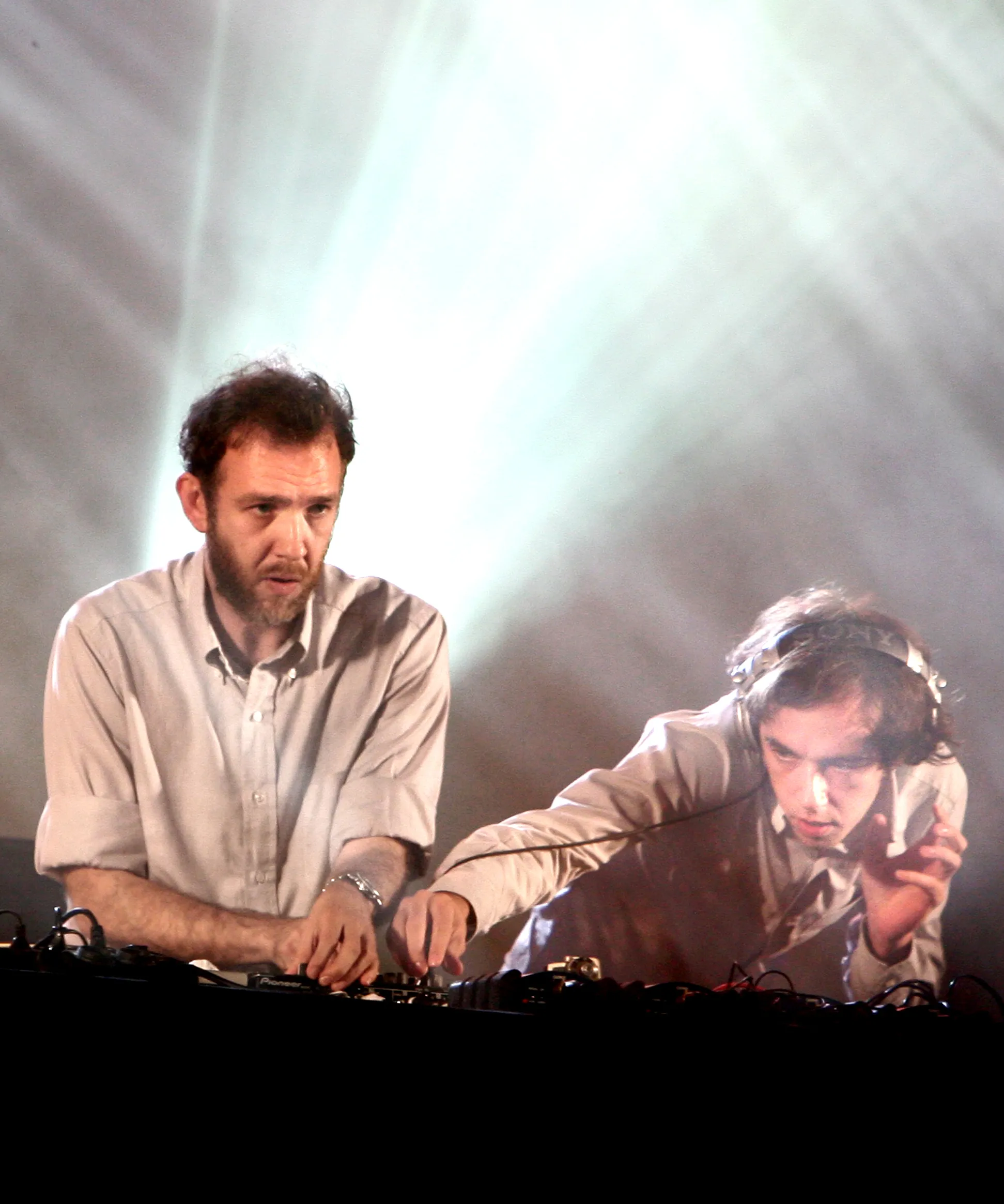
Soulwax is a rock band. 2manydjs is a DJ duo. Soulwax scored Belgica. 2manydjs hosts Soulwax FM in GTA V. DEEWEE produces Charlotte Adigéry and Asa Moto. These are the same people — Stephen and David Dewaele, brothers from Ghent, active since 1995 — but the work refuses the border between registers. The project has no single alias, it has aliases. No single format, formats. No single genre, friction.
It all starts in 2000 with an accident: the BBC invites them for an Essential Mix. The Dewaeles, expected as a Belgian rock band (Soulwax), arrive with two decks and two hours of mashups. The recording circulates as a legendary bootleg, then becomes an official album after clearing 45 of 187 licensing requests (As Heard on Radio Soulwax Pt. 2, 2002). The New York Times names it “best popular music album of 2002” — a record with almost no original music of its own. Legitimate mashup culture has just been born.
The five records that follow show how these two permanences unfold — from the prophetic rock band (Much Against Everyone’s Advice, with the announcing Too Many DJs) to the mashup revolution (As Heard on Radio Soulwax Pt. 2), from dance-punk (Any Minute Now) to club self-remix (Nite Versions), to the strict studio return (From Deewee, live-in-studio). Between Nite Versions and From Deewee, a remix-and-film decade that turns them into a diffuse ecosystem. After From Deewee, the DEEWEE label in Ghent turns them into producer-duo.
In the European electronic ecosystem, two other cartographies cross this one. Cassius — Parisian duo, non-biological brothers, same emergence era (1996-1999). Cassius keep the signature inside a closed Motorbass studio; Soulwax share it inside an open DEEWEE ecosystem. Two opposite answers to the same question: how to be a duo that produces. Laurent Garnier — DJ culture, BBC Essential Mix (1995 Garnier — 2000 Soulwax). Garnier defends mental techno in long form; Soulwax defend eclectic mashup in multiplied short forms. Two DJ-set disciplines, one shared conviction that the set is a form of writing. And Air, by contrast: same late-90s European generation, but Air is chamber/closed where Soulwax is club/open — the two extreme edges of one decade.


◆ Musicological studies
The work’s tracks examined closely — device, structure, procedure, lineage, reading under the permanences.


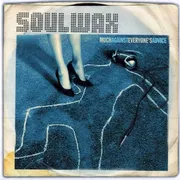
Much Against Everyone's Advice
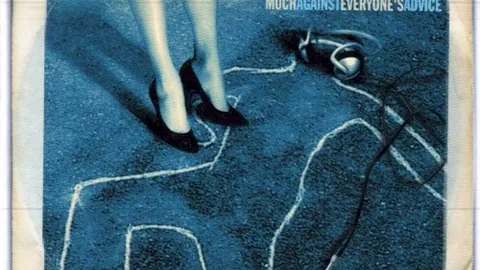
The prophecy. A pop-rock record that contains, as a single, the name of the project to come.
Soulwax’s second album, released 1998 on PIAS. Four-piece rock lineup: Stephen Dewaele (vocals/guitar), David Dewaele (guitar/bass/keys), Stefaan Van Leuven (bass), plus a session drummer. Late-90s pop-rock, influences of Pixies, Pavement, early Blur.
The device
A band record, still. Live-band recording, no dominant machines, guitars up front. But inside, one track is called Too Many DJs — an ironic pop-rock song about the 90s club saturation. Four years later, that title will be the Dewaele’s alias as a mashup duo. An involuntary prophecy.
”’Too Many DJs’ was a joke that became a name. A name that became a movement.”— paraphrase, 2010s interview
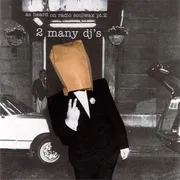
As Heard on Radio Soulwax, Pt. 2
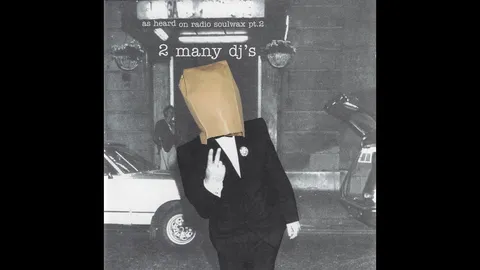
The birth certificate of legitimate mashup. 45 tracks, 60 minutes, zero pause.
First album under the name 2 Many DJ’s. Derived from a BBC Radio 1 Essential Mix broadcast October 2000 — Stephen and David Dewaele, invited as “Soulwax” to the BBC’s surprise, deliver two hours of mashups. The recording circulates as a bootleg, becomes a cult phenomenon. PIAS agrees to release it officially in 2002 — on condition that the Dewaeles obtain all 187 licensing clearances. Only 45 are granted. The other 142 move to unofficial “house” compilations (Part 1, Part 3, etc.).
The device
45 tracks in 60 minutes, no silence, continuous transitions. Destiny’s Child’s Independent Women mixed over Nirvana’s Smells Like Teen Spirit (Smells Like Booty). 10cc’s Dreadlock Holiday over a ragga beat. Iggy Pop, Adult., Whitney Houston, Vitalic, Salt-N-Pepa — no high/low culture hierarchy. The record demonstrates one thesis: the border between sample and original does not exist when the mashup is well written.
”Best popular music album of 2002” — a record with almost no original music of its own.— The New York Times
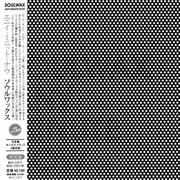
Any Minute Now
The dance-punk turn. The band returns after the 2manydjs revolution.
Soulwax’s third album, two years after the mashup shock of As Heard on Radio Soulwax Pt. 2. The Dewaeles pick up the band format again — still four (or five in the studio), now with production by Flood (U2, Depeche Mode, PJ Harvey). Dance-punk / electro-rock in full revival (The Rapture, LCD Soundsystem, Radio 4, Franz Ferdinand), Soulwax here find the format that links rock band and club ethos.
The device
Saturated guitar, analog synth, frontal live drums, funk-punk bass. Voice direct, almost spoken. More energetic, more efficient than Much Against Everyone’s Advice: six years of remixes and DJ sets have taught the Dewaeles how a rock track should sound on a dancefloor. Singles NY Excuse, E Talking, Any Minute Now.
”Soulwax learned to DJ, and now they come back to the rock band with that discipline under their skin.”— paraphrase, 2004 press

Nite Versions
The full self-remix. Any Minute Now re-crossed at night — a mirror work.
A year after Any Minute Now, the Dewaeles release Nite Versions: the same album entirely re-remixed by themselves as club versions. Each track extended, tightened, sped up, altered in length, with added synths and external sampled voices. E Talking gains a vocal line from Nancy Whang (LCD Soundsystem). Any Minute Now runs from 4 to 7 minutes. The concept “Nite Version” is born here and becomes a regular format of the duo.
The device
Not a simple remix-album decoration — a rewriting. The Dewaeles treat their own material as they would another artist’s they remix. The studio chain replaces the band. Tempo rises, kick thickens, transitions go continuous. E Talking (Nite Version) reaches #27 UK singles — their biggest radio success.
”Nite Versions proves Soulwax is not a rock band or a DJ duo. It’s a friction machine, able to reprocess any material — even its own.”— paraphrase, 2005 press
The golden age of remixes — 2004–2012
Between Nite Versions (2005) and From Deewee (2017), twelve years with no Soulwax studio album. But the duo do not stop — on the contrary, this is the decade the Dewaeles become reference remixers, diffuse producer-authors, media artists.
The remix catalog (2004-2012) stacks up fast. Get Innocuous! for LCD Soundsystem (2007) — a remix that turns canonical, played live by LCD themselves. Kids, Electric Feel, Time to Pretend for MGMT (2008-2009) — re-edits that redefine mainstream indie-electro. Robot Rock for Daft Punk. Gravity’s Rainbow, Golden Skans for Klaxons. Lovelight for Robbie Williams (2006), #1 UK charts — their biggest commercial success, paradoxically for a mainstream pop star. Standing in the Way of Control for Gossip (2007). Elephant for Tame Impala (2012). Justice, Kylie, Pulp, Interpol. The duo becomes the signature you request when you want a track to move from song format to club format.
Part of the Weekend Never Dies (2008) is the media pivot. Documentary film directed by Saam Farahmand, follows the worldwide Soulwax × 2manydjs tour over two years. A fetish object for the 2000s club generation — released on DVD/Blu-ray, tours festivals. First time the Dewaeles are staged as figures, not just invisible producers.
Radio Soulwax (2011) is the total gesture. 24 musical films, about one hour each, published free on a dedicated website. Each film is a themed mashup with its own visual aesthetic. The project is a declaration: mashup is not a hack, it’s an art form that deserves its films. Work, archive and manifesto at once.
In parallel, the Dewaeles produce whole albums: Tiga (Sexor, 2006; Ciao!, 2009), then the score for Felix van Groeningen’s Belgica (2016). They also host Soulwax FM — the radio station in Rockstar’s Grand Theft Auto V (2013) —, an unexpected but culturally decisive diffusion: the Soulwax signature becomes accessible to anyone playing GTA.
When From Deewee lands in 2017, it is a gesture of strict studio return after this maximum diffusion. Twelve years of external ecosystem give the album its weight: it’s not a return to rock, it’s a return to origin, to studio as centre. And the studio’s name — DEEWEE — becomes the label’s name. The ecosystem closes on itself.

From Deewee
Live-in-studio, 45 minutes in a single take. The strict studio return after the remix decade.
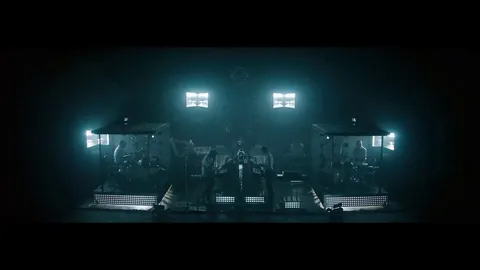
Twelve years after Nite Versions. In between, the Dewaeles have produced, remixed, toured (film Part of the Weekend Never Dies, 2008; series Radio Soulwax, 2011), and founded the DEEWEE label in Ghent (2015-2016). From Deewee is a return to the album format, but without compromise: recorded in a single live take at their DEEWEE studio, 45 continuous minutes, no editing, no overdubs.
The device
Nine musicians in a circle, instruments and electronics interwoven, two Dewaeles at the console live. The record listens as one block: tracks are named, separated on the tracklist, but flow without silence. The album format here joins the DJ-set format — one flow, transitions, no pauses.
The record ships on vinyl and on pressings with laser-marked transitions so a DJ can play the whole thing in a club. The project is coherent at every level: capture, mastering, pressing, diffusion.
”To make From Deewee, we played the album three times in one day. The take we kept is the one where no one messed up. No editing, no patching. It’s that or nothing.”— paraphrase, 2017 Dewaele interview

All Systems Are Lying
First Soulwax album in eight years. "A rock album made without any electric guitars."
First Soulwax album since From Deewee (2017). An eight-year gap — this time less silent, more dense: DEEWEE productions (Charlotte Adigéry, Asa Moto, Marie Davidson), tours, continued Radio Soulwax, Gaspar Noé’s Climax soundtrack (2018). The album drops 17 October 2025, strikingly the same day as Le Disque Bleu by Benjamin Biolay — calendar coincidence, no musical relation.
The device
14 tracks built entirely from modular synthesizers, live drums, tape machines and processed vocals. The Dewaeles describe it as “a rock album made without any electric guitars” — assumed contradiction, logical sequel to From Deewee. Where From Deewee was live-in-studio in one take, All Systems Are Lying returns to sequential work, but with modular rigour as discipline: every sound built from patches, no presets.
Advance singles: Run Free (first excerpt), Meanwhile on the Continent and Gimme a Reason (double single September 2025). Standout tracks: Pills And People Gone, Idiots In Love, Distant Symphony, the title track.
”All Systems Are Lying was built entirely from modular synths, live drums, tape machines and processed vocals. A rock album made without any electric guitars.”— DEEWEE announcement, July 2025
A body of work in four movements
Thirty years, six studio albums, one mashup record that invents a format, a canonical remix decade, one film, 24 musical films, two soundtracks, one label. The trajectory breaks into four clear movements — each testing a different dimension of the founding thesis: the DJ-set thinks the album, friction writes the music.
What never changes
Two permanences cross the four movements. The DJ-set thinks the album — from As Heard on Radio Soulwax Pt. 2 to All Systems Are Lying, continuity logic erases the isolated-song format. Friction as writing — mashup, remix, genre crossover: no hierarchy between sample and original. Not citation — collision that becomes a work.
The bridges that hold
The 1996-2000 French Touch shares an emergence age with Soulwax. Cassius, Parisian duo, asks the same question in reverse: how to be two musicians at the desk. Cassius seal the ecosystem inside the Motorbass studio, sign everything that passes. Soulwax share the ecosystem through DEEWEE, produce for others as much as for themselves. Two opposite answers to one question — and two paths that crossed in the 2000s (Zdar and the Dewaeles shared festivals, shared press).
Laurent Garnier and Soulwax meet in DJ-set discipline. Garnier defends mental techno in long form (6, 8 hours in a club); Soulwax multiply short mashupped forms. But same conviction: the DJ-set is a form of writing. The BBC Essential Mix remains the shared waypoint — Garnier in 1995, Soulwax in 2000. Five years apart tell the whole story: from danceable techno to eclectic mashup.
DEEWEE continues. All Systems Are Lying (2025) proves the duo can still sign an album without abandoning the ecosystem — the work now unfolds on two levels, Soulwax productions under their own name and DEEWEE productions for others (Charlotte Adigéry, Asa Moto, Marie Davidson). The work has de-centred from its authors without diluting.
The map
Six records orbiting the two constants. Click an album to see how it plays them out.
Friction: thematic — Too Many DJs comments on club from inside rock.
Position: prophecy. The title will become the duo's name.
Friction: maximum. Collisions between Nirvana, Destiny's Child, Iggy Pop.
Position: mashup landmark. NYT Best Album 2002.
Friction: rock + club + funk (NY Excuse, E Talking).
Position: return to band, dance-punk, Flood production.
Friction: with oneself. E Talking (Nite) + Nancy Whang.
Position: invents the Nite Version format. #27 UK.
Friction: nine musicians in a circle, zero overdubs.
Position: strict studio return after the remix decade.
Friction: modular vs live, tape vs digital, rock without guitar.
Position: return 8 years after From Deewee. Modular discipline.